

Why Is Seafood Synonymous With Mardi Gras?
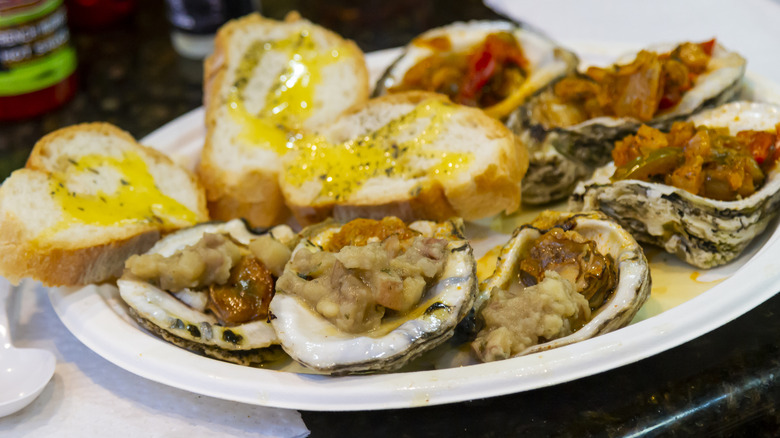
When Mardi Gras season comes around, almost one million people flock to New Orleans for a week of parading, partying, and lots of eating. Much of what's consumed is seafood, which is no great surprise: the Big Easy is one of the best U.S. cities for seafood, where delicious plates of gumbo, crawfish étouffée, seafood boils, and oyster loaves have long delighted locals and tourists alike.
What might be more surprising, however, is how closely linked the history of Mardi Gras is with New Orleans seafood. It's a relationship that stretches back centuries. According to Congressional Seafood, seafood's influence on Mardi Gras goes all the way back to its early days in the U.S., when it was a cheaper alternative for NOLA's working class, who often couldn't afford a trip to the butcher. Even as the market evolved to a point where a few scallops cost more than a burger, seafood's importance to Mardi Gras has remained constant, with Louisiana Creole cuisine creating some of the best places to get seafood in America.
The New Orleans seafood boil has unexpected origins
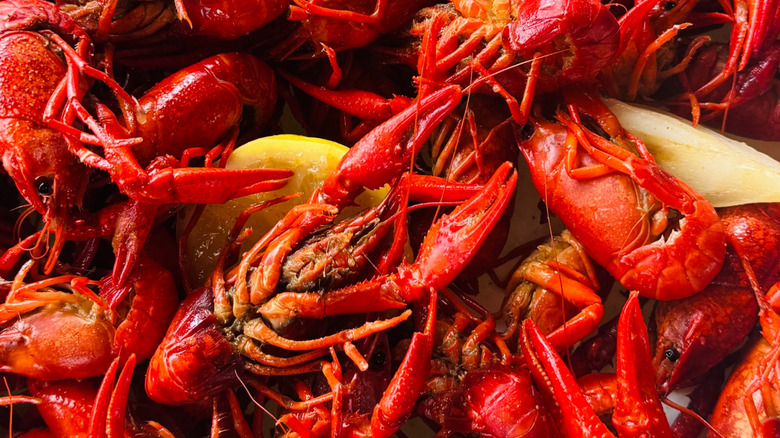
Of the many foods that make up the legendary feast of Fat Tuesday, one of the Mardi Gras foods you need to try is the seafood boil, particularly the shrimp and crawfish boils that are so common in Louisiana and the Gulf Coast. While this treasure trove of underwater treats is associated with the Cajun community, the truth about seafood boils is that their origins trace all the way back to Canada — particularly to French settlers in Nova Scotia (known as Acadians) who were forced to relocate in the 18th century after their refusal to submit to the British crown. The Acadians who found a new home along Louisiana's Gulf Coast continued their tradition of cooking one-pot meals of easily foraged items, and that meant shrimp and crawfish.
Mardi Gras in New Orleans can be cramped and chaotic. Yet it's also an amazing expression of local culture and customs, particularly showcasing some of the nation's most mouthwatering seafood. While some still argue over the real difference between Louisiana Creole and Cajun food (Creole cuisine has urban roots, while Cajun food has more rustic beginnings), everyone can agree that a Mardi Gras feast is not complete without some Gulf shrimp.