

US Cranberry Production Is Dominated By One State

In 2025, TikTok was awash with videos that brought cranberry farms to the forefront. The crop was getting attention because spiders were common in the fields, which gave many the creeps, but we also learned another surprising fact: Despite rigid temperatures, Wisconsin leads the United States in cranberry production by a considerable amount.
For 30 years now, Wisconsin has been the top cranberry producer in the United States. About 65% of the country's cranberries come from the Badger State, which produced 5.3 million barrels of cranberries in 2025. It's no wonder cranberries became Wisconsin's official fruit in 2004, placing them right there with cheese curds as a must-try state food.
If you sample Wisconsin cranberries, chances are they won't be newly harvested. Only around 5% of Wisconsin's cranberries are consumed fresh. These are typically sold around November and December given the popularity of holiday cranberry recipes. In general, dried cranberries are more popular and the fruit is often used in sauces and juices.
Wisconsin's often inhospitable climate is an asset for cranberry growing
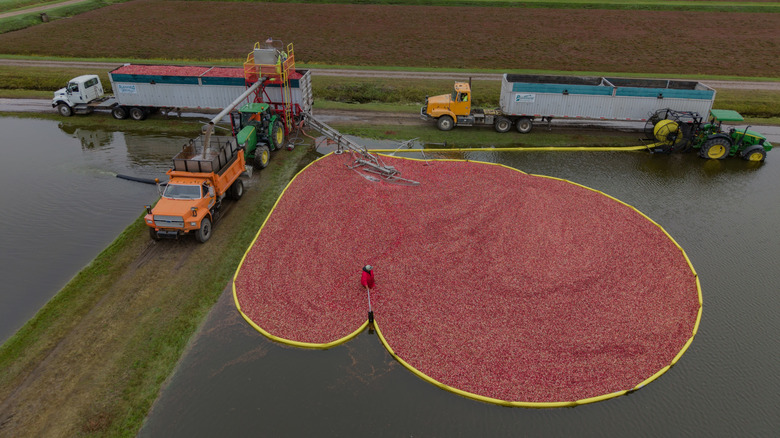
Why Wisconsin? Right alongside cheese and the Green Bay Packers, Wisconsin also conjures thoughts of harsh winters, but such a climate does not deter cranberry growth. The fruit is actually native to the state so the general climate is actually ideal for the crop, providing plenty of wetlands and the right quality soil.
Cranberries benefit from a cooler climate. Each year, cranberries must undergo a dormancy period, an important means of conserving energy for the following season. Temperatures of 45 degrees Fahrenheit and below are required, which Wisconsin provides in spades.
So, Wisconsin's harsh winters are actually an asset for cranberry farmers, who work with the weather to help their crops thrive. Before temperatures dropping below freezing, Wisconsin farmers fill garden beds with water to create a layer of ice to shield the plants until spring. The ice is then topped with sand. Once the ice melts, sand seeps into the ground, improving the health of the underlying soil to encourage plant growth each spring.