

The Difference Between The High And Low Settings On Your Slow Cooker
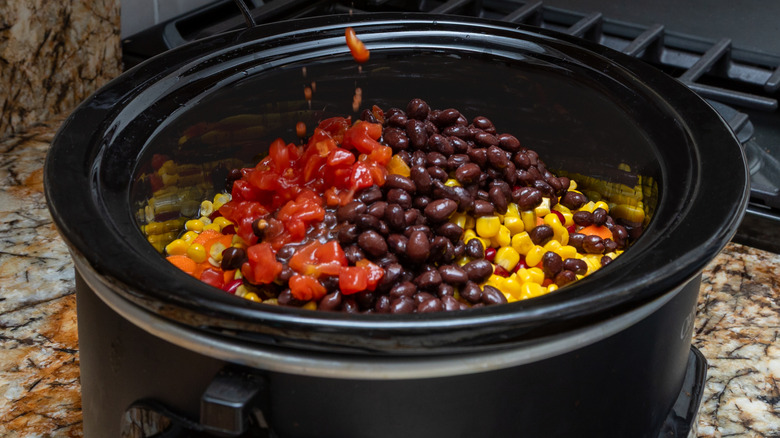
Unlike air fryers and toaster ovens, most slow cookers only have two temperature settings: high and low. The very basic difference here obviously comes down to temperature: the high setting runs between 270 and 300 degrees Fahrenheit, while the low setting falls between 170 and 200 degrees Fahrenheit. Recipes that call for low settings generally cook for around seven to eight hours while recipes cooked on high can be done in as little as three to four hours.
While slow cooker recipes can make your life easier, they can also be somewhat convoluted when considering the issue of temperature. There's a surprising amount of discourse regarding when to use the high setting versus the low setting. Some say it is A-okay to switch a recipe's temperatures with simple conversion, whereas according to Betty Crocker, "Thou shalt not switch the cooking temperature." There are also arguments about which foods benefit most from being cooked on low versus high heat and how temperature settings impact a food's flavor and texture. If you're new to slow cookers, it's wise to spend some time researching temperature settings before you get cooking.
Meats cook better but take longer on low settings
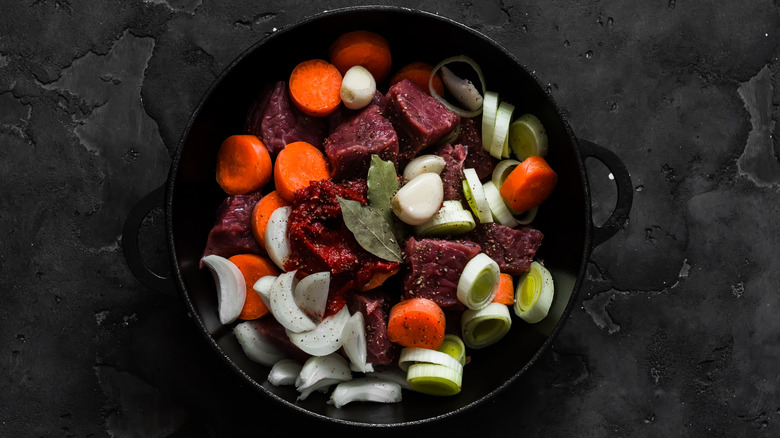
Speaking very broadly, the majority of meats tend to fare better on lower settings. We've all heard barbecue restaurants boast about cooking meat low and slow. The slow cooker applies that same principle, cooking meats at relatively low temperature for upwards of six to eight hours. This yields meat that is significantly more tender and flavorful.
If you're in a time crunch, you can technically cook a recipe that calls for a low setting at a higher temperature, although the merits of doing so are questionable. To convert the time for a high setting, simply divide the original time by 1.5 to 2.5 hours. However, swapping out temperature settings may qualify as a mistake you can make when using a slow cooker. Your meat may come out dryer and even burnt around the edges.
There's also safety considerations. Undercooked meat is a possibility when shortening cooking times, even if you turn up the heat. Make sure to use a meat thermometer to double check when adjusting your slow cooker's heat settings. While the USDA recommends using the high setting for the first hour and then switching to low, they also state that using the low setting exclusively is perfectly safe for all-day cooking. So, if your original recipe requires low heat cooking for long periods, it's probably best not to mess with it too much unless you're really short on time.
High settings can yield a specific texture and may be better for some meats
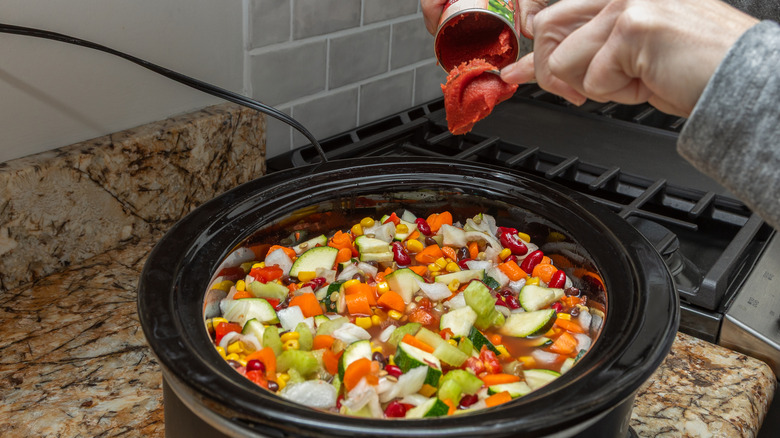
Slow cooker recipes that call for high settings are often trying to yield a specific texture. For instance, slow cooker pizza recipes typically aim for a crispy crust. Soups may sometimes work better on a high setting as it helps the ingredients create a uniform mixture more efficiently. Potato-based dishes are also a good candidate for high settings as potatoes rarely need to be cooked more than four hours to yield a suitable texture.
When it comes to heavily meat-based meals like slow cooker beef stew, using the high settings can backfire. Meats especially may come out dry or even mildly burned when cooking at a higher temperature, whereas certain meats may cook better at this setting depending on who you ask. Unlike many cuts of meat, lean meats actually dry out when cooked longer, so high settings are preferred. Chicken also sometimes becomes dry if cooked too long.
That being said, there's a lot of debate surrounding this topic. While some say chicken dries out the longer it's cooked, others argue low settings are your best bet for poultry. Betty Crocker advocates for a low setting but a briefer cooking time.