

The Powerful Natural Force That Makes Some Of Sicily's Wine So Unique
Rising above the Sicilian city of Catania, Mount Etna boasts the titles: It is the most active and tallest active volcano in all of Europe. Below the volcano, which can be seen spewing ash every few months, lies an abundance of rich, fertile, volcanic soil. In this soil, old vineyards thrive, making for some of the most unique wines on the island, and some might argue, in the country.
Despite being an island, Sicily, which sits just off the tip of Italy's boot, is quite large, with 23 different DOCs, or controlled designations of origin. Etna is one of them, and is considered to be one of the oldest wine-growing regions in Italy. Only in more recent years has the Mount Etna region started to become more globally recognized, as winemaking was revived in the area about 30 years ago. The area also received some on-screen attention when a local winery was featured in "White Lotus."
Tasting Table spoke with Sicilian winemaker Angelo Di Grazia, who produces bottles for Tornatore Wine and his private label, to understand why this wine region is so special. Di Grazia explained, "Mt. Etna is such a unique terroir that it is difficult to compare it to other Sicilian wine regions," likening the area to "an island within the island." The soil, a key component of terroir, is specifically what sets the wine apart, with Di Graza noting that, "The mineral content of the volcanic soil certainly plays a fundamental role, giving the wines complexity, longevity and elegance."
The volcanic wines of Mount Etna
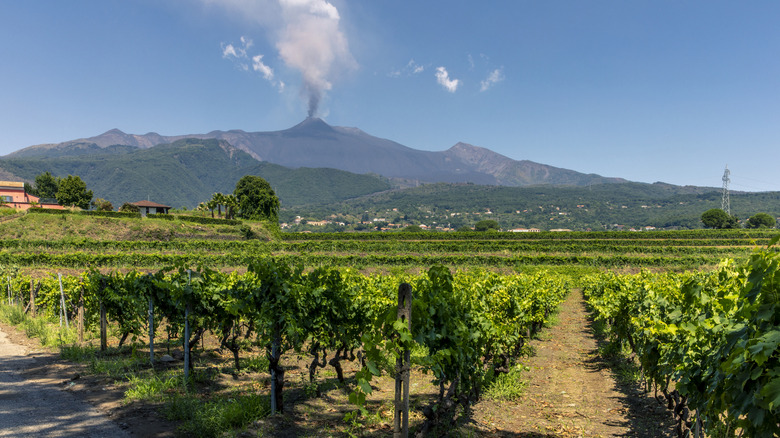
The wine grapes of Mount Etna grow at some of the highest elevation vineyards in Italy, with many situated at 3,900 feet; some are even planted on the side of the active volcano! As a result, the vines are exposed to many minerals, like magnesium, copper, phosphorus, and iron, which affect the flavor of the wine, proving how impactful terroir is to a growing region. According to Flatiron Wines, different eruptions and lava flows can have varied mineral and chemical compositions. So if there are a handful of vineyards in one area, their wines can all taste quite different depending on how lava flows have influenced the soil. Different sides of the volcano slope also have different terroir; some slopes are hotter and sunnier, and other parts are rainy and shadier.
In terms of types of grapes grown in this DOC, Nerello Mascalese and Nerello Cappuccio are planted for red wines, and Carricante is the most common for white wines. These grape varietals are indigenous to the area. As a DOC, wine from the Etna region must follow a certain composition. Red (rosso), white (bianco), rosé (rosato), and sparkling wine (spumante) are all produced in the area, and must contain a certain percentage of the indigenous grapes.
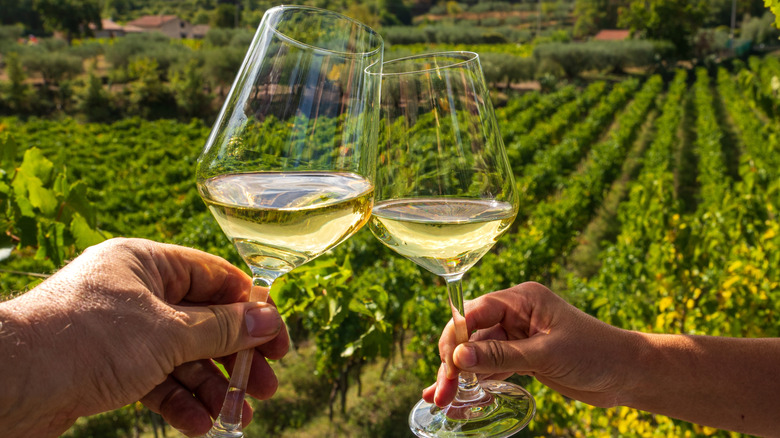
As for their taste, expect reds from this region to have high tannins and acidity, with a slight earthiness and notes of berry. Etna whites can be compared to Rieslings, with a more saline flavor and a herbaceous aroma with hints of diesel fuel.
Static Media owns and operates Mashed and Tasting Table.