

This Underrated Beef Cut Takes Hours To Cook But Delivers Big Flavor
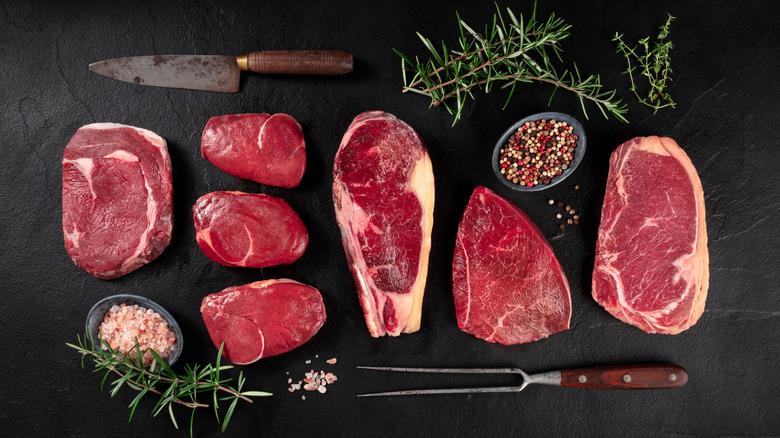
When buying beef, most people gravitate toward familiar cuts like ribeye, sirloin, or flank steak. Even when planning a slow-cooked pot roast or stew, chuck, brisket, or bottom round are typically the go-to options. These cuts get the most attention because of their flavor, relative ease of cooking, and predictable outcomes. Barring unforeseen cooking mishaps, you generally know what you're going to get. However, there are many lesser-known cuts that offer greater flavor and texture. Oxtail is one of them.
What is oxtail? The name can be a little misleading (and even off-putting). While oxtails may have originally come from oxen, large, domesticated cattle used as draft animals, today, the term simply refers to meat taken from the tails of cows or steers. With its high proportions of bone, fat, and connective tissue to meat, oxtail can seem intimidating to inexperienced cooks. And because they're not a menu staple in the U.S., oxtails are often overlooked.
What makes oxtail special is the very thing that turns many people away from it. Its connective tissue, bone, fat, and cartilage content make it a poor candidate for quick cooking. However, as with brisket or pork shoulder, a long, slow cook breaks down those elements into tender, rich, and beefy tasting meat. According to Chef Matt Bolus, this underrated cut will "hands down make the best stew you've ever imagined." Long braising times and pressure cooking deliver the best flavor by rendering the fat, collagen, and bone marrow into a deep delicious base.
Slow-cooking unleashes the hidden potential of oxtails
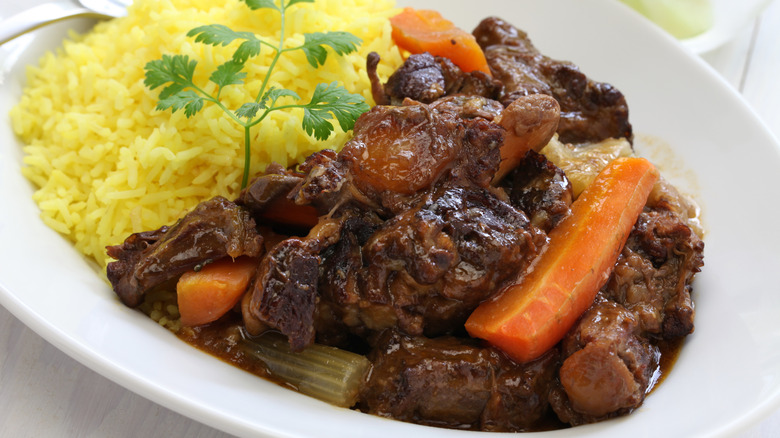
Oxtail is prized in many international cuisines for its intense flavor, unctuous mouthfeel, and ability to thicken and enrich stews and soups. Its high gelatin content, which comes from connective tissue and bone marrow breaking down during extended cooking, adds body and savory, rich flavor. Historically, that transformation is what made oxtail a practical way to create deeply flavorful meals with time and technique instead of premium cuts of beef.
For many years, oxtail was treated by butchers as a secondary or throwaway part of the animal, with limited demand outside of ethnic markets. That perception has shifted in recent years, in part due to the the popularity of "nose-to-tail" cooking. The movement was popularized by British chef Fergus Henderson, owner of London's St. John restaurant. Fergus advocates using every part of the animal to reduce waste and promote greater sustainability.
As that mindset gained traction with chefs and diners (alongside the farm-to-table movement in the U.S.), chefs began placing renewed emphasis on overlooked cuts with big flavor potential. Oxtail fits naturally into slow-cooked dishes like soy-braised oxtail, in which hours of gentle cooking create a silky texture and deep, rich sauce. While it may never be a quick weeknight option, oxtail dishes reward patience with flavor that few other beef cuts can match. Recipes like pot-au-feu-style oxtail soup are prime examples of why this underrated cut is moving into the mainstream.