

Why Smart Steakhouse Diners Look Beyond Filet And Ribeye
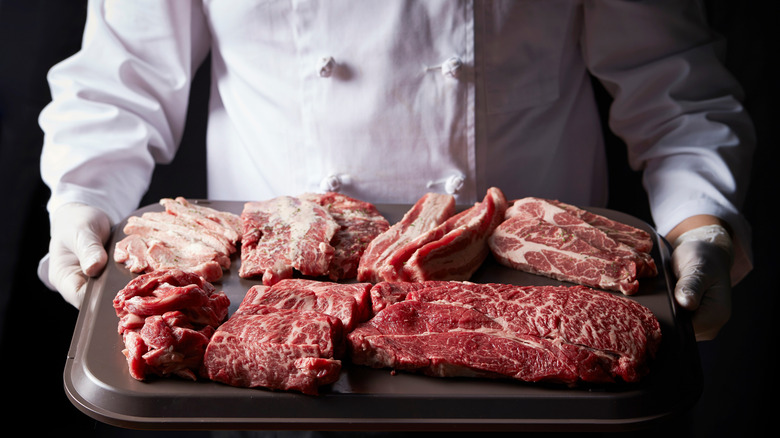
If you are the kind of person who celebrates a special occasion with a steak, you also might be one of the many steakhouse diners who order a filet mignon or a ribeye. It makes sense, considering that over 28% of Mashed survey respondents agree that filet mignon is the best cut of steak, followed closely by over 22% of people who prefer ribeye over filet mignon. Dining at a steakhouse isn't generally the most affordable restaurant option, so going for what you know is a safe bet. Despite the costly nature of coveted steak cuts, cooks at respectable steakhouses should know how to prepare any cut of meat well. With that in mind, why not divert your attention to the cheaper cuts available on the menu?
Among the top budget-friendly steak cuts chefs love to cook are skirt steak and flank steak. While these may be among the toughest cuts of beef, they can be delicious when expertly prepared. Both cuts are from the abdominal area of the cow, and are known to have strong, beefy flavors. One key difference between the two is that the flank steak has less fat than the well-marbled skirt steak. So whether you are more inclined towards a leaner or fattier cut, you will have a delicious steak no matter which of the two you choose.
Hanger steak is another relatively inexpensive cut that is a fantastic choice for diners in the know. It comes from a section of the cow where it "hangs" just below the rib, and its rich flavor is so prized by butchers that it's also known as "butcher's steak". Look for this cut on steakhouse menus, and order it medium-rare for the perfect amount of chew.
How to get more bang for your buck at a steakhouse
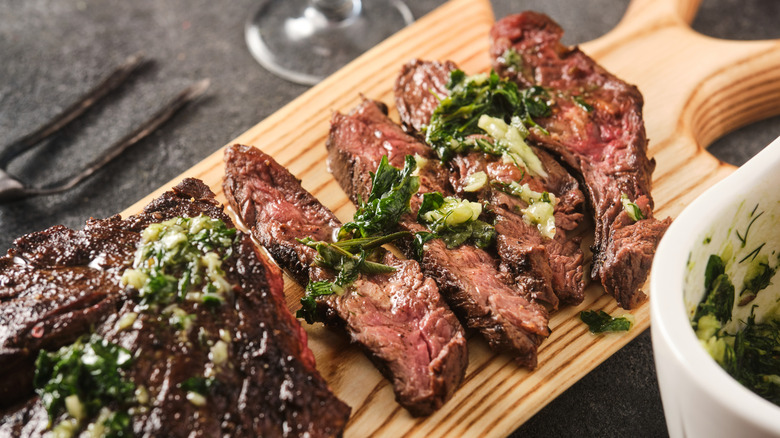
Part of being a smart steakhouse diner is knowing how to order these less-expensive cuts. The late Anthony Bourdain was a fan of hanger steaks, and as the head chef of a French brasserie in New York City, he knew it was the preferred cut for steak frites, that iconic French dish of steak with fries. Skirt steak is a top choice to prepare fajitas with because it takes to marinades particularly well. If the menu states that the skirt steak has been marinated, that's a good sign. If you decide on a flank steak, ask your server if you can take a look at the meat before it is cooked. The grains of a flank steak generally run lengthwise, so check that it has been cut against the grain for maximum tenderness.
Aside from specific cuts, another key phrase to look for on a steakhouse menu is "dry-aged". This technique involves hanging large pieces of meat in a cold room with sufficient air circulation for an extended length of time. Natural processes that occur during dry aging help concentrate the meat's flavor and texture. After aging for a duration that may range from weeks to months, the meat is trimmed and cut into steaks. Dry aging is an excellent way to make a cheap cut of steak taste better, at a restaurant, or even at home.
Next time you're dining at a steakhouse, consider expanding your horizons beyond filet and ribeye. As long as you feel confident in the kitchen's abilities at a particular steakhouse, you should be in for a delightful, yet more affordable meal.