

How Aldi Seafood Purchases Were Linked To A Major International Scandal
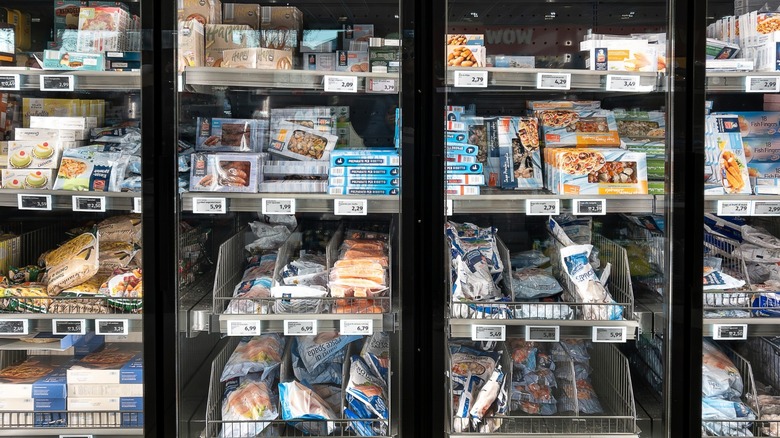
Despite being one of the most popular brands in America, Aldi has been rocked by huge scandals in the past. From the discovery of horse meat labeled as beef in its freezers to glass being found in its frozen gyoza, the discount grocery store has been through the wringer with controversies and still managed to keep a devoted fanbase. One major incident, however, became the reason why a lot of folks will never buy seafood from Aldi again. The story involves North Korea.
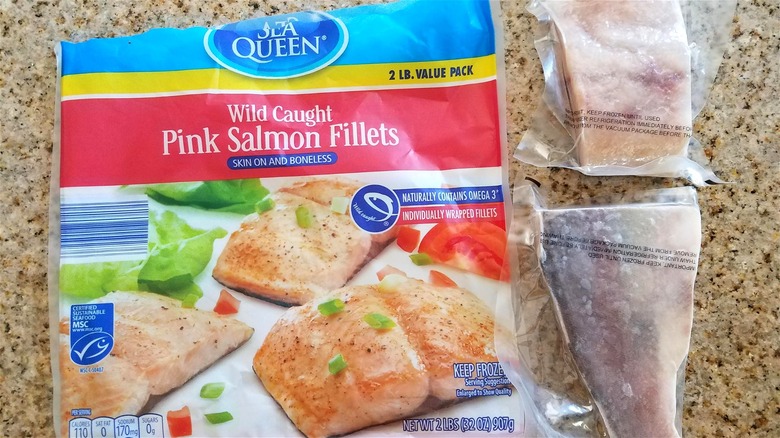
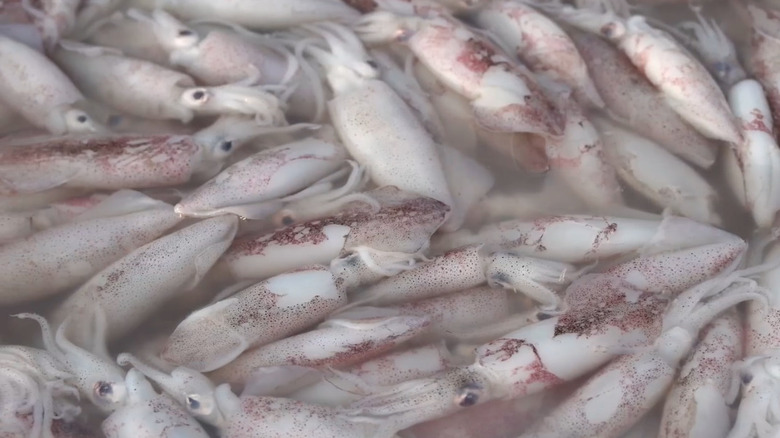
In late 2017, the Associated Press (AP) reported that seafood processed in Hunchun, China, for the American market may have been prepared by factory workers from North Korea. Some of the seafood shipped to the United States from these factories included snow crabs, squid, and salmon. One of the brands spotted in these shipments was Sea Queen, which supplies a variety of seafood products to Aldi.
Importing anything produced by North Korean labor is illegal in the US, which is why having these products on American soil was such a scandal. At the same time, it's suspected that many North Korean workers found abroad are there through a system of forced labor, which effectively made some of Aldi's seafood the product of grievous human rights violations. It was so bad that when the news broke out, some companies, such as Pennsylvania-based importer The Fishin' Company, immediately ended their partnerships with the exposed factories.
Why was the seafood illegal?
It might seem extreme on the surface, but buying seafood products manufactured by North Korean workers posed a serious security risk to the U.S. It's widely believed that North Korea exports its labor force to fund projects like its nuclear program. In short, buying seafood from Aldi at the time could have indirectly contributed to nuclear war.
North Korean workers are often cheap and easy to exploit, which is why there is a genuine demand for them — even if at the risk of nuclear weapons development. For this reason, President Barack Obama issued Executive Order 13570 in 2011, which prohibited the importation of any goods from North Korea, whether directly or indirectly. Later, in August 2017, just two months before AP published its report, President Donald Trump signed into law the Countering America's Adversaries Through Sanctions Act, which additionally prohibits the importation of goods produced wholly or in part by North Korean workers.
While these measures were created to prevent any funding of the North Korean government, a manufacturing operation of this scale is hard to police. In the case of Aldi's seafood, the workers processed it inside factories in China. With that much distance, unlawful practices were bound to slip through the cracks.
How did Aldi respond to the scandal?
When the story first broke in 2017, Aldi declined to comment. In contrast, Walmart publicly revealed that it had already banned its suppliers from working with factories in Hunchun, China, a year prior, citing concerns over the factories' migrant labor.
There's a chance that Aldi decided to handle the issue in private, but questions lingered. In 2024, The New Yorker published an exposé revealing that a number of Chinese factories not only continued to employ forced laborers from North Korea, but also doubled their squid exports to the U.S. The report was written by Ian Urbina, founder of non-profit journalism organization The Outlaw Ocean Project, who managed to get an inside look at the dehumanizing conditions North Korean workers, all of whom are female, endured.
As Urbina's organization built its report, it also found that Aldi Nord — the group that handles Aldi in multiple parts of Europe — sourced some of its seafood supply from factories where Uyghurs, a Muslim ethnic minority group in Xinjiang, China, were forced into labor. The team corresponded with Aldi Nord regarding these findings, and the company not only began an internal investigation but also requested further cooperation with The Outlaw Ocean Project to ensure due diligence on the matter. It's possible that, like Aldi Nord, Aldi in the U.S. began its own investigation into the 2017 scandal without publicizing it. Until we know for sure, the connection with North Korea remains one of the biggest secrets of the Aldi frozen aisle.