

The Red Solo Cup's Other Identity Around The Globe
We may receive a commission on purchases made from links.
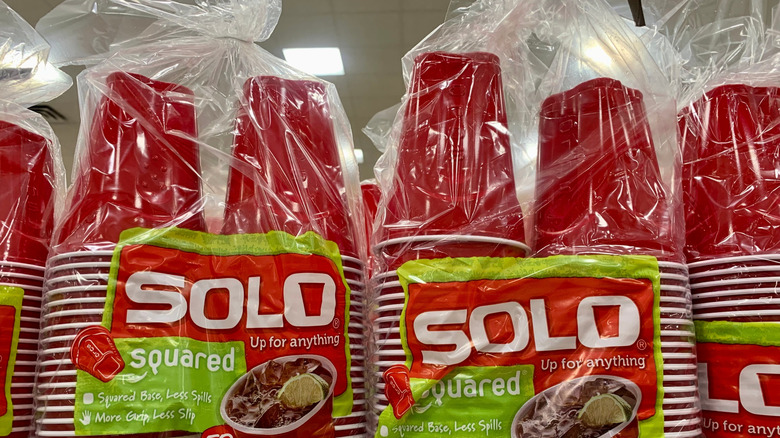
The Solo Cup Company has made a name for itself as a reputable manufacturer of disposable tableware, but one of its products has come to symbolize something beyond convenience. More than just a vessel to complement your beer, the red Solo cup has infiltrated pop culture, appearing in movies, TV shows, and songs. The red Solo cup's status as a house party essential is so ubiquitous that packages of red plastic cups are sold under the name "American party cups" in other countries.
Solo cups, which have roots in the American Midwest, are part of USA-themed parties around the world. It's hard to argue with the gimmicky aspect of the "American cup" (Solo's official branding may not always be present), given its established prominence within American culture. Party scenes in American teen movies often feature red plastic cups. This is evidenced by films like "Fanboys," "American Pie," and "Neighbors." Sony Pictures even sells a red Solo cup as movie merchandise for "Superbad." The red Solo cup was immortalized in country singer Toby Keith's 2011 hit of the same name. The award-winning song was even covered in the TV musical series "Glee".
The Solo cup's rise to icon status

When Leo Hulseman founded the Solo Cup Company in 1936, its initial business was in paper cups(disposable tableware didn't go mainstream until the post-war era). Solo wouldn't produce its disposable icon until the 1970s. When it did, the original Solo cup color roster included red, blue, yellow, and peach. The Solo cup's sturdy design helped it gain popularity and made it a key component for drinking games like beer pong and Beirut all over the world.
The cup's media exposure was prioritized early on. In addition to founding Solo, Hulseman also owned a small production company and studio between 1971 and 1974. According to the Chicago Tribune, the studio was used by shows like "Candid Camera," giving Hulseman an inside connection to commercial airtime for Solo. Although the product was initially marketed as a way to limit cleanup during at-home social gatherings, Solo became more synonymous with party culture, even leading to a now-debunked myth that the meaning of the lines on a Solo cup was to measure different types of alcohol.
As reflected in Hollywood films and television, parties and social drinking are naturally ritualistic. They are ceremonies and celebrations where drinks are shared in large crowds in the name of hospitality, bonding, and togetherness. In that spirit, there are many unique drinking practices around the world, and it's undeniable that the red Solo cup has become recognized as an American extension of those same traditions — and we can absolutely raise a drink around the world to that.