

The One Ribeye Cut That Promises Maximum Juiciness
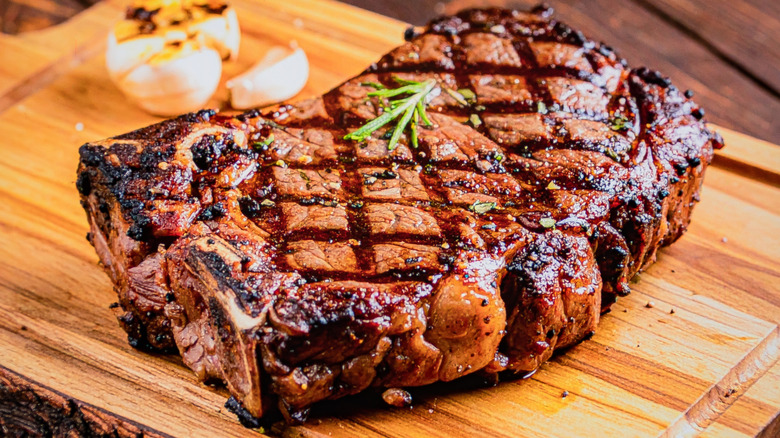
It may come as a surprise, but not all ribeyes are created equal. Whether you're ranking steaks by tenderness or debating which chain restaurant serves the best ribeye, the "cut within the cut" makes a huge difference in flavor and juiciness. Many of us likely didn't even know that there were different cuts on a ribeye. However, the ribeye runs along the rib primal of the cow, from the sixth to the twelfth rib, and where your particular ribeye steak comes from makes a big difference in flavor and juiciness. And the MVP among most chefs is the chuck end — ribs six through nine — and it's definitely one that steak lovers should be asking for by name.
What sets the chuck end apart is fat — wonderful, flavor-amplifying fat. Compared to the loin end, the chuck end carries a thicker fat cap and more intramuscular marbling, which means the fat will dissipate beautifully into the meat as it cooks, producing super juicy, richly flavored steak. The loin end (ribs 10–12) contains a larger, single longissimus dorsi muscle — the classic "eye" — that's incredibly tender and uniform, which is what most people picture when they think of a standard ribeye. But that picture-perfect view of a ribeye comes at a cost: less fat means less moisture, less flavor, and a subtler flavor profile. The chuck end, by contrast, features the richly marbled spinalis dorsi — the ribeye cap — along with additional smaller muscles and more fat pockets that render beautifully under heat, adding layers of beefy richness that make each bite more complex.
How to buy and cook a chuck ribeye or ribeye cap
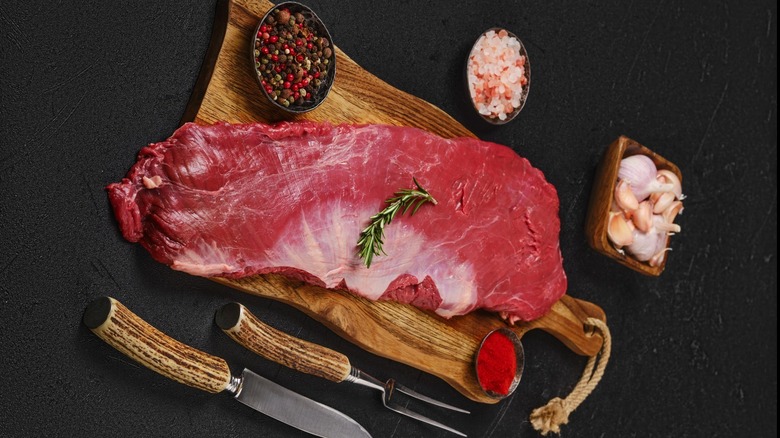
Finding ribeye cap can sometimes take a little effort, but it's worth the hunt. It may be as easy as a trip to (or order from) Costco, where they occasionally carry ribeye chuck. Online retailers are a solid option, but it can be a little pricey. Depending on where you live, a good independent butcher is probably the best bet if you order in advance. You can even buy a whole ribeye roll, and prepare it yourself, which may be pricey at the outside but, ultimately saves time in the end. Whether you buy it or prepare it, ribeye cap is typically rolled tightly into a cylinder, tied with butcher's twine, and sliced into steaks that resemble small filets and ensure even marbling and relative size per steak (once unrolled).
When it comes to cooking, simplicity wins the day. As always, let the meat come to room temperature, then season generously with salt and pepper — the marbling does the heavy lifting on flavor. Because the cap is thinner and richer in fat, it's often best cooked hot and fast in a searing-hot cast iron skillet or super hot grill because you don't want to lose all of that juiciness. Approximately 3 to 4 minutes on each side should be about right, until you get to 125 to 130 degrees Fahrenheit for medium-rare. Let it rest for 5 minutes or a bit longer, and it might just be the best steak you've ever had. If you want to understand everything that makes ribeye special, start by asking your butcher for the chuck end. Your taste buds will thank you.