

How To Pick The Best Steaks At The Grocery Store
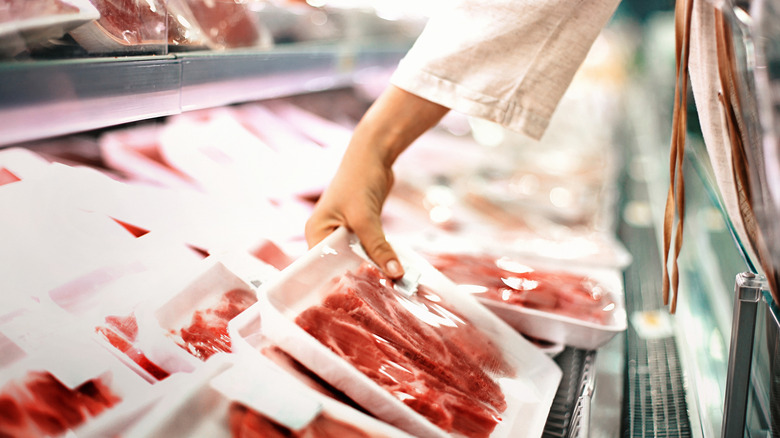
There are countless ways to cook a perfect steak, from grilling over an open flame to searing in a well-seasoned skillet. However, even the most skilled home chef can have a tough time creating magic with a lackluster hunk of meat. Shoppers today are fortunate they have lots of options where steak is concerned, with a variety of cuts and grades available in most grocery stores. And while choosing quality cuts isn't necessarily difficult, it does require a bit of knowledge and foresight.
To ensure your next shopping trip is successful, we put together some no-nonsense tips to help you easily identify the top steak cuts. By evaluating fat distribution, checking the label, and opting for vibrant colors, you can rule out cuts that don't provide optimal freshness and flavor. The size and cut of the steak also matter, particularly when it comes to certain cooking methods. With a careful selection process, many home cooks can replicate the succulent steakhouse experience right in their own kitchens.
Select USDA prime beef when possible
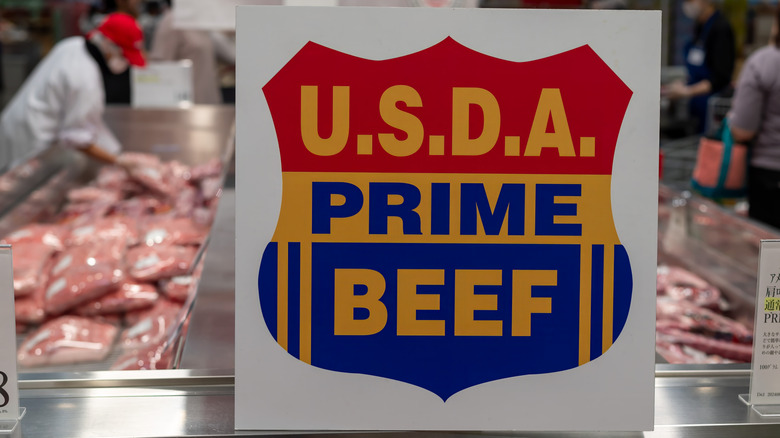
When shopping for the best of the best, knowing the facts about beef grades can help you find the highest-quality steaks. American consumers typically get to choose from three grades: prime, choice, and select. Prime has the most plentiful marbling (aka intramuscular fat), while choice and select come in second and third in terms of fat distribution. Although you can sometimes identify prime beef by assessing the marbling, steaks are also labeled with a USDA shield indicating their grade.
Prime beef does have a few drawbacks, however. It's not quite as accessible as lower-quality cuts since it's estimated that only 10% of beef in America is categorized as prime. That means you may need to visit a specialty butcher shop or order steaks online if you can't find it at your local grocer. Price is another matter altogether, and consumers should expect to pay quite a bit more for the higher grade. Beef costs will naturally vary from place to place, but one online retailer offers a 16-ounce USDA choice ribeye for $39, while the prime ribeye costs $51 for the same size.
Know the difference between intramuscular and intermuscular fat
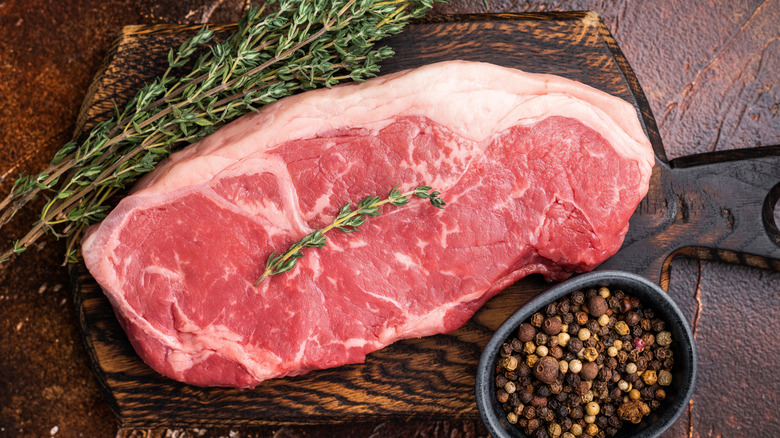
Fat is a major factor when it comes to steak quality but consider that not all fat is good fat. We've all had the misfortune of an overly fatty hunk of beef that required major trimming. Situated between the muscles, intermuscular fat doesn't have much impact on the tastiness of the finished steak. On the other hand, intramuscular fat is dispersed throughout the meat, which is vital to the flavor and texture of the beef. When abundantly marbled beef is subject to high temperatures, the fat melts down and disperses flavor and moisture throughout the steak, essentially basting the meat as it cooks. At the same time, dissolving intramuscular fat creates a softer, more tender texture.
Well-marbled fat is a significant factor in the American beef grading system. Marbling can also be broken down into some sub-categories. Largely considered the most desirable, fine marbling is characterized by an abundance of delicate lines of intramuscular fat consistently spread throughout the meat (think wagyu). With medium marbling, the distribution of fat is not as uniform, and the lines of fat are larger, which can take longer to melt down. Last on the list is coarse marbling, which features large areas of fat inconsistently interspersed throughout the beef and is not as desirable.
Prioritize dark or cherry red coloring over brown
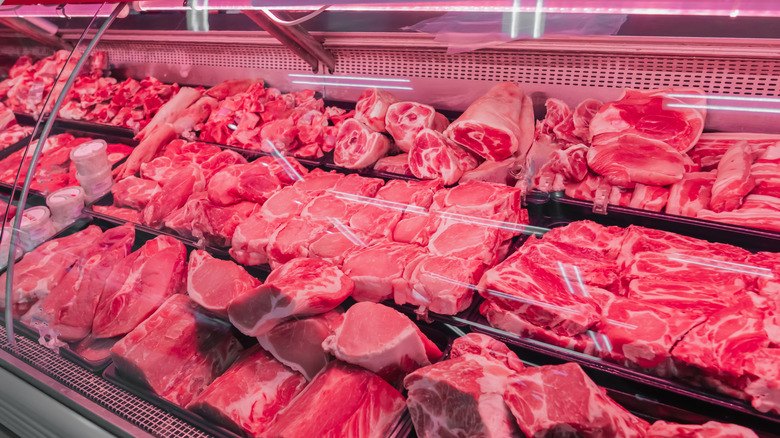
If you've ever been put off by a brown steak in your grocer's freezer, rest assured the meat probably wasn't spoiled. Beef takes on a less appealing color the longer it's exposed to air, a process known as oxidation. While that doesn't mean the meat is unsafe for consumption, it could indicate the steak has been hanging around the store for some time (or wasn't packaged correctly). For peak freshness, look for red steaks in various shades.
First, a bit of clarification: while bright red beef may be the ideal, fresh beef can also be a much deeper red shade or even appear purple. These variations have to do with how steaks are packaged. When beef is vacuum-sealed, the meat will appear much darker than regularly packaged beef. That's because the regular pack allows for more air exposure, which develops the characteristic red shade you see in grocery stores. No matter what, be mindful of the common signs to tell your steak has gone bad, which include slimy textures, nasty aromas, and unappetizing colors.
Choose the best steak for your specific cooking method
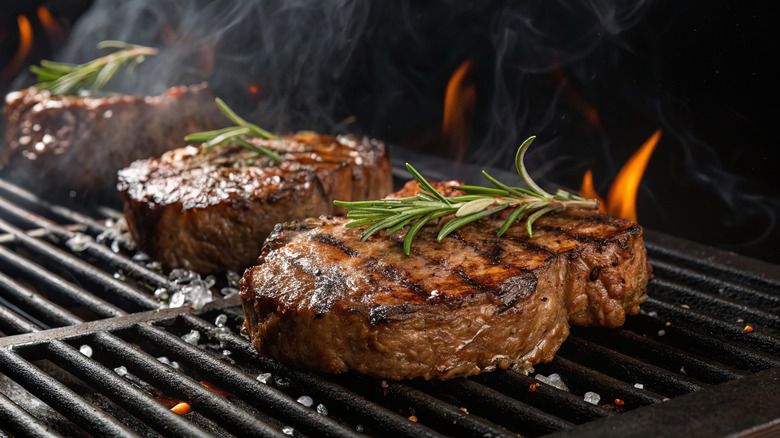
When shopping for meat at the grocer, you've seen beef cuts like round, chuck, rib, loin, and sirloin. These cuts come from different parts of the cow, and their location can dictate things like fat content and toughness. For instance, steaks sourced from the tenderloin (like filet mignon) are the most tender because they're taken from under-used muscles. Conversely, flank steaks come from the underside of the animal, making them far tougher. In fact, flank steaks came in dead last in our ranking of steak cuts from toughest to most tender.
Tenderness is important, but not all cuts of beef are suited to every cooking method. As such, when shopping, you should consider how you'll be cooking the steak. Ribeye, strip steak, and T-bone respond beautifully to open flame and dry heat of grills, while pan-searing is best for a beautifully caramelized outer texture on filet mignon. As for bone-in ribeye, like tomahawk steak, reverse-searing is the way to go. With this method, the steak is cooked over low heat first before being transferred to a much hotter frying pan or grill. The sheer size of these steaks makes even cooking challenging, but reverse searing creates the perfect outer crust while ensuring the interior of the steak has finished cooking.
Stick with thicker cuts of steak
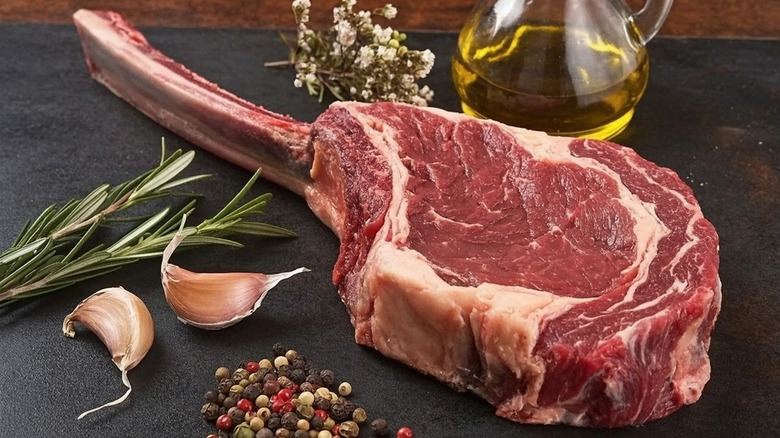
As we've established, cuts of steak have different attributes where toughness and fat content are concerned. Steak also comes in a range of thicknesses, and the heftiness of a piece of beef is another crucial factor to consider during your shopping trip. Aim for cuts that measure at least 1.5 inches in thickness, as these steaks are the most amenable to a wide range of doneness levels. With thinner cuts, you run the risk of cooking the meat completely through when searing it. In this case, you can kiss your dreams of a medium-rare steak goodbye.
Keep in mind optimal thickness also varies according to the steak cut. If you're in the mood for a strip steak or ribeye, a thickness of 1.5 inches will garner the best results. With filet mignon, aim for a thickness of at least 2 inches. Thicknesses of 3 inches and higher usually fall into the category of tomahawk steaks, which may be a bit challenging to prepare. We'd be remiss if we didn't mention that doneness levels can affect food safety, and the USDA recommends all cuts of steak are cooked to 145 degrees Fahrenheit.