

11 Ways To Elevate Store Bought Frosting
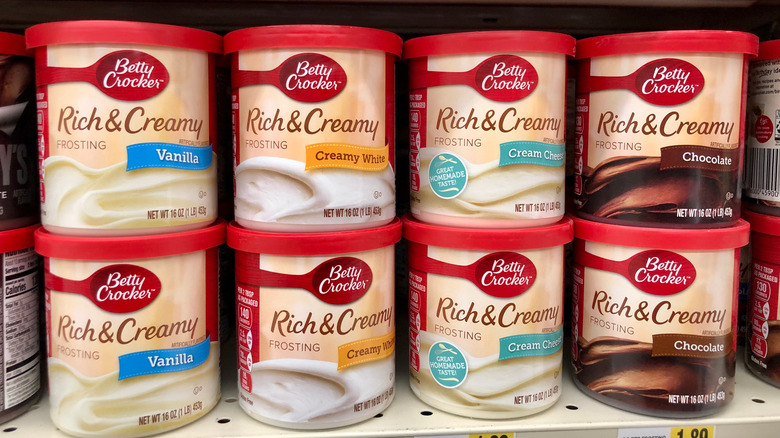
Making a cake complete with luscious frosting entirely from scratch is always satisfying, but sometimes we need to cut corners in the kitchen. Sure, the boxed mixes and cans of frosting from the grocery store could never compete with homemade creations, but for many of us, they're simple and nostalgic. You can also make any can of frosting taste more complex and delicious with just a few simple tweaks. From adding some fun mix-ins to rethinking your decoration techniques and beyond, there are plenty of clever tricks you can use.
Three talented baking experts have shared their professional insights for transforming store-bought frosting. Laurie Shannon is the creator of The Icing Artist and also shares her cake decorating tips on YouTube, where she has garnered close to 5 million subscribers. John Kanell is a New York Times bestselling author, cooking and baking expert, and founder of Preppy Kitchen. Meanwhile, Odette D'Aniello is the co-founder of Dragonfly Cakes, a gourmet Washington bakery previously featured on the "Today" show.
Do you want to know how baking experts would level up store-bought frosting if they weren't making any from scratch? Read on so you can keep their tricks in mind the next time you buy a can of frosting from the store.
Cream cheese, butter, and chocolate sauce can make the frosting richer
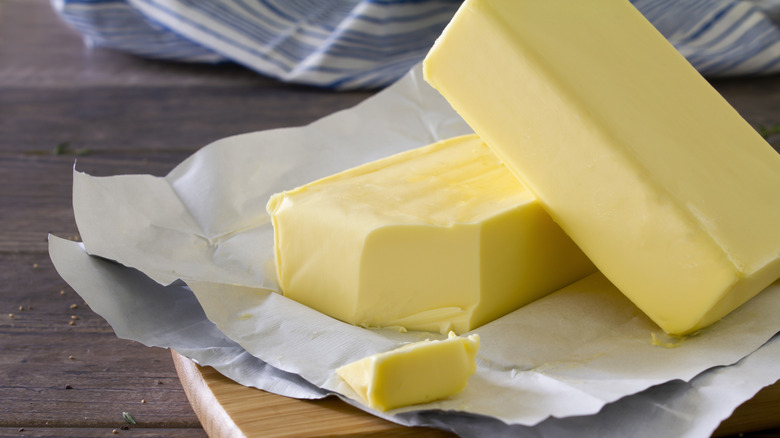
Store-bought frosting tends to be cloyingly sweet, and the texture isn't all that great. One of the simplest yet most effective things you can do to make store-bought frosting taste a bit more homemade is to add some cream cheese or butter. These decadent dairy products can do a lot of heavy lifting. Odette D'Aniello is used to working with her own frosting recipes, but she was previously impressed by experimenting with cream cheese. She says, "When in an emergency and I had to make a cake for a friend while traveling, I bought some store-bought icing and added cream cheese to it to make it fluffier and richer." Once she tasted it, she says it "worked really well."
Many home cooks and professional chefs would agree that butter can instantly make almost any dish taste so much better. The same goes for store-bought frosting. John Kanell says, "If you want to go all in, you can beat in a few tablespoons of softened butter to give it a richer flavor."
Laurie Shannon's favorite addition to make store-bought frosting taste richer is chocolate syrup. She shares, "I love adding in a good chocolate sauce, the thicker the better!" You could try your hand at the viral indulgent chocolate gravy recipe, or you could just use your favorite store-bought chocolate sauce if you're trying to keep things simple.
Extracts, ice cream sauces, and even Kool-Aid mixes can be your friend
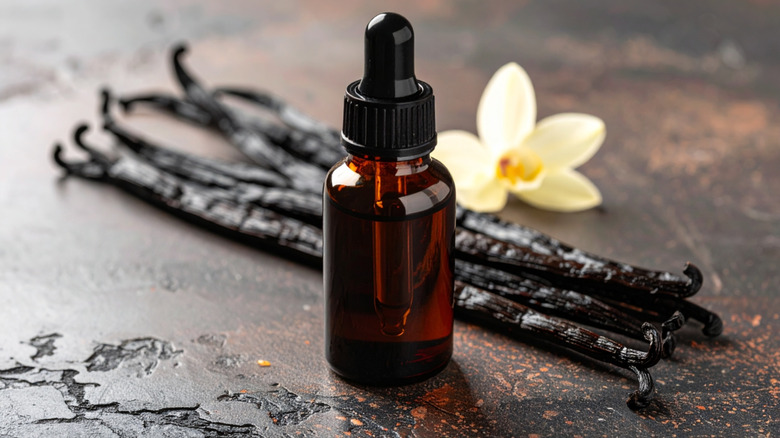
Extracts and flavorings can go a long way in livening up store-bought frosting. Two of John Kanell's favorite extracts are vanilla and almond. He's also a fan of using warm spices like cinnamon and pumpkin pie spice. He says, "Stronger flavors can help hide the store-bought taste!" Odette D'Aniello is also a fan of almond extract. She shares, "Almond or lemon work well. Store-bought icings are heavy with vanilla, so anything that complements that flavor, like brown butter or floral notes like lavender."
Laurie Shannon is the only baking expert who isn't totally in love with extracts. While she uses them in other recipes, she tries to avoid them when working with foods that won't be baked in the oven. She explains, "The chemical taste lingers far too much and doesn't bake off the way it would in something like cupcakes."
So, what does she use instead? "I tend to lean into things like jams, ice cream sauces, or even something as simple as Kool-Aid liquid drink mix," Shannon says. "You'll get an elevated flavor punch without any chemical aftertaste." Kool-Aid may sound funky, but she swears that it'll delight your taste buds. You can try adding a little bit at a time and tasting until you strike that perfect balance. It can also turn lighter frostings into a pretty new hue.
Natural ingredients can help balance the chemical taste
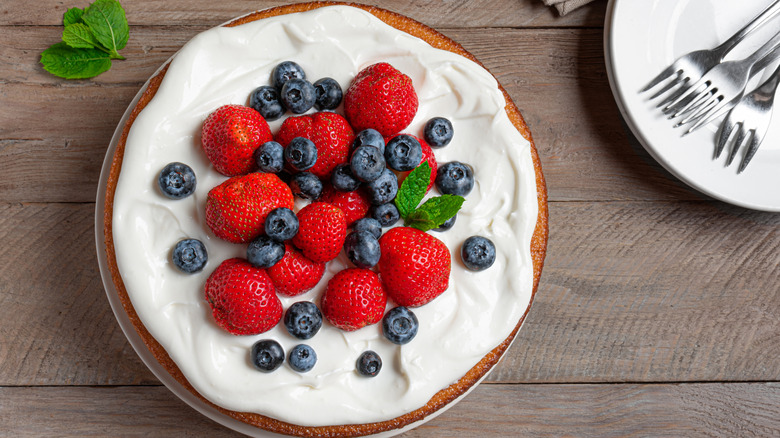
Sometimes, all you need to do is get some help from Mother Nature when you're working with ultra-processed foods. If you want to brighten up your cake, look no further than freshly chopped berries.
"Strawberries, blackberries, and raspberries will give you a hit of fresh flavor as well as some beautiful natural color," John Kanell says. Keep an eye on fresh berries, though, because the juiciness can mess with the consistency of the frosting. Don't worry if things start to look a little suspicious because he has a tip that can save your cake. "Have more powdered sugar on hand in case the berries are extra juicy and make the frosting a bit too soft," Kanell adds.
Our eyes tend to form an impression long before that first bite reaches our taste buds. Kanell explains that another perk of working with fresh fruit is that it will delight your other senses, too. "Seeing, smelling, and/or eating a fresh element like fruit can change the perspective on the whole dessert," he shares. There are plenty of other natural ingredients that can make any store-bought frosting both look and taste more glamorous. Some of Kanell's favorite recommendations are caramel, cocoa powder or melted chocolate, and espresso powder.
Jams add some freshness and zippiness to your frosting
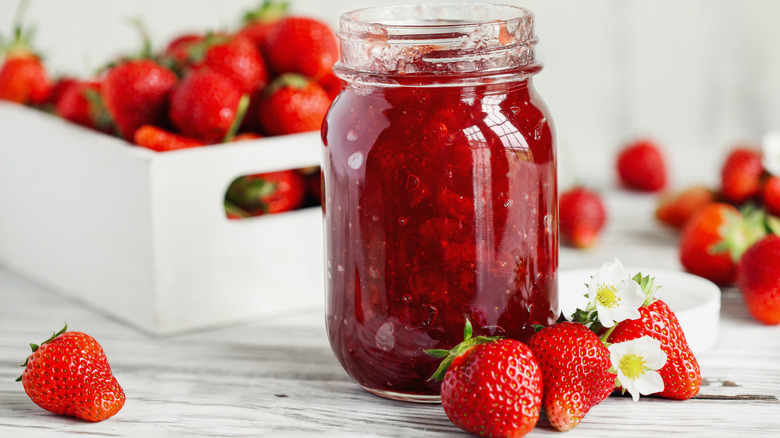
All three of our baking experts are big advocates for adding jam to store-bought frosting. You can still enjoy the freshness of the fruity flavors without the hassle of chopping anything up and worrying about excess moisture. The texture also tends to be nice and thick, so your cake layers won't slip and slide all over the place.
Odette D'Aniello's personal favorite is raspberry since the fruit has a touch of tartness that can provide some much-needed balance to store-bought frosting. She also gets excited about incorporating creamy peanut butter into cakes because the saltiness creates a lovely flavor profile. "Who doesn't like peanut butter icing on chocolate cake?" she mused.
Laurie Shannon notes that home bakers can take two fun approaches to incorporating jams into their cakes. "One method is adding the jam directly into my frosting and stirring it together to fill a cake, the other is adding in a layer of frosting to my cake, then adding a thin layer of jam right on top," she says. "You'll get a little punch of flavor from the separate layers and even be able to see them when you slice the cake."
An electric mixer is a must for making your frosting fluffier
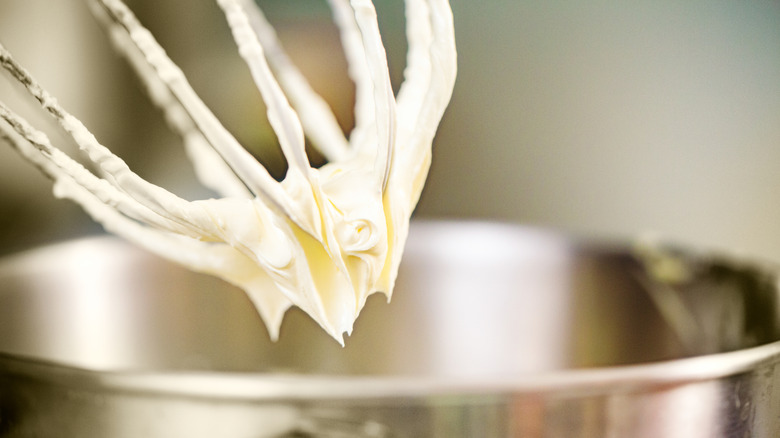
Popular baking brands have caught on to the fact that fluffier frosting is much more magical and easier to work with. That's why it's easier to find whipped versions of store-bought frostings nowadays. However, taking the time to whip the frosting yourself with an electric mixer can garner even better results.
Laurie Shannon is in awe of this basic step. She says, "To make store-bought frosting fluffier, all you need to do is add air. It's amazing what whipping a bit of air into a jar of frosting can do. Whip it up using a hand mixer or stand mixer for 30 to 90 seconds and watch it transform into a fluffy spreadable cloud."
John Kanell also agrees that whipping the frosting is something you should never skip. His key takeaway for home bakers who want their store-bought frosting to look professional is to "beat it to make it fluffy, and add a fresh garnish." Kanell explains that there's another reason why whipping frosting is so important. "Store-bought frosting is much thicker scooped straight out of the tub than homemade frosting, and it can be hard to spread onto soft cake," he says. "If your cake layers are delicate, beat the frosting first or pop the cake layers in the freezer for 15 to 20 minutes to firm up the outside." If you've ever known the sadness and frustration of your frosting ripping your cake apart, then whipping it can spare you a lot of heartache.
Cookies, sprinkles, and other ingredients can enhance the texture
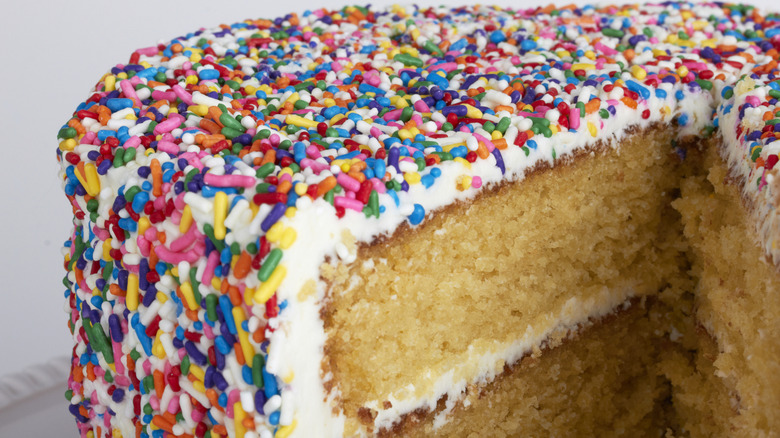
Flavor will always be the most important element of your cakes, but you should also pay attention to the texture. A soft, melt-in-your-mouth cake is reliably satisfying, but it's nice to switch things up every now and then. Chopped nuts, graham crackers, and candies are just a few ingredients that can make your frosting more exciting. When discussing her favorite texture enhancers, Odette D'Aniello says, "Sprinkles for an instant rainbow effect are always nice and crushed cookies for a cookies and cream effect."
Shannon is also enthusiastic about frosting mix-ins. "Oreos are a must for me as a great texture rich mix-in," she says. While it's surprisingly easy to make Oreo cake from scratch, there's no doubt that folding some crushed Oreo cookies into store-bought frosting will take things to the next level. Shannon's other favorite additions are butterscotch and peanut butter baking chips, as well as crushed chocolate bars. "And don't get me started on crunchy Biscoff butter," she adds.
It's always good to feel comfortable with experimenting in the kitchen. Some results will be disappointing, but it's also the only way you'll discover surprisingly tasty flavor combinations. Shannon knows this for a fact, stating that "the wild-card ingredient I never would have expected to work in frosting is potato chips. Don't fold them in, just sprinkle them on top of each layer of frosting for a delicious, salty crunch."
Salt and citrus ensure your frosting isn't too sweet
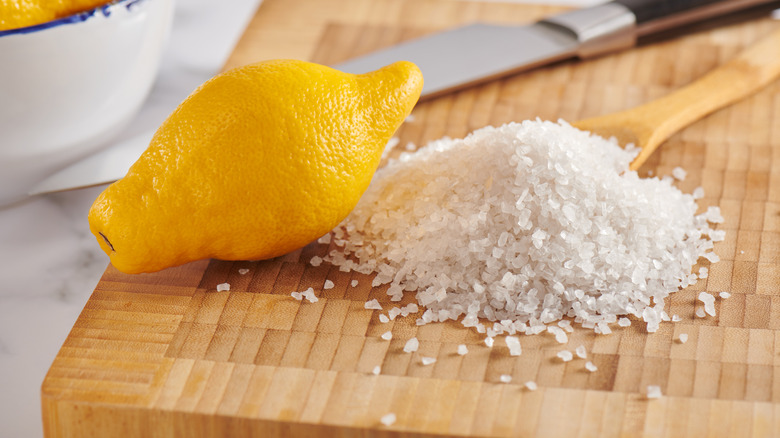
Have you ever felt like you need to stop eating a cake after a few bites because the sweetness is too over the top? At first, that sugar hits the spot, but then the saccharine flavor becomes monotonous. Odette D'Aniello wants home bakers to know that there's a brilliant solution to this issue. "The flat sweetness of store-bought icing can be evened out with salt or citrus," she says.
John Kanell also urges home bakers to get out their zesters. He explains, "Citrus zest can also add a vibrant flavor." There's a good reason to hold onto your leftover lemon peels because they'll hold up well in your freezer. You can zest the peels whenever you want to brighten a dish or dessert without needing fresh fruit on hand.
Similarly, Laurie Shannon is in love with both citrus juice and zest. She says, "I love to lean into any kind of citrus like lemon, lime, or grapefruit. Adding in a bit of zest with the citrus juice really gives a punch of fresh flavor." For a touch of something salty, one of Shannon's go-to ingredients is crushed pretzels because they build the texture of the frosting. They also pair wonderfully with chocolate frosting, in particular. Shannon also recommends that home bakers don't overlook bitter ingredients for balance. "Dark chocolate is my best friend," she says. "It adds that bitter balance while also delivering a decadent impact."
Gel food coloring is superior to liquid
If you're a fan of baking competitions on TV, then you know that strange feeling that washes over you when someone's impressive cake starts sliding and falling apart. Of course, you feel bad for the contestant, but you're also transfixed by the drama. That's why we love revisiting iconic baking fails, such as the wildest mishaps from "Spring Baking Championship."
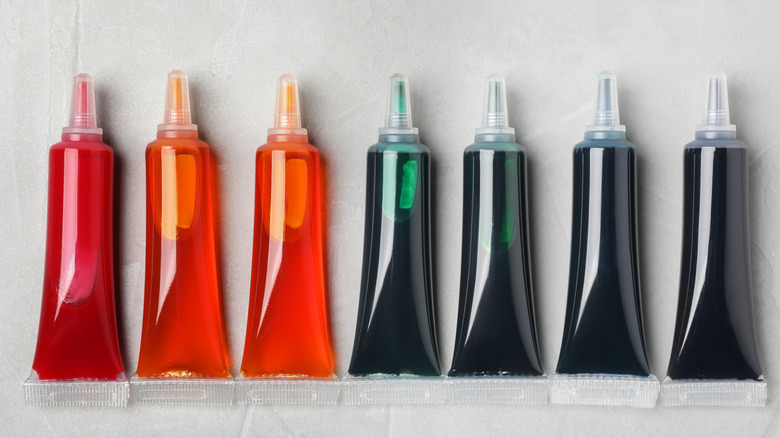
One thing you can do to ensure your cake doesn't face-plant onto the floor is to exclusively use oil-based food coloring. Odette D'Aniello says that this boils down to basic food science. "Always use oil-based colors, flavors, and inclusions," she explains. "These shortening-based frostings do not blend well with anything watery."
Don't worry if oil-based food coloring isn't in your pantry. John Kanell says that you can also get great results with gel food coloring. "If you want to color the frosting, avoid liquid food coloring," he warns, because "the frosting can slide off the cake. I prefer gel food coloring — it's thicker and more concentrated, so you need less." If you're ever worried about the consistency of your frosting, he says that cream and powdered sugar are all you need to prevent any accidents. "Adding more powdered sugar will thicken the frosting," he says. "If you want a more slack icing, you can mix in a tablespoon of cream at a time until the desired consistency is reached. Use an electric mixer to mix in both!"
Some ingredients and techniques can ruin your frosting, so avoid them
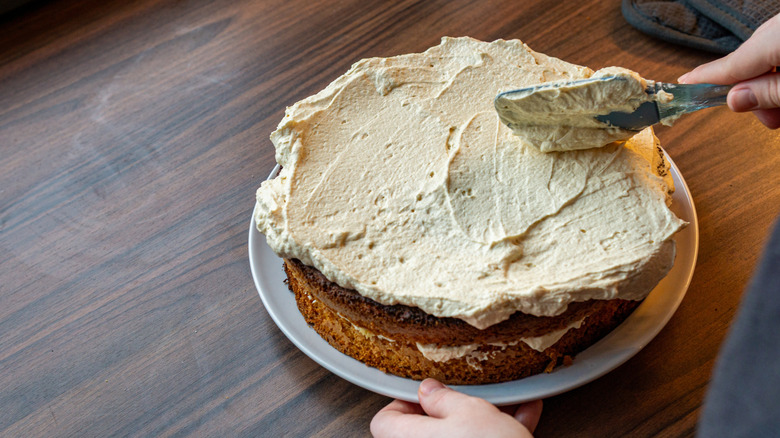
Struggling to get all the frosting out of the can is frustrating enough, let alone trying to spread frosting onto a cake that simply doesn't want to cooperate. If you have any leftover frosting in the fridge from previous baking projects, it's even harder to work with since it's so stiff.
Laurie Shannon says it's best to let the frosting come to room temperature before working with it. However, both she and Odette D'Aniello give home bakers the go-ahead to use the microwave with caution. They both agreed that bakers should start with 10 seconds. An additional 10 seconds may be helpful, but you definitely don't want to go overboard, as too much heat will destroy the frosting.
D'Aniello also warns home bakers against using a heavy hand with watery fruits, flavors, and colors. Shannon warned against too much water as well, and also mentioned excessive acidity. When working with temperamental ingredients like extracts or citrus, go slow and consider doing a small test batch. "I can't tell you how many times I've had to run to the store over ruined frosting that could have been avoided if I had just tested the ingredients together first in a small batch," Shannon says.
John Kanell's professional insight is to avoid skipping the steps bakers take when making homemade cakes. "Treat it like it's not store-bought," he says. "For example, crumb coat your cakes so the finished frosting stays smooth and clean."
Complementary cake flavors can help the icing shine
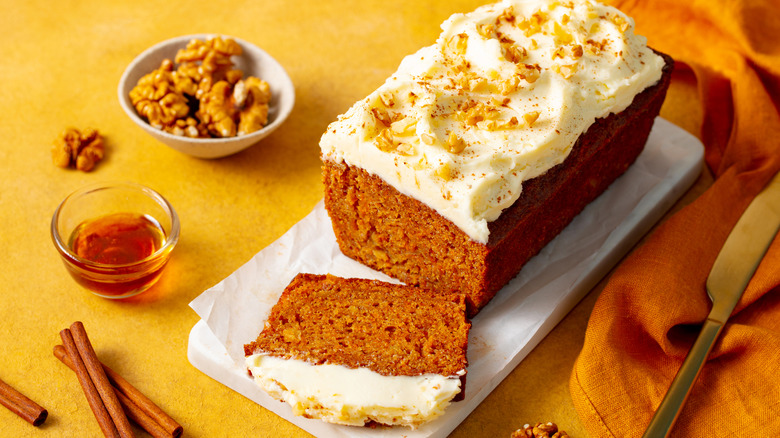
Many of us have spread store-bought chocolate frosting onto a classic chocolate cake and funfetti frosting onto a funfetti cake. This symmetry guarantees that there won't be any unpleasant surprises when you taste the cake. However, there are plenty of other spectacular cake-and-frosting pairings that have the stamp of approval from baking experts. "I am personally a big fan of a rich chocolate cake with a Biscoff flavored frosting," Laurie Shannon says. "If you haven't tried that combination yet, you're really missing out on life!"
Lots of flavor combinations came to Odette D'Aniello's mind: "Chocolate and raspberry. Strawberry and lemon. Banana and brown butter. Carrot and cream cheese. Pineapple and coconut." Meanwhile, John Kanell's primary concern for home bakers is to avoid any unpleasant and unnatural flavors in store-bought icing. If you're debating about which frosting to choose in the baking aisle, he believes that chocolate is the way to go. He explains, "Chocolate is the safest option. You can add more chocolate to the icing itself and not have to deal with the synthetic flavor of imitation vanilla."
Professional assembly and decoration tricks give you stunning results
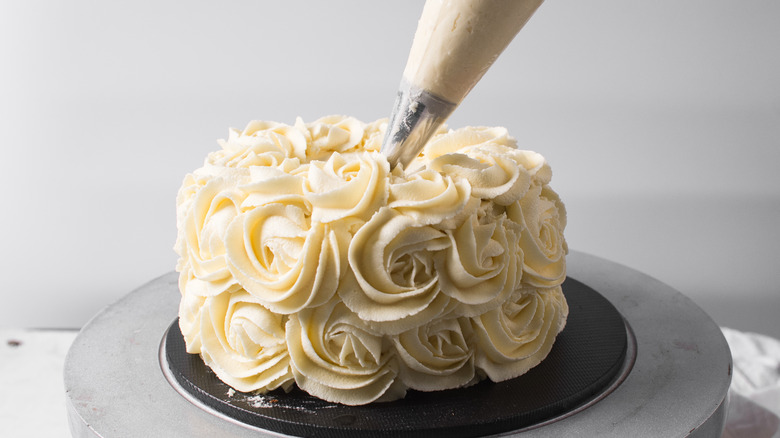
With thoughtful assembly and decoration, any store-bought ingredients can look gourmet. To make your job easier, Laurie Shannon recommends chilling your cake and using store-bought frosting that's been microwaved for 10 seconds and whipped.
John Kanell loves playing with piping tips for an amazing finish. "I have a few favorite piping tips I use over and over for my desserts," he shares. "A small and medium open and closed star tip will do almost everything you need. Once you get more comfortable, add more to your collection and expand your decorating horizons. A petal tip is really fun for flowers." There's an easy trick to piping cake like an expert, but home bakers will still need plenty of practice. If your piping skills aren't yet honed, Kanell says the right garnishes can make your cake look more delicate. "Fresh berries, passion fruit pulp, stemmed cherries, edible flowers, chocolate curls, toasted coconut — so many options!" he says.
If you're worried about wrestling with your frosting, Odette D'Aniello says that adding butter can make dense shortening-based frostings easier to spread. She elaborates, "Also, it's hard to make that kind of texture smooth, so a rough ice finish garnished with fresh flowers gives it a rustic look that a lot of people love."