

Rump Vs Chuck Roast: The Differences To Know Before Firing Up The Slow Cooker
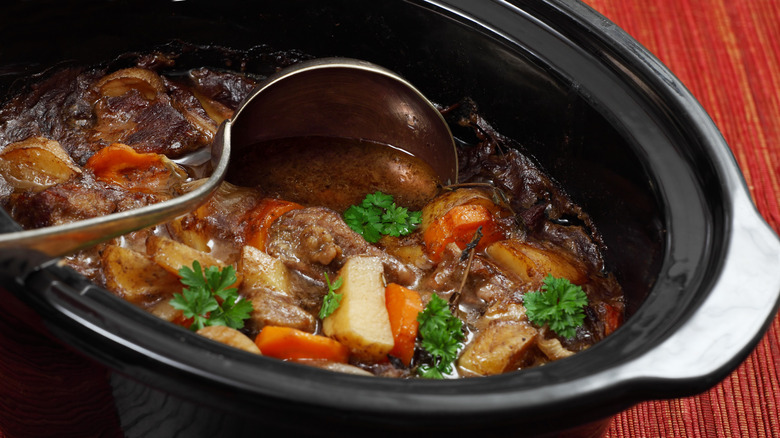
Many cuts of beef, pork, and poultry fare well in a slow cooker, but rump roast and chuck roast are both excellent choices for a slow-cooked meal. Both are rather tough cuts of meat, high in firm muscle tissue, and that's the type of cut that works well in a slow cooker. With such cuts, the good news is they tend to be cheaper. The bad news is they need to be prepared in specific ways to tenderize them over the cooking process.
Rump roast is leaner, so it's prone to dryness if it's not cooked with enough liquid. Meanwhile, chuck roast has more fat marbling, so it requires less liquid since the fat keeps the meat more moist and flavorful. The rump roast end result works best shredded, while chuck roast easily falls apart into chunks. Slow cooking is important here: Both take a long time to cook into a beautifully soft, juicy result, but chuck roast often takes longer. Both cuts also contain large amounts of collagen, a protein that slowly breaks down into gelatin when cooked at a low temperature. The ideal range is between 160 and 205 degrees Fahrenheit, and slow cookers don't tend to get above 200 degrees Fahrenheit.
Rump roast is lean and a little more tender
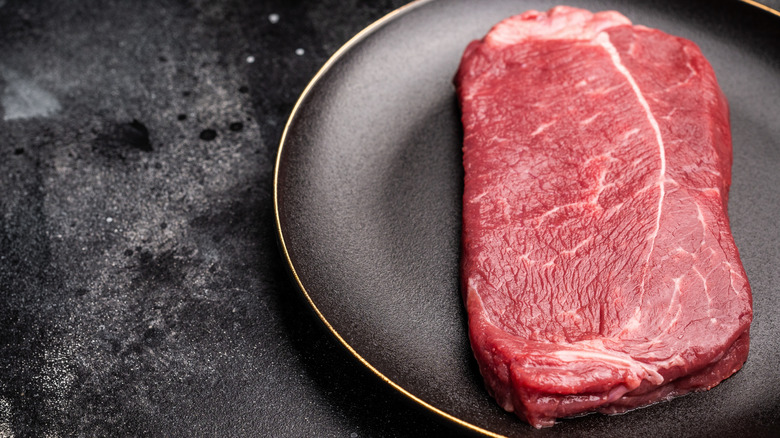
Rump roast comes from, well, the rump, where the cow's hind legs meet its body. A cow uses the muscles here to walk, so there's not much fat and it's pretty tough. Rump roast can also be called bottom round. It's similar in its uses to top round, though typically less expensive. Compared to chuck roast, it's leaner, but more tender.
Rump roast makes a perfect beef stew since it has an intensely beefy flavor that transfers well to a broth or stock. When braised in a slow cooker, rump roast also shreds easily, making it ideal for sandwiches, tacos, or any other application for shredded beef. To think outside the slow cooker for a moment, it's a great cut for roast beef if cooked in the oven. Just be ready to set aside some serious time for a rump roast. Cooking on low, it should take between eight and 10 hours. In a slow cooker set to high, it takes about half that time, but it may not come out as tender.
Chuck roast has more fat, so it's great for saucy dishes
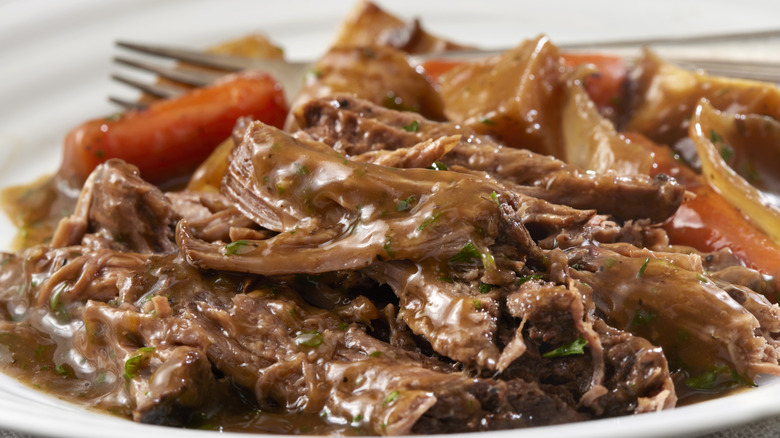
Chuck roast is basically the equivalent of rump roast, but this cut comes from where the front legs connect to the cow's body and neck, so again, it has a lot of tough muscle tissue. A cow uses the muscles in this area both to walk around, and to support itself standing up. So, here, too, the meat should be cooked low and slow to tenderize it. However, this cut does have a bit more fat than rump roast, and that helps add richness to sauces.
Pot roast — which refers to the cooking method, not the actual cut of beef — is most often made with chuck roast since the lightly marbled, but fairly lean, beef falls apart into chunks easily when braised in a slow cooker. Plus, as the collagen breaks down into gelatin, it helps give the braising liquid both flavor and better body. When the end result needs to be moist, and a little more fat isn't a problem, chuck roast is ideal; think birria, French dips, or even a beef pot pie.
Like rump roast, this isn't something to throw together at the last minute. On low, chuck roast typically takes eight to 10 hours (or longer), or six to seven hours on high. If the meat isn't fall-apart tender after this time, simply let it cook longer. It's hard to overcook meat like this if there's enough liquid and the temperature is low enough.