

What, Exactly, Is Xylitol And Can You Use It As A Sugar Substitute?
Sugar is a sneaky ingredient: Most of us are well aware that our favorite coffee drinks or sweet treats are chock full of it, but it often hides in unexpected places, like pasta sauce and bread. There are two options to manage sugar consumption: Cut it out and the foods that contain it, or replace sugar with an alternative. You've likely heard of sugar replacements like stevia and monkfruit, but another one to consider is xylitol.
Xylitol may sound familiar because chances are, you've seen it on the ingredient list on a gum package or tube of toothpaste. It wouldn't make sense to put sugar into chewing gum, as sugar causes cavities in teeth. But xylitol does the opposite of sugar: It can reduce the risk of tooth decay and cavities. It is also a plant-derived option that is naturally sugar-free, but still provides a sweet flavor without causing a blood sugar spike.
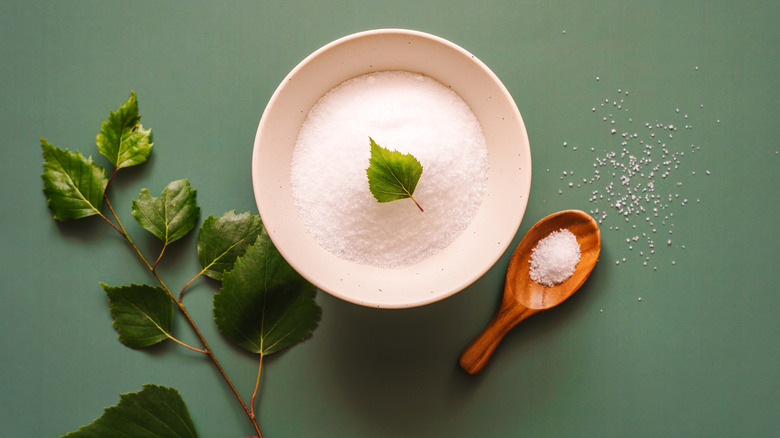
Different types of fruits and vegetables, as well as the bark of birch trees, contain small amounts of xylitol. For the commercial production of xylitol, it is most commonly extracted from corn cobs, wood pulp, or coconuts. The extract is considered a sugar alcohol, which means that it has a structure of both sugar and alcohol molecules, and is typically made by hydrogenating the extracted sugars using pressure. The final result is a white grain powder, which is whiter and finer than regular white cane sugar.
How xylitol can be used as a sugar substitute

One of the biggest benefits of xylitol is that it is just as sweet as regular cane sugar, but it has half the calories. It can be used in a 1:1 ratio to sugar, making it an exact replacement in baking. And it can be used to sweeten your coffee or tea, using the same amount of sugar you might normally add. However, for any baked good recipes that use yeast, avoid using xylitol; as a natural anti-fungal, it prevents yeast from activating, and therefore, something like bread won't rise correctly.
With its bright white color, it won't change the color of what you add it to, like tea or cakes. That said, sugar helps create a golden-brown color in baked goods as it cooks and caramelizes, but xylitol will not provide this, so keep this in mind for recipes like cookies or caramel. Adding something like molasses to pancakes provides the perfect brown color, so if you still want the darker color in your xylitol-sweetened baked goods, a teaspoon or two of molasses can be added for every one cup of xylitol used.
Texture-wise, it can sometimes be slightly grainy, so for a powdered sugar replacement, it can be ground in a blender or food processor. When used in cakes or sweet breads that have more liquid in the batter, xylitol grains can actually absorb liquid, so adding slightly more liquid can prevent dry baked goods.