

The Bird That Went From Dinner Staple To Protected Species
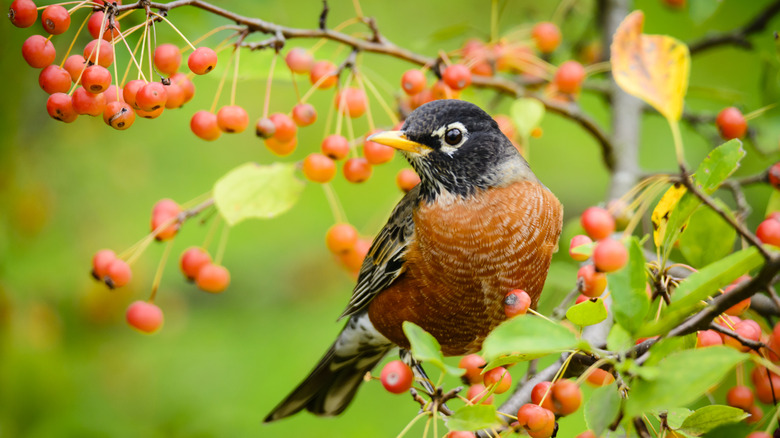
When you see a cute little robin, it may evoke a nostalgic association with spring arriving. But not that long ago these messengers of the new season were once hunted and eaten in the United States. It all started when European settlers arrived and saw birds that reminded them of the red-breasted thrushes they called robins in Europe. This gave way to the name of the American Robin (which is classified as a flycatcher instead of a thrush). The songbirds were a very opportune hunt back then, especially in winter when flocks would cover berry bushes and grass grains.
While you can find evidence of folks eating these birds during the mid and late 1800s, this didn't last long in North America. One reason is that people came to associate consuming robins, crows, and other migratory songbirds with being poor. Moreover, some of the more well-off members of society saw robins as beneficial. Along with many other unusual foods people used to eat, these birds fell off the menu. The U.S. also banned people from eating this once-desired source of protein in the 1900s. It marked a win for public health and animal welfare.
Robin pie went from popular to forbidden
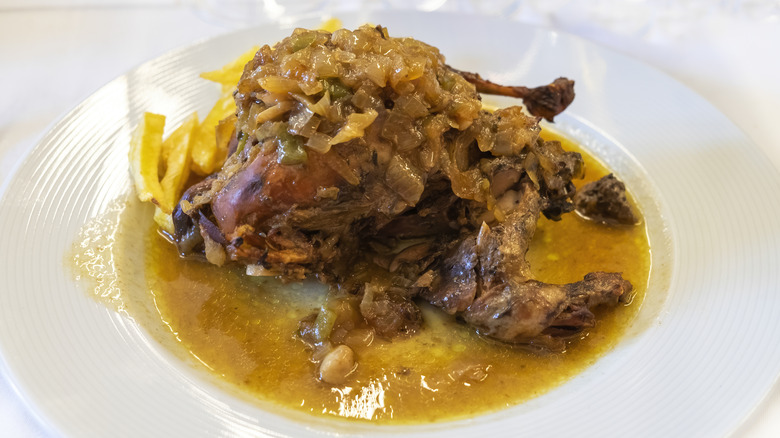
Back when people still consumed this bird, they commonly prepared it in a meat pie. A recipe appeared in the 1890 work "Wehman's Cook Book: A Complete Collection of Valuable Recipes Suited to Every Household and All Tastes." It described cooking about a dozen robins over a bacon and beef base with a pie crust topping and a self making gravy including herbs to fill the pie. The dish was served hot.
Such pies are no longer legal, thanks to the Migratory Bird Treaty Act of 1918. For much of Europe, comparable protections are enforced under the Convention on the Conservation of European Wildlife and Natural Habitats (the Bern Convention of 1979). But it shouldn't take a treaty to convince the public not to consume wild birds. They are so dependent on living off the byproducts of humanity that they are potentially full of nasty parasites and micro plastics. Such birds likely aren't safe to eat. Even if you found a place claiming to serve robin, that would indicate it's selling a banned food obtained through poaching.