

Does Caviar Go Bad? What You Need To Know
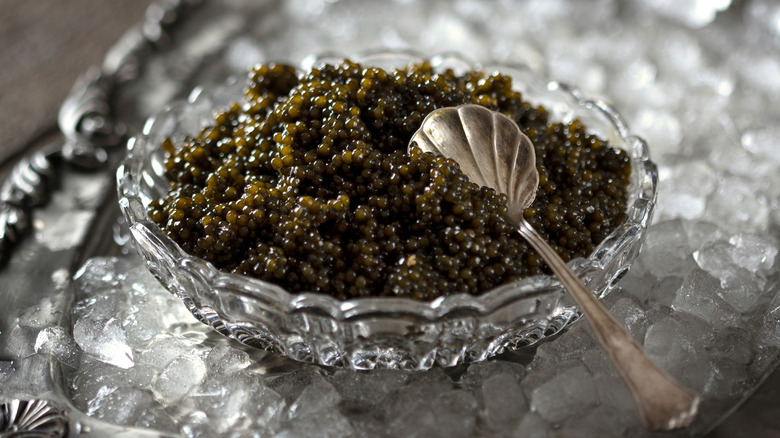
We may receive a commission on purchases made from links.
Caviar is the quintessential luxury food. It's a gourmet ingredient not typically found in everyday cooking, although there are ways to get great caviar without breaking the bank, like opting for varieties other than sturgeon. Still, caviar is delicate and demanding of respect. Even if you're not buying Strottarga Bianco caviar, which can cost over $100,000 per kilogram, it's only logical that you'd want to get the most out of your purchase. That's why it's important to eat your caviar before it spoils.
Yes, caviar does go bad, but as for the question of when? There's no single answer that goes for all types of caviar. Fresh caviar sold in a tin will stay fresh for up to six weeks if it isn't opened. Pasteurized caviar, which has a firm texture, remains shelf-stable for about six months if unopened. Once you open the can, either type of caviar will begin to go bad after about three days.
Keeping your caviar at the proper temperature is key to retaining its briny, crisp taste. The best way to store caviar that's been opened is in the coldest part of the refrigerator. Between 28 and 32 degrees Fahrenheit is best (the rest of your refrigerator is probably 35 to 40 degrees, depending on your settings). We freeze all types of seafood, so it might be tempting to throw caviar in the freezer, but that's a bad idea. It'll cause the caviar to lose its textural pop.
Sure signs your caviar has gone bad
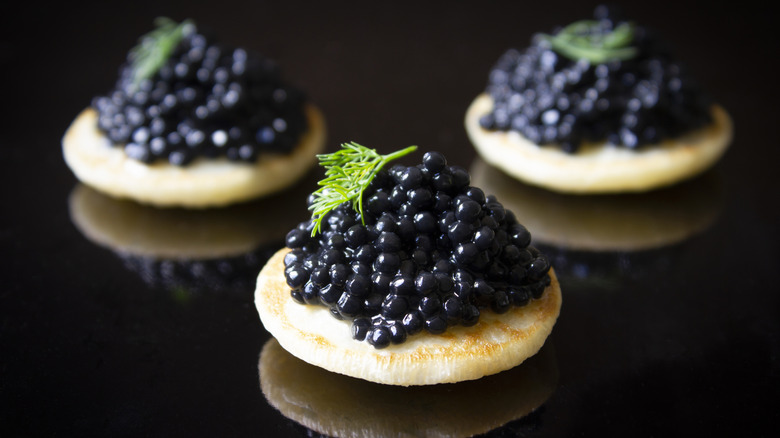
Caviar is made with curing salt, which slows down but does not prevent bacterial growth even in an unopened tin. An early sign that caviar has declined in quality is the loss of its signature taste and texture. Eventually, it will become unsafe to eat. Air exposure accelerates the oxidation process within the caviar, leading to spoilage. Wrapping an unsealed container of caviar in plastic wrap before storing it in the fridge can hasten oxidation. Determining whether your caviar has gone bad is similar to checking other food products for spoilage, but you there are specific characteristics to look for.
If the tin appears bloated, the caviar has gone bad. Another visual indicator of spoiled caviar is discoloration. Now, take a whiff. Caviar should smell mildly briny, not fishy. As you take your first bites, note the texture and taste. If the roe doesn't pop as you bite it, seems mushy, or has a bitter or funky flavor, toss it.
If you're still unsure, you can use the same technique as checking eggs (caviar is fish eggs after all). Take a small number of roe and drop them into a cup of water. They should gently sink down to the bottom of the cup. If they float, they're past their prime. Unfortunately, if some of the caviar in a container is spoiled, it's safest to throw all of it out rather than try to pick out the good eggs.