

For The Best Braised Cabbage Add This Powerhouse Liquid To Your Pan
We may receive a commission on purchases made from links.
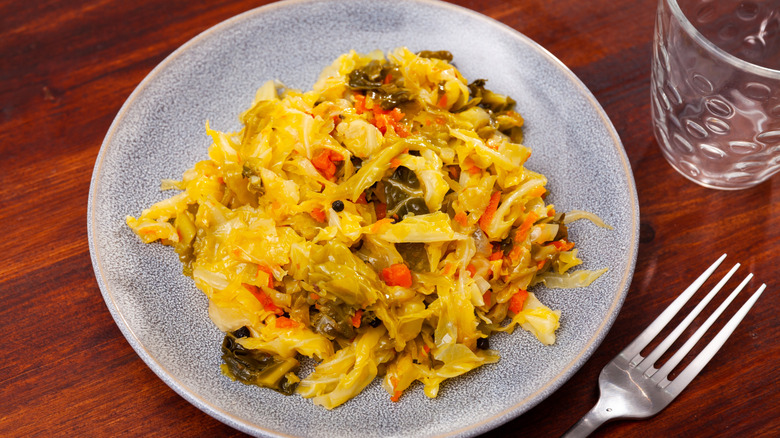
One of the oldest known vegetables to be harvested and consumed by humans is cabbage, and our relationship to it dates back more than 4,000 years. Cabbage works well as a supporting side or a prominent feature in a main dish (like a good tomato-based cabbage soup). To amp up cabbage's flavor, try braising — the technique of slow simmering in liquid that's known for producing tender, delicious results. To really knock braised cabbage out of the park, fill your deep braising pan with a mixture that includes the powerhouse liquid: apple cider vinegar.
ACV is noted for a myriad of taste and health benefits. Sprinkling ACV on mashed potatoes creates such a standout finishing touch that we included it among our 19 tips for cooking veggies you'll wish you knew sooner. When we asked a dietitian about the benefits of drinking apple cider vinegar, we learned that a modest amount can help improve a slow metabolism (however, it shouldn't be considered a serious method on its own for weight loss, and too much ACV can be harmful).
When selecting an ACV for your braised cabbage dish, brands that are certified organic, raw, and unfiltered are best for cooking. Opt for a variety with "organic apple cider vinegar" (and a small amount of water) listed as the only ingredients to avoid artificial coloring and unwanted sugars. To achieve a balanced flavor blend that's both fruity and acidic, the ACV should be diluted to 5% acidity.
Tips for braising cabbage in apple cider vinegar and how to make it at home
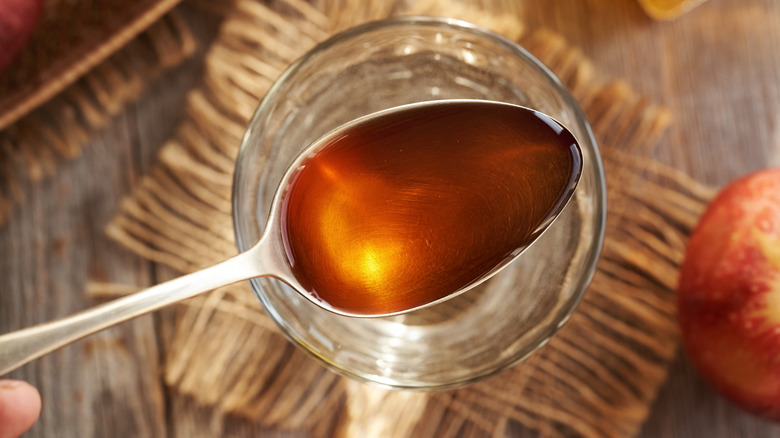
When braising cabbage, you can experiment with ACV by combining it with other cooking liquids (stock, water, wine, etc) to build depth of flavor. On r/cookingtonight, one Reddit user shared a photo of a homemade dish featuring shaved red cabbage and chopped onion braised in ½ cup of ACV, ½ cup of water, and 3 tablespoons of date syrup. In a r/Cooking thread, another user shared a German variation of a braised red cabbage recipe made with butter, ACV, a splash of balsamic vinegar, and a finishing of brown sugar and nutmeg.
You can even make ACV at home in a few simple steps. First, fill one or more containers about ¾ full with apple cider or raw, unfiltered apple juice. Leave the containers uncovered and store them in a warm area away from direct sunlight (at a temperature between 60 and 80 degrees Fahrenheit), stirring often. After three to four weeks, the fermenting cider should develop a vinegar smell. When the smell appears, stir and taste the liquid over the course of a few days until it reaches a pronounced ACV flavor. Note: the vinegar will continue to ferment and eventually spoil unless the bacterial substance known as "the mother" is removed by distilling the liquid through filter paper.