

3 Mexican Dishes Cowboys Enjoyed Back In The Old West
We may receive a commission on purchases made from links.
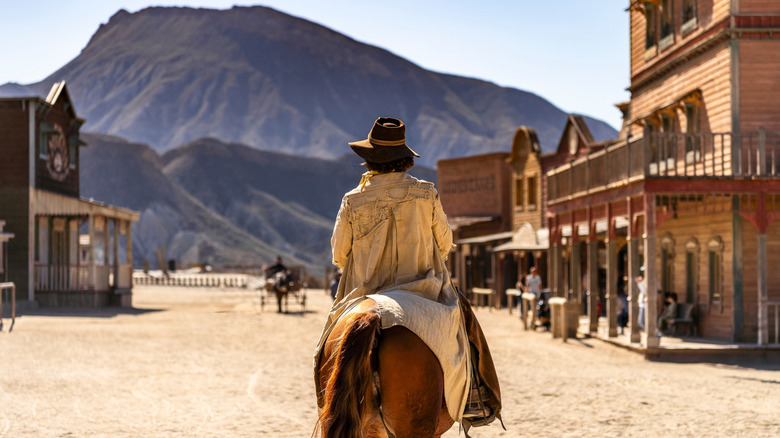
In the 19th century, American cowboys pushing the boundaries and exploring the Old West were met by vaqueros, natives of modern-day Mexico who were trained by Spanish settlers to lasso cattle and drive herds on horseback. Through Western expansion, particularly in Texas, vaqueros blended with American cowboys. They worked in close proximity on ranches, and their food cultures began to mix, creating the Tex-Mex cuisine we know today (a regional culinary style developed by people of Mexican descent living in modern-day Texas). The foods vaqueros and American cowboys ate were simple. Items packed with nutrients (or caffeine) fueled their long days — coffee, beef (often smoked and made into jerky), and dried fruit. In time, blended groups of vaqueros and cowboys adopted entire meals with distinct Mexican influence — dishes like huevos rancheros, carne guisada, and charros.
These meals were made possible by the chuckwagon, an 1860's invention that could be expanded, similar to a tailgate. A chuckwagon could carry enough equipment and supplies to feed entire crews of cattle drivers (about 15 cowboys, tasked with herding 1,000 cattle and 100 horses). Cooks, or "cookies," maintained the chuckwagon on the trail and prepared daily meals. Tools like dutch ovens allowed for larger portions, and because there were many mouths to feed, stews and bean-based mixtures were the norm. We're breaking down these popular meals and exploring both their Mexican roots and their modern adaptations.
Huevos rancheros
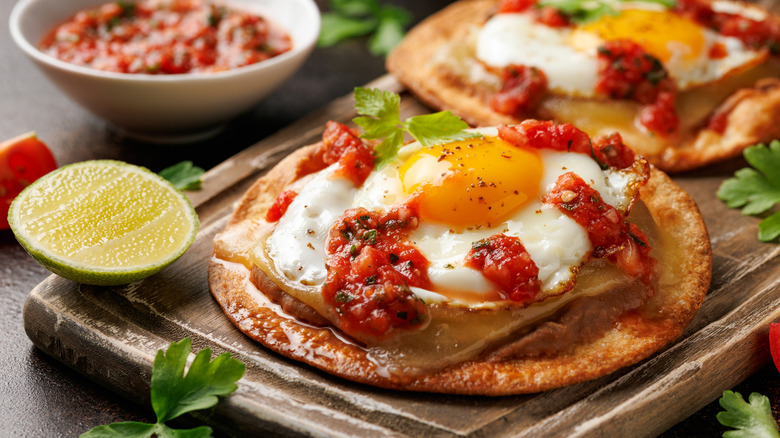
According to Way Out West, most cowboys ate their midday meal on the job, opting for snack-sized bites they could carry in their saddlebags. Breakfast and supper were larger, shared meals, and huevos rancheros were commonly served in the morning. Huevos rancheros translates to "rancher's eggs." It originated on rural farms and ranches in Northern Mexico and spread to the U.S. by way of San Antonio, Texas. Early variations of the dish could also be found in Arizona, California, and New Mexico. The original huevos rancheros included tortillas, eggs, and beans. Occasionally, potatoes or meat were added, and the whole mixture was covered in salsa.
As huevos rancheros' popularity grew, cooks experimented with adding ingredients like rice, sliced avocado, sour cream, and melted cheese. Modern takes offer creative adaptations, like huevos rancheros breakfast bowls made with a bed of cheesy polenta, and the brunch favorite, cheesy huevos rancheros casserole, which swaps out the Old West dutch oven for a conventional oven.
A Reddit user on r/Cooking offered a huevos rancheros cooking tip of pouring salsa around the cheese-topped eggs and covering the pan, noting that the liquid in the salsa has a steaming effect on the eggs. On another thread of the same subreddit, a user suggested cutting corn tortillas into triangles, frying them, and topping them with salt to serve the huevos rancheros over homemade chips.
Carne guisada
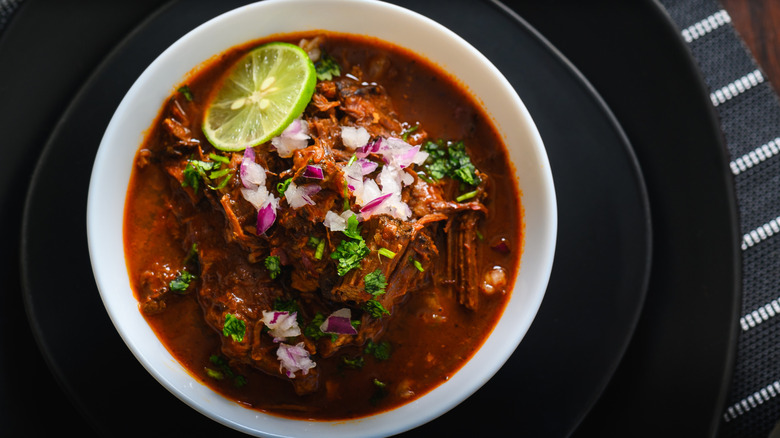
A surplus of beef came with the nature of driving cattle across the frontier, and chuckwagon cooks used it as often as they could. Simmering beef in a large pot with herbs, onions, and chiles foraged on the frontier and preserved in vinegar was a popular technique for creating a thick beef stew, or "carne guisada," as it was called in Mexico. If fresh beef ran low on the long journey, the cooks made a variation of the stew with sun-dried beef jerky, which was called "guidado de carne seca." The added ingredients varied widely due to what was available on the trail. For a little added texture, cowboys often crumbled hard biscuits made from water, flour, and salt into the stew, or ate it with tortillas.
Today's carne guisada interpretations reflect the many ways it has evolved since the Old West cattle drives. With access to refrigeration, modern meat processing, and a wider selection of vegetables and seasonings, many recipes include tomato sauce or swap chunks of fresh beef or jerky with ground beef. A carne guisada recipe posted on Reddit is served over mashed sweet potatoes — an item not known to be common in the Old West. Another revised South Texas carne guisada recipe adds Modelo Mexican lager for flavor, pairing it with rice and refried pinto beans.
Charro beans
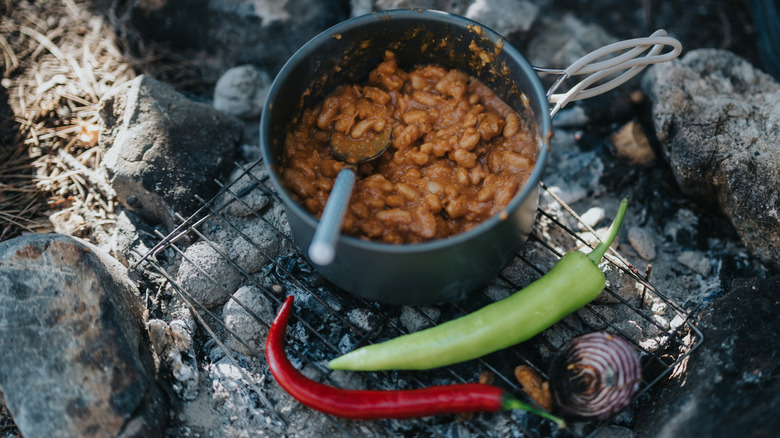
In addition to beef sourced from the herd, cowboys in the Old West relied on beans for protein. As a curator from the Briscoe Western Art Museum explained, "Certainly, vaquero cooking then as now was heavily influenced by indigenous Native ingredients, like the Anasazi bean, from which the Pinto bean is descended from." Chuckwagon cooks would add spices, chopped vegetables, and salted pork or bacon to a pot of beans, creating the dish vaqueros knew as "charro" beans. "Charro" is the term for a Mexican horseman or cowboy. As this dish spread through America, it became known as "cowboy beans." When chuckwagon cooks had access to beer, they'd add that to the beans to create a variation called "frijoles borrachos" (drunken beans).
By swapping the Old West campfire cauldron for a modern crock pot, you can try charro at home with a slow cooker cowboy beans recipe. The recipe calls for molasses and brown sugar, both of which 19th-century cowboys accessed and used to sweeten their beans; however, the modern touch with this recipe comes courtesy of store-bought BBQ sauce. A Reddit user who shared their favorite recipe for baked bean casserole on a r/BBQ thread stated, "This recipe took me from always ignoring the beans at the cookout to them being one of my favorites."