

11 Tips For A Tender, Flavorful Slow Cooker Pot Roast
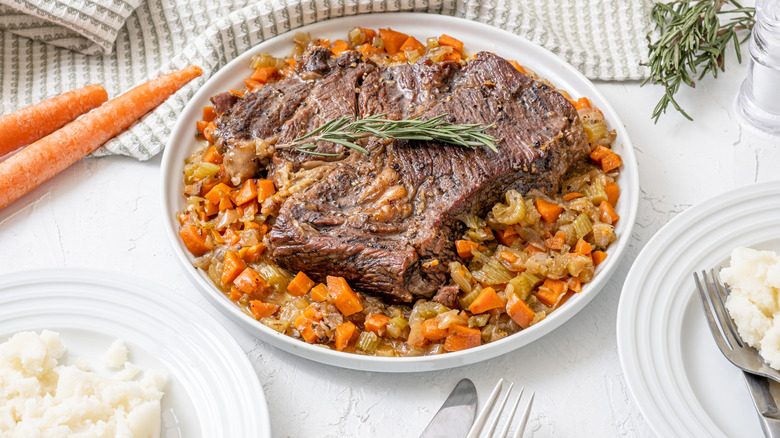
Whether you're trying to learn your way around a kitchen or juggle a hectic schedule, there's no denying that slow cooker recipes can make your life easier. There's nothing more appealing than being able to add a handful of ingredients to one pot, walk away for a few hours, and then come back to a meal that's both mouthwatering and more affordable than takeout. One of the most classic comfort dishes that holds up beautifully in a slow cooker is a pot roast. In fact, one could argue that it's the best way to prepare the dish, since the long cooking time works wonders for the meat.
However, there are still plenty of things that home cooks could do that would sabotage their pot roast. Yes, the recipe is simple, but there are some tricks that are worth knowing to elevate your meal. To get to the bottom of how to best prepare a pot roast in a slow cooker, Natasha Kravchuck of Natasha's Kitchen has generously shared her secrets. Read on to learn how you can transform your lackluster weeknight meals into something truly spectacular.
1. Use the right cut of beef for your pot roast
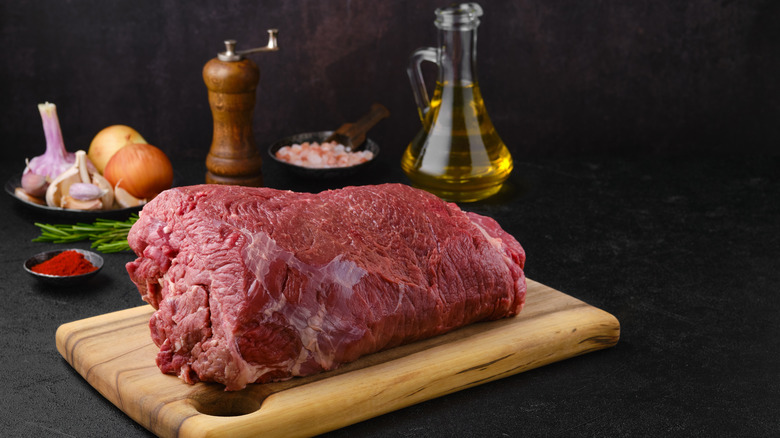
Every home cook should be aware of the ranking of cuts of beef from toughest to most tender so they can navigate the meat aisle with more confidence. With grocery store prices only seeming to go up each trip, sometimes choosing cheaper cuts of meat works better for your budget. The good news is that the humble chuck roast can give more expensive cuts of beef a run for their money when given the right treatment.
"My favorite cut for pot roast is beef chuck roast," Natasha Kravchuck explained. "It has wonderful marbling throughout the meat, and that marbling is what gives you a roast that turns out tender, juicy, and full of flavor after slow braising in the Dutch oven. I've had the best and most consistent results with chuck roast. Brisket or bottom round can work, but chuck is still my top choice."
You may find some other pot roast recipes floating around on the internet that also incorporate bacon and other types of flavor-boosting meats, but Kravchuck believes that simple is best for this traditional dish. "I usually keep pot roast classic and let the beef be the star," she said. "I don't add bacon because this recipe already builds so much flavor from the seared chuck roast, the onion and garlic, the tomato paste, the herbs, the dry red wine, and the beef stock. It really doesn't need extra help."
2. Follow some key steps instead of dumping everything into the pot
Considering how much time you'll need to prepare the perfect slow cooker pot roast, it's understandable if you're eager to get everything going as soon as possible. Kravchuck instructs home cooks to be patient for the absolute best results. The first step is to let your chuck roast rest on the counter for a bit. "I like to take the meat out of the fridge about an hour before cooking so it can come closer to room temperature, then season it well with salt and pepper," she said. "After that, I sear it in a Dutch oven until it forms a nice crust on all sides. That searing step adds a lot of flavor right from the beginning."
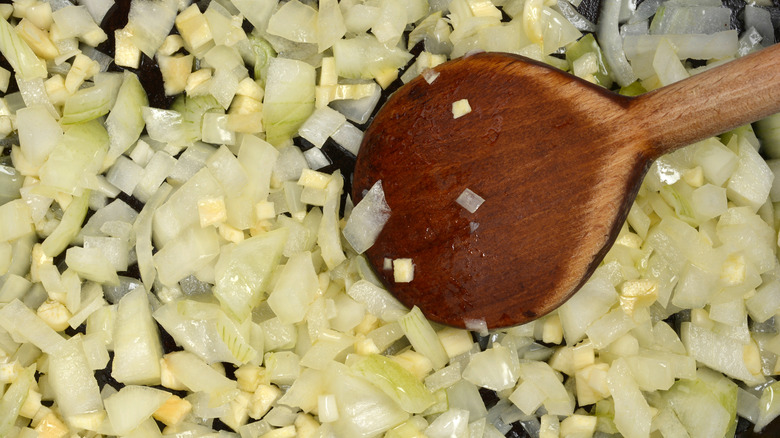
While your meat develops a tasty crust, you can work on your veggies. Joshua Weissman's family pot roast recipe includes sliced garlic cloves, a quartered onion, and five medium carrots cut into 1 ½-inch sections. Feel free to use the veggies you love and adjust the ratio to your liking. Afterward, it's time to caramelize them.
"Then I sauté the onions, add the garlic, stir in the tomato paste, and deglaze the pot with red wine, scraping up all the browned bits from the bottom," Kravchuck said. "I do think those steps matter. That's where so much of the flavor starts, and it gives the broth a richer base, then the oven does the rest."
3. Build a rich flavor profile with seasonings
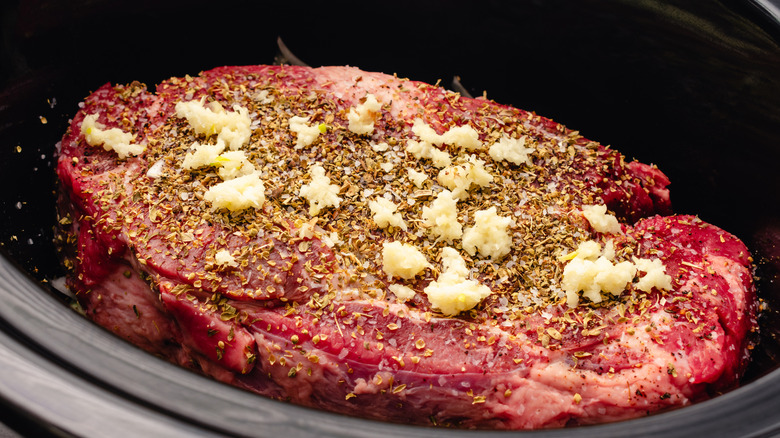
As Kravchuck previously explained, letting the meat rest for an hour and sprinkling it with salt and pepper is a must before searing it. The goal is to build flavor on every level. It's true that the meat will soak up so much from the broth, but it's wise to get into the habit of ensuring each component in all of your meals is seasoned. Of course, a phenomenal pot roast doesn't stop at salt and pepper, though.
"For me, the must-haves are salt, black pepper, bay leaves, thyme, and parsley," Kravchuck said. "Those simple seasonings give the pot roast that classic, cozy flavor without overpowering the beef." She also urged home cooks to never underestimate the power of sautéing aromatics before adding the broth. "I also think onion, garlic, and tomato paste add amazing depth of flavor. A few simple ingredients, used the right way, create a roast that tastes rich and memorable," she explained.
As you'll notice, most pot roast recipes don't come with a huge list of ingredients. A few staple seasonings can create a savory, comforting broth that will help the chuck roast melt in your mouth with each bite. Too many seasonings could overwhelm your taste buds and detract from the meat itself, which should be the star. Just remember to taste your broth before serving so you can do a final adjustment if needed.
4. Create a robust broth with wine and tomato paste
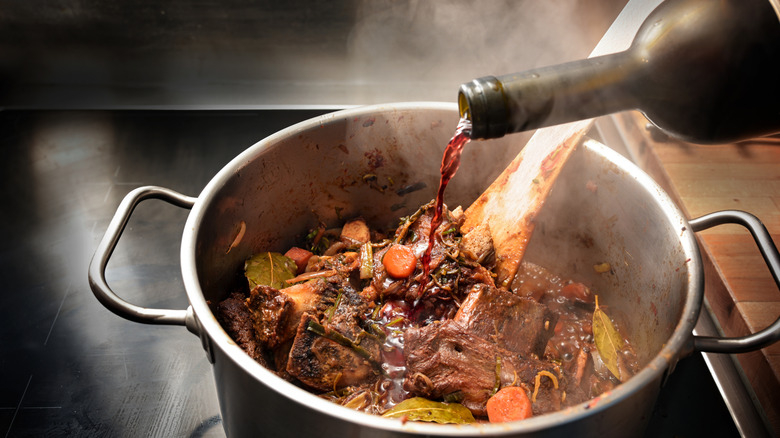
Not only will your broth lend flavor to the chuck roast, but your veggies will also soak it up like a sponge. Serving your pot roast on top of mashed potatoes or rice means that those components will also benefit from the broth. Although building a robust broth can seem intimidating when the stakes are high, the good news is that it's actually quite easy when it comes to pot roast in particular.
"I build the broth with tomato paste, dry red wine, and beef stock, along with the onion, garlic, bay leaves, thyme, parsley, salt, and pepper," Kravchuck shared. "It cooks together with the roast and turns into a really rich, flavorful sauce. The red wine is a meaningful ingredient in this recipe. It adds acidity and depth of flavor." Kravchuck also explained that you can still create a fantastic broth without the red wine if you don't have any on hand or you'd rather abstain from it.
Her advice is to just include more beef broth and tweak your approach to seasoning the broth. If you still want to get that little punch of acidity, you could add a splash of vinegar or lemon juice. It's better to add bold ingredients like acids a little bit at a time and taste along the way, because you can always add more, but it's harder to course correct if you add too much.
5. Thicken your broth before serving
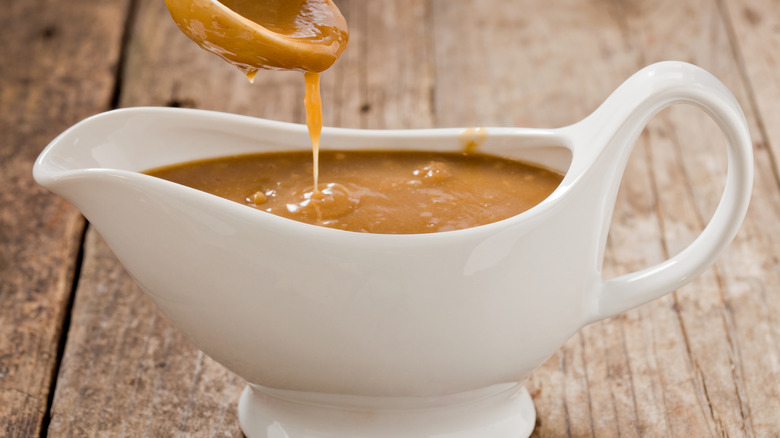
There's a beautiful symbiotic relationship that occurs in the slow cooker when you're making a pot roast. The well-seasoned broth makes its way deep into the meat, while the fat from the meat renders and combines with the broth to make it richer. With this in mind, you can't let a drop of that broth go to waste. If you like your pot roast on the soupier side of the spectrum, you can serve it in a bowl with the broth. However, most folks will find that they have a much more luxurious experience if they thicken the broth before plating.
"Yes, I do like to thicken the sauce when I want it more like a gravy to serve over mashed potatoes," Kravchuck shared. "After removing the meat and vegetables, I thicken it either with a cornstarch slurry or with a flour-and-butter paste. Both work well depending on what you have on hand."
There's no doubt that making a roux with butter will amplify the decadence. However, a cornstarch slurry can be ideal for folks who want quick results. This technique is also handy because it doesn't impact the flavor. Beginners in the kitchen should remember to create a slurry with a bit of water in a separate glass before adding it to any broth or sauce. This step is vital because it'll be impossible to remove the clumps of cornstarch from the dish if you try to dump it straight into the broth.
6. Keep it simple when adding your veggies
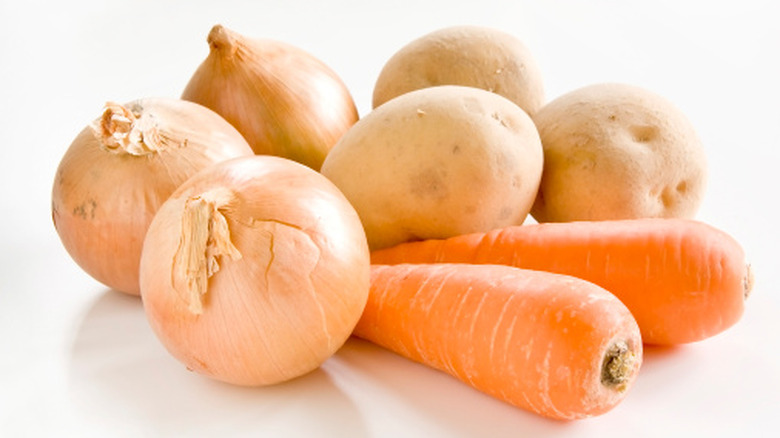
We all have at least one special dish in our hearts that is sacred, and we would never want to alter the structure of the original recipe. Pot roast is one of those meals that Kravchuck loves to keep classic. "For this pot roast, I keep it simple with onion, garlic, and carrots. They create an aromatic base and pair really well with the beef and sauce. The carrots are especially good because they become tender and flavorful without disappearing into the broth," she said.
The beauty of pot roast is that it doesn't require a bunch of ingredients to make. You won't be stuck in the kitchen doing a ton of prep work. "I don't really try to get too fancy with this recipe because I think part of its appeal is that it's classic and dependable," Kravchuck explained. "I'd rather keep the roast, carrots, and gravy exactly where the focus belongs, then serve it with or over great sides."
However, there are some folks out there who might enjoy experimenting with their pot roast veggies. Doing so could allow you to increase your intake of veggies and benefit from a broader range of nutrients. It's definitely a lot easier to eat vegetables that are soaked in a succulent broth. This approach could also be parents' secret weapon for picky kids. Some home cooks on Reddit shared that their favorite pot roast additions are leeks, parsnips, cabbage, mushrooms, celeriac, and rutabaga.
7. Go low and slow while cooking if you have the time
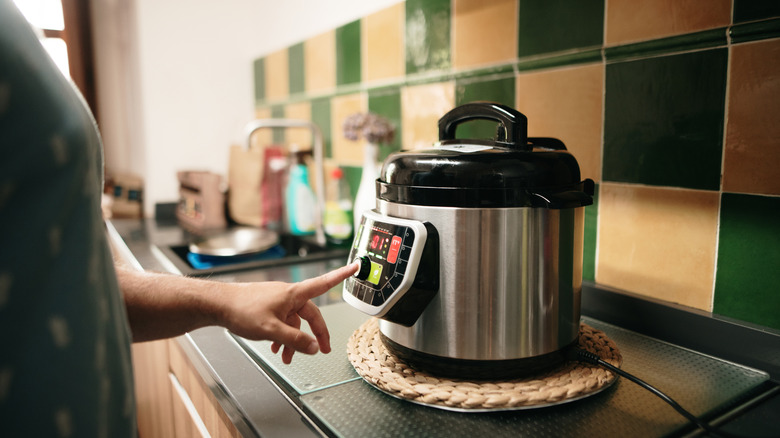
Kravchuck's favorite way to cook pot roast is actually in the oven, which takes around 2 ½ to 4 hours, depending on the size of the chuck roast. However, when she wants a hands-off approach with a slow cooker, she believes that low and slow gets you the juiciest results. "For my slow cooker Mississippi pot roast, I recommend cooking it on low for 7 to 9 hours or on high for 4 to 6 hours. Low is my favorite because it gives the chuck roast plenty of time to break down and become melt-in-your-mouth tender," she said.
Kravchuck explained that home cooks should get familiar with meats and how they transform throughout the cooking process. Once you know what to look for in a good pot roast, you'll know when it's had enough time to get tender in the slow cooker. She elaborated, "The real test is texture. When it's done, it should be easy to pull apart with two forks, and the internal temperature should read 200°F to 210°F. If it still seems tough, it usually just needs more time."
Lots of home cooks are fearful of overcooking their meat, since this is a death sentence for the texture in most cases. Most of us know what it's like to fight through dry, tough chicken. However, you don't run that risk with pot roast. If the meat still seems tough, it's perfectly fine to continue cooking it.
8. Think about convenience and presentation when serving the meat
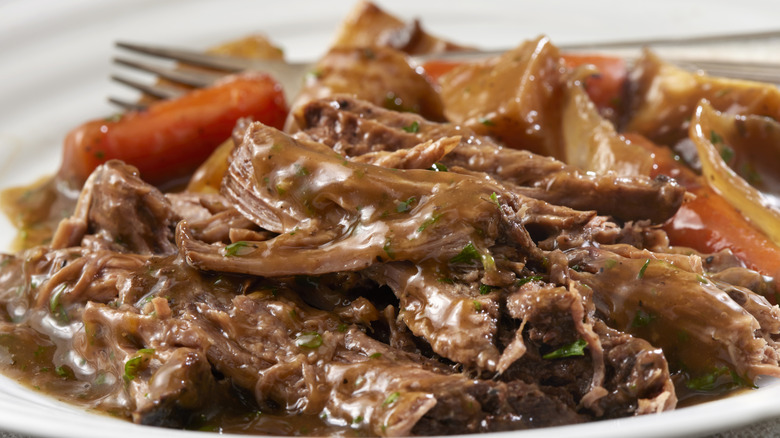
Lots of home cooks face the following dilemma once it's time to plate their pot roast: to shred or not to shred? The truth is that there are no wrong answers, only preferences. Kravchuck's personal preference is to shred the meat as soon as the pot roast is finished cooking. "I like to shred the meat with two forks right in the pot once it's fully tender," she said. "That's my favorite way to serve it because the shredded beef soaks up all the sauce and turns incredibly juicy and flavorful. I love to serve pot roast over creamy mashed potatoes, with the sauce spooned over the shredded beef."
In fact, this method reminds Kravchuck of a more expensive cut of beef. As she explained, "That combination is pure comfort food, and the flavor reminds me of a really rich short ribs dish." Remember, a gourmet cut of beef can do a lot of heavy lifting on its own, but your treatment of it is the ultimate deciding factor. With the right cooking techniques and flavor combinations, any cheap cut will shine.
It's worth noting that some folks love the presentation of a whole chuck roast on a bed of succulent veggies. This method also allows everyone at the table to cut their ideal portion. You could also choose a happy medium and cut the roast into smaller chunks that are more approachable. It's worth experimenting to find your favorite method.
9. Prepare a hearty base for serving your pot roast
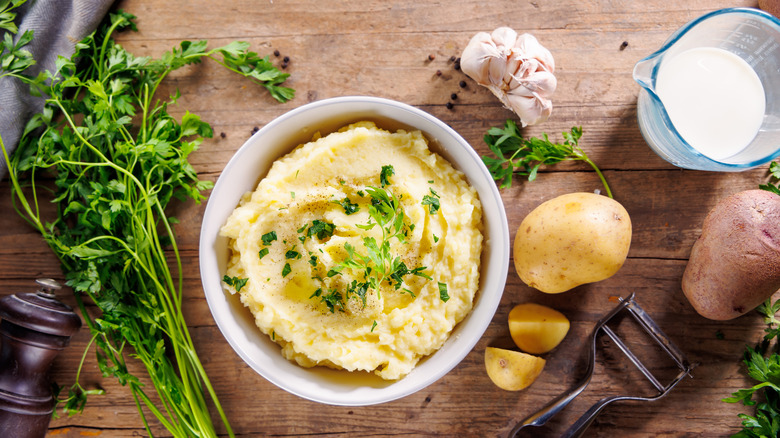
When prepared right, pot roast is tasty enough to eat on its own, but why stop there? Unless you're following a specific diet, you'll enjoy your pot roast much more with a hearty base. It can help fill you up faster, so you'll have extra pot roast leftovers. Kravchuck didn't hesitate to sing the praises of good ol' fashioned mashed potatoes. She mused, "I love serving pot roast over creamy mashed potatoes first and foremost. That's my favorite pairing because the potatoes catch all of that rich sauce."
Buttery, soft mashed potatoes seem like the ultimate base that would allow you to savor the pot roast's flavor even more. To achieve a velvety texture, do yourself a favor and invest in a potato ricer. It'll help you avoid over-whipping the potatoes to the point of becoming gluey. You could also incorporate a bit of sour cream or heavy cream for extra decadence. For a lighter option, you could experiment with mashed parsnips or cauliflower, or try folding them into your mashed potatoes for a nutrient boost.
Any potato lover already knows that this brilliant starch can dazzle the palate in so many other ways, though. Steak fries, roasted potatoes, and hasselback potatoes are just a few examples, but the sky is the limit. Jasmine rice could be another fabulous pairing, because the subtle nuttiness will pair amazingly with the meat, and each grain will really soak up the juices.
10. Have fun with bread and other side dishes

If you've got some extra time on your hands and want to prepare an epic spread for your Sunday dinner or a holiday, there are all kinds of sides that elevate your pot roast further. Bread is an obvious choice, because who doesn't love dipping a roll into a rich gravy? Breads with a crispy exterior and a pillowy interior are an excellent choice. You could also serve a rustic multigrain loaf so everyone can grab a slice, load it with butter, and even add a bit of the chuck roast on top. No matter which type of bread you choose, it will always be a welcome guest at the dinner table.
Kravchuck has all kinds of ideas for pot roast sides. She described, "On the side, I'd go with soft dinner rolls, sourdough rolls, sourdough bread to soak up the extra gravy and pair with roasted vegetables, Caesar salad, or even classic risotto." Since pot roast tends to be quite decadent, a crisp and refreshing side salad can help cleanse your palate throughout the meal. Of course, having extra roasted veggies on the table is great if you prepared lots of gravy. Finally, risotto is a smart choice for the folks who are all about richness. We all deserve the ultimate comfort meal every once in a while. Parmesan risotto with lemon zest brings an incredible savoriness and a little kick of acidity to complement the meat.
11. Be aware of common pitfalls when preparing your pot roast
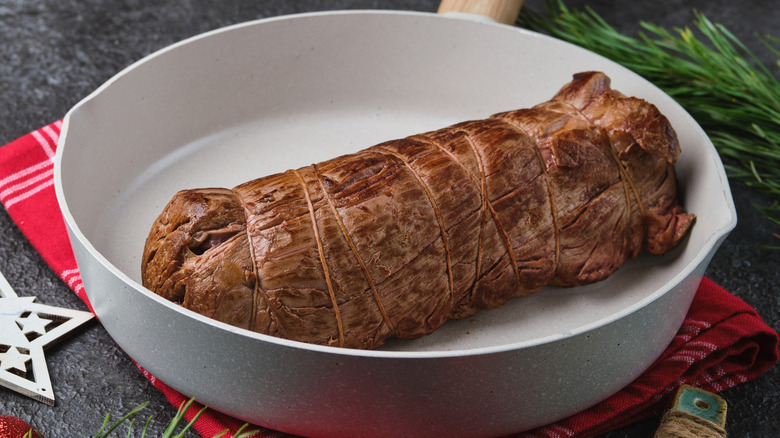
Pot roast is a beginner-friendly dish, especially when prepared with a slow cooker, but home cooks should be wary of a few missteps that could impact the final results. "One mistake is trying to rush the cooking process," Kravchuck warned. "Chuck roast is a tougher cut, and it needs enough time to break down and become tender. If the roast seems tough, it usually needs more time rather than less." Time is your ultimate ally, so don't be afraid to put the lid back on and walk away if your sample bite isn't satisfactory. You can never overcook a chuck roast. If you're pressed for cooking time, you can always reference our guide on how to pick the best meat for pot roast to suit your abilities and tastes.
"Another mistake is skipping the flavor-building steps at the beginning," Kravchuck elaborated. "Searing the meat, sautéing the onions, stirring in the tomato paste, and deglazing with red wine all help build the depth that makes this pot roast so special."
All in all, try to avoid rushing at any point in the cooking process. Taking the time to develop a nice crust on your meat and making sure to maximize the flavor of your veggies will always be worthwhile. Definitely plan this meal on a day when you can start the recipe in the morning and enjoy it much later in the day, unless, of course, you're working with leaner beef.