

Can You Safely Use One Utensil For Raw And Cooked Meat?
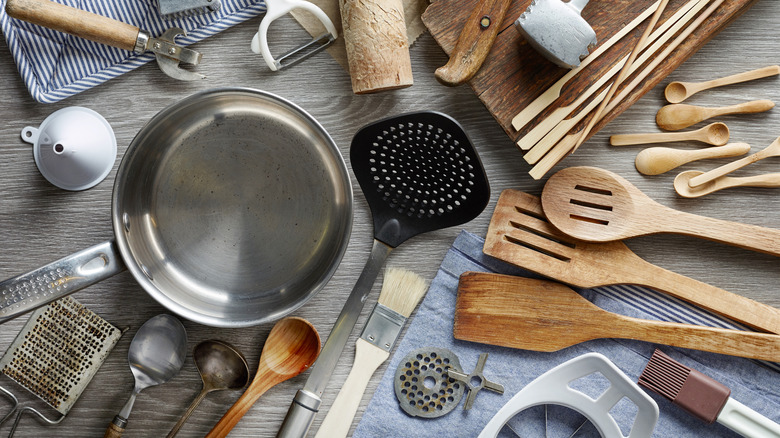
Anyone with basic cooking knowledge can likely tell you about the dangers that raw meat can bring, primarily due to harmful pathogens, parasites, and other toxins. Although few would chomp down on an uncooked chicken breast or raw pork chop, many home cooks fail to consider that cross-contamination can be just as risky yet far more likely to happen without careful prep. Generally speaking, best practice strongly suggests using separate utensils for raw and cooked meat, or at least washing the single utensil during the cooking process.
As with most food safety issues, the key factor in this question is temperature. According to the Department of Health & Human Services, the temperature reading on your handy meat thermometer that's required to know harmful bacteria has been killed varies from product to product; from as low as 145 degrees Fahrenheit for beef steaks and pork chops to 165 degrees for chicken. Unless the utensils which touched the raw meat reach these temperatures, any unpleasant pathogens which hopped over will survive, ready to jump back onto the cooked food as it heads to your plate.
To avoid concerns over whether the utensils reached the required safe temperature, it's far more reliable to make a switch somewhere in the cooking process. This could be when it's time to serve, or at whatever point in the recipe where the food has been sufficiently cooked. For those who want to continue with a particular utensil for any reason, a quick wash in hot, soapy water will also allow you to safely put it right back in service.
An easy step for staying safe and healthy in the kitchen
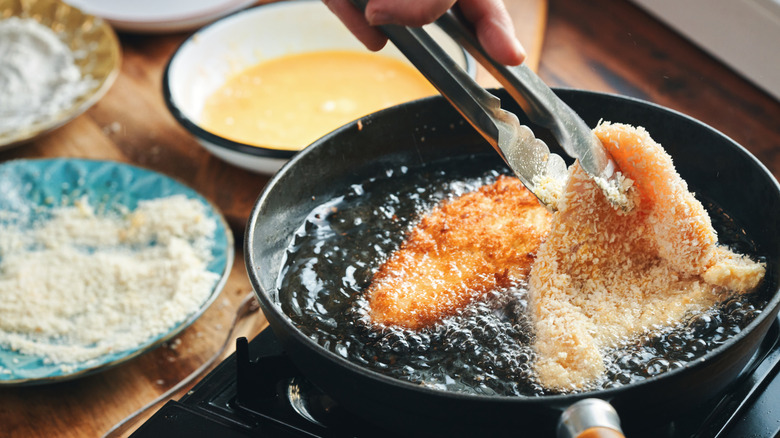
This rule of thumb is true for all types of cooking, even high-heat, casual methods like grilling. To avoid temptation, it's worth tossing that contaminated spoon, spatula, or set of tongs right into the sink or dishwasher as soon as you finish handling the raw meat initially rather than leaving it sitting around to be grabbed accidentally in the frenzy to plate your food.
Switching out utensils between raw and cooked meat is just one step among many for avoiding food poisoning, but most are straightforward and easy to manage, such as being mindful of FDA recalls and getting rid of chipped or cracked dishware. Doing so helps keep you from becoming one of the nearly 10 million cases of foodborne illness the CDC estimates strike Americans every year.
As those who've broken this rule in the past (intentionally or not) likely know, there's no guarantee you'll get sick by reusing a kitchen utensil that's touched raw meat. However, there's no doubt it's also a bad kitchen habit you need to break, as a simple switch or wash can help keep you and your fellow diners safe from a variety of unpleasant foodborne illnesses.