

Hot Or Cold Water: What's Best For Brewing Coffee?
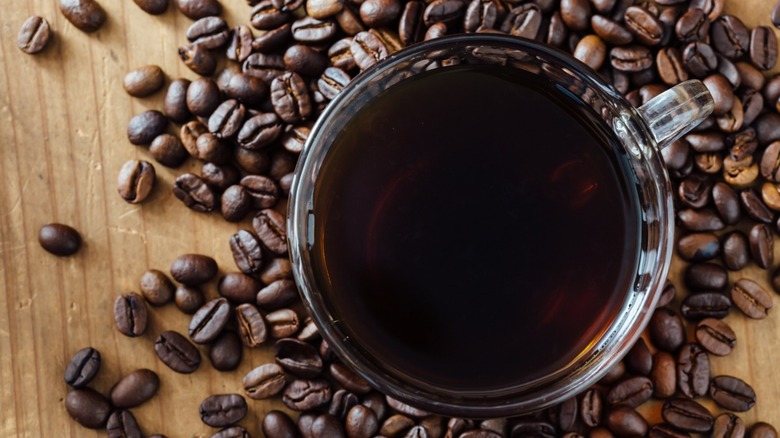
Brewing coffee might feel like a straightforward task: At its most basic level, all you really need is water, coffee grounds, and a machine. But, in reality, the art of brewing the perfect cup of coffee comes down to more than just possessing the right tools. Your classic office kitchen coffee machine will get you by, but a more delicious cup can actually come down to the temperature of the water you're using. So is hot or cold better for brewing?
Coffee extraction is the process by which the flavors are literally drawn out of your grounds. These flavors and compounds dissolve when they interact with water, but the temperature of that water impacts the rates at which they are processed. Your water should be heated at some level, because cold water won't properly dissolve those compounds, leaving essential flavors behind in the grounds. On the other hand, if the water is too hot, your coffee can taste burned.
So, what does that mean, numbers wise? For hot-brewed coffee, the perfect water temperature is typically between 195 degrees Fahrenheit and 205 degrees Fahrenheit. Hot-brewing methods include drip, pour-over, and French press coffee. On the complete opposite end of the spectrum, cold brew coffee — which has a big advantage over hot coffee — is (fittingly) brewed at cold temperatures. Similarly to how warm water extracts the perfect flavors from the beans, the up to 24 hours it can take to cold brew functions likewise (the length of time means temperature matters less).
Other factors can impact ideal water temperature as well
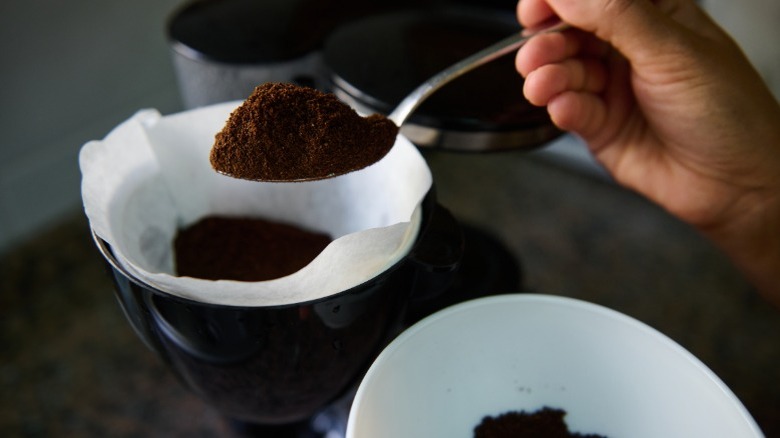
There are actually a number of other considerations when it comes to your water's temperature. All hot brewing methods will fall in the 195 to 205 degrees Fahrenheit range, but the specific type of brewing technique may warrant hotter or cooler water. For example, in the pour-over method, because you're dumping the hot water over the grounds, it loses its temperature fairly quickly. To accommodate, you can start out with hotter water within the ideal temperature range.
Additionally, the kind of beans you're using and their roast can make a big difference. Arabica beans are typically more delicate, which means it is better to use water that's on the cooler end of the spectrum. In comparison, Robusta beans are hardier, and can be brewed at the higher end of the ideal temperature range as there is less of a risk of them burning. To add on to the bean type, darker roast coffees (which are already subjected to higher temperatures for longer periods of time than light roasts) often warrant cooler water for brewing to avoid bitterness.
Interestingly, the water itself (beyond its temperature) does make a difference. Distilled water is not recommended, because its purity can leave your coffee bitter. Additionally, mineral water has its own set of flavors that could interfere with your cup, so it's best to avoid this as well. You should never brew coffee with tap water, typically making the best choice filtered water.