

4 Differences Between Single Malt & Blended Whiskey
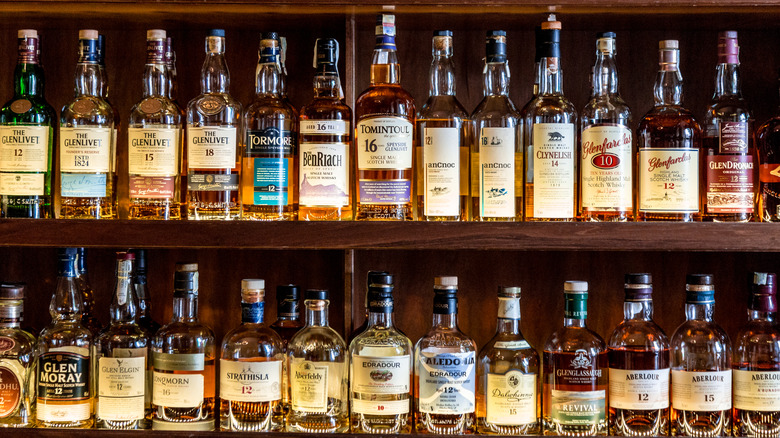
Whiskey can feel like a complicated spirit to navigate. Like wine, it seems to have unsaid rules for consumption, and enthusiasts treat certain varieties with the sort of reverence other spirits rarely receive. It helps that you can infer quite a bit from the descriptions on a whiskey bottle. The spelling, whether it's "whiskey" or "whisky", speaks to its origin. The former describes dram in Ireland and the U.S., while the latter denotes varieties from Scotland, Canada, Japan, Australia, and much of the European Union. Another common specification in the title is whether it's single malt or blended. This detail points to the manufacturing process and influences a whiskey's flavor profile, ideal serving method, and, to an extent, price. These categories fragment into even finer classifications based on geography and ingredients, like highland, lowland, Irish single grain, and more, essentially revealing over a dozen types of unique whiskey.
To get to the amber-colored heart of the issue, it's crucial to understand what the "single" in single malt signifies. It means that the spirit comes from one distillery and is made exclusively from malted barley. Meanwhile, a blended whiskey combines products of multiple distilleries, resulting in notable differences in the dram's characteristics. There are a few stringent prerequisites a spirit must fulfill to be called single malt, which often justifies the premium it commands. However, this doesn't mean that single malts are universally superior to their blended counterparts — a wide spectrum of whiskeys exists in both categories.
Single malt and blended whiskey have different ingredients and distillation methods
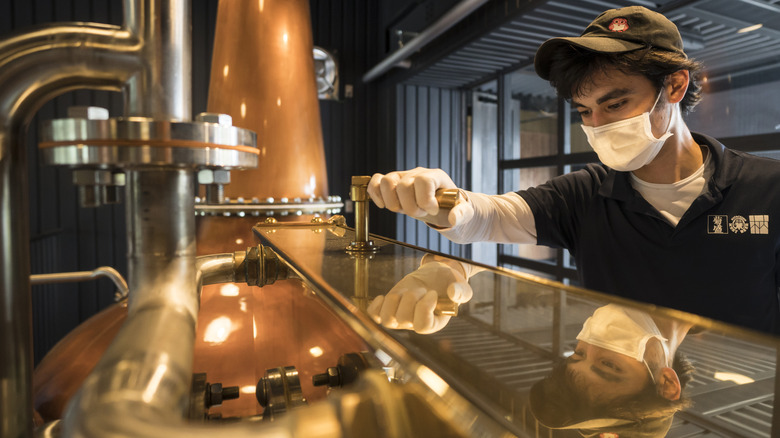
All whiskeys start with grain, most commonly barley, wheat, corn, and rye. The mix of grains used, known as the mash bill, as well as the distillation process, imbue many of the spirit's final characteristics, like flavor profile and mouthfeel. Unlike single malts, blended whiskeys can be a mix of single malts, grain whiskeys, or both.
The nomenclature of blended whiskeys is key to knowing what grains they encompass. A blended malt whiskey, for example, is made using single malts from various distilleries and contains only malted barley. Blended grain whiskey consists of multiple single-grain whiskeys. Like single malts, a single grain whiskey is the product of just one distillery. Finally, a blended whiskey has the widest parameters and can contain a mix of single malts and grain whiskeys from multiple distilleries.
The distillation process is also an important area of divergence. Single malt whiskey uses the traditional pot still method and is distilled in batches. The process is slower, and to be called a single malt, the spirit must be aged for a minimum of three years in oak barrels. Conversely, grain whiskeys, a major component of blended whiskey, use the continuously running column distillation method, which is more efficient and produces a spirit with a higher alcohol concentration.
How the flavor profile and consistency of whiskeys vary

The difference in grains and distilling method predictably leads to single malts and blended whiskeys having different flavor profiles. Malted barley's complex notes form the base of all single malt whiskeys. Blended whiskeys have a much wider range of flavor profiles since they mix the tasting notes of single malt and grain whiskeys. The sweetness from corn, spiciness from rye, and light creaminess from wheat can be balanced to create novel blends. The distilling method also plays a role. Traditional pot stills used for single malt production yield deep, complex tasting notes and a rich mouthfeel, while distillation columns imbue a lighter, more neutral flavor into blended grain whiskeys.
Consistency of flavor in a single malt variety is achieved by blending single malt whiskeys from different barrels from a singular distillery. This is also why single malts have distinct flavor profiles associated with geographical regions. The single malt of a certain region is seeded with nuances of the local ingredients used in its making. Local fuel, like peat, which is used in drying malted barley, gives Scotch whisky a distinctive smoky flavor.
Blended whiskeys are not limited by geography and have more leeway in curating their specific flavor profiles across batches. Due to this greater flexibility in ingredients, blended whiskeys may have a more approachable flavor profile, which can appeal to a wider audience.
Is single malt whiskey always more expensive than blended?
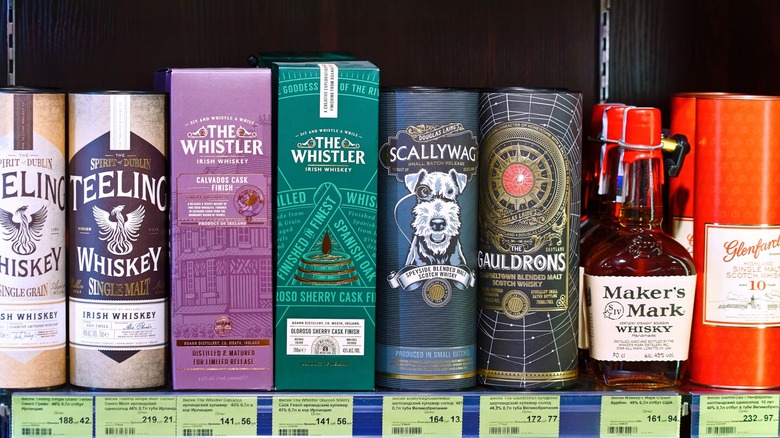
One of the most common whiskey misconceptions masquerading as truth is that single malts are universally better and more expensive than blended whiskeys. Often, this stems from the reasoning that the former's manufacturing method is significantly more labor-intensive. There's also the added step of malting the barley, which other grains don't undergo. The distillation process for blended whiskey is several times faster, leading to much larger batches of spirit. That said, there's more to a bottled whiskey's sticker price than the distillation process.
Much of a whiskey's cost is dictated by age and rarity, which affects the value of both single malt and blended whiskeys. Although grain whiskeys, and by extension, blended whiskeys, are technically easier to manufacture and faster to mature, some are aged for decades, resulting in a unique depth of flavor. Premium grain whiskeys are layered with single malts to make nuanced, high-end blends. The cost of storing whiskey barrels for several years and accounting for the amount of alcohol that evaporates during the maturation process also contributes to a pricier final product.
Therefore, pricing hierarchy varies. A 750-milliliter bottle of single malt Scotch, like the popular Glenfiddich 12, retails for around $54. Conversely, the same-sized bottle of a blended Scotch, such as Johnny Walker Blue Label, costs about $200. This high-end Scotch is made from heavily matured grain whiskies, some of which are available in very limited quantities, and the blend ratio is a well-kept secret.
Single malt and blended whiskeys aren't traditionally served the same way
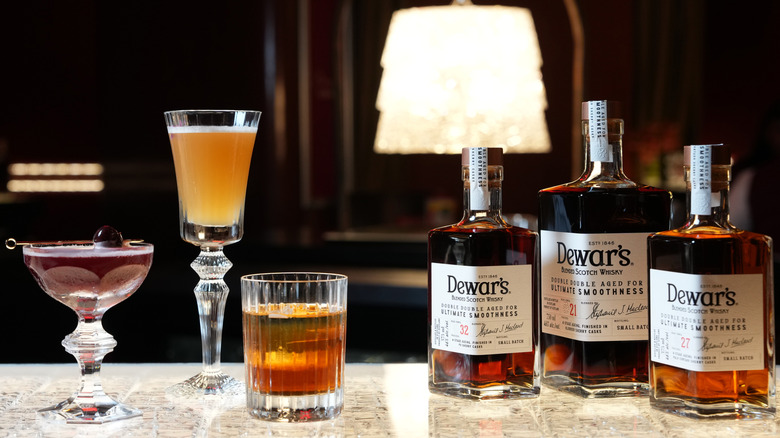
High-quality single malt whiskeys are traditionally consumed with a splash of water and rarely mixed into cocktails, so as not to lose their nuances amidst mixers. For someone looking to explore the subtleties of single malts of different regions and maturations, this is the way to go. However, their assertive tasting notes also make single malts suitable for certain cocktails. There is a growing realization that both the single malt and the resulting libation benefit when mixed in a well-made cocktail.
Blended whiskeys are more versatile due to their milder flavor profile and are suited to a wider range of cocktails. The less intense yet distinct flavor also makes blended whiskeys a good pairing with club soda for those who find whiskey neat or on the rocks too intense or smoky.
A cocktail made with single malt should put the whiskey front and center. These generally pricey, complex spirits work best in thoughtfully balanced cocktails. For mixed whiskey drinks that benefit from the brown liquor's dusky notes but get their dominant flavor from a combination of all the ingredients, opt for a blended whiskey.