

Irish Vs French Butter: How Do They Compare?
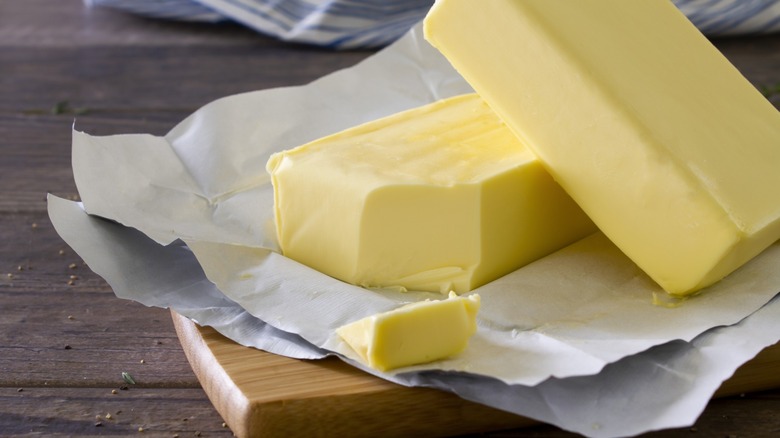
Not all butter is created equally — or in the same place for that matter. While used in many types of cuisines, this food staple is made differently around the world. And when you think of France or Irish cuisines, you might think of butter pretty soon after. Kerrygold is the iconic Irish butter brand, and a crunchy French baguette is lonesome without a healthy spread of the delicious stuff. Both countries produce incredible butter, but what's the difference between the two?
It really comes down to production methods and ingredients. In its most basic form, butter is made from milk or cream in combination with salt (or not, for unsalted butter). All European butter is required to have a butterfat content of 82%, which is a bit higher than in the States. This results in a richer product. However, the types of butter crafted in Ireland and France rely on unique processes that impart distinct flavors and textures.
Irish butter comes down to the cows
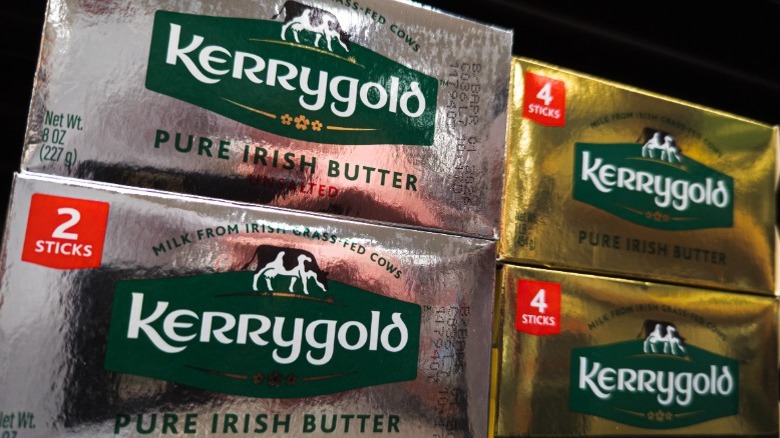
If you've ever purchased a block of Kerrygold, you'll likely have noticed how yellow the butter is. This results from the fact that it's produced from the milk of Irish dairy cows. These bovines are fed grass that contains lots of beta-carotene, which is a naturally-occurring pigment and the scientific reason butter is yellow. American dairy cows, by comparison, consume a form of fermented forage called silage. This tends to produce a paler and whiter spread (one of the major differences between Irish butter and regular U.S. butter).
In addition to color, the compounds present in the pasture cow's milk can actually have an impact on the product's texture. Irish butter specifically has a lower amount of fatty acids with a high melting point — in non-scientific language, you'll taste the butter sooner and more fully.
Beyond slathering on a piece of toast, what is the absolute best way to enjoy Irish butter? Two great options are a sponge cake or a yellow cake. In both, the butter's high butterfat content will make your bakes especially rich.
French butter has a more distinct flavor
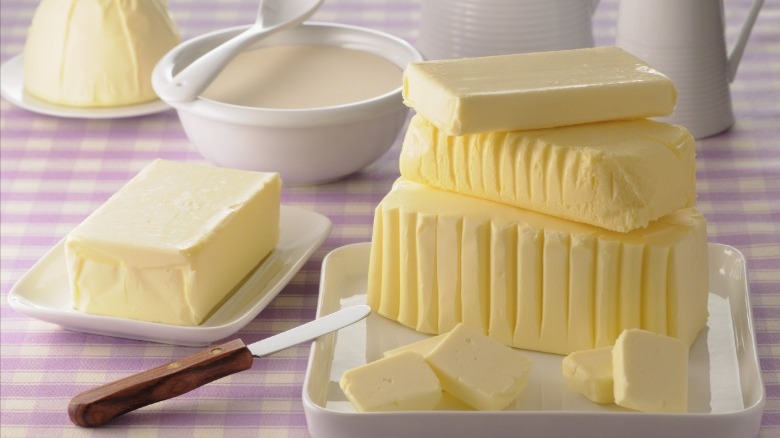
Traditional French butter is largely associated with the regions of Normandy and Brittany, where the dairy cows graze on grass. As we already know, diet impacts the milk, which then affects the resulting flavor and qualities of the butter. Additionally, the product is typically cultured, meaning bacteria are added to ferment the food. This imparts a slightly tangier taste than American butters commonly have, as the latter are usually made with sweet cream and are not cultured.
One of the more distinct qualities of French butter is that it sometimes contains coarse rock salt. These granules add a slight crunch and a salty flavor. Beurre d'Isigny is one kind of butter that has these crystals, and it also holds what's called the Appellation d'Origine Protégée (AOP) label. The AOP is a certification of production methods and origin in France, and it is connected to the longstanding heritage of butter making in the country. In other words, it's the best of the best.
Butter is a savory staple ingredient in Parisian sandwiches and is a key component of pastries like croissants. French butter's higher butterfat content (and therefore lower water content) is makes it ideal for crafting these delicious bites. The product is much easier to work with when it's cold, so it can be readily incorporated into doughs.