

Should You Drink Milk After The Expiration Date?
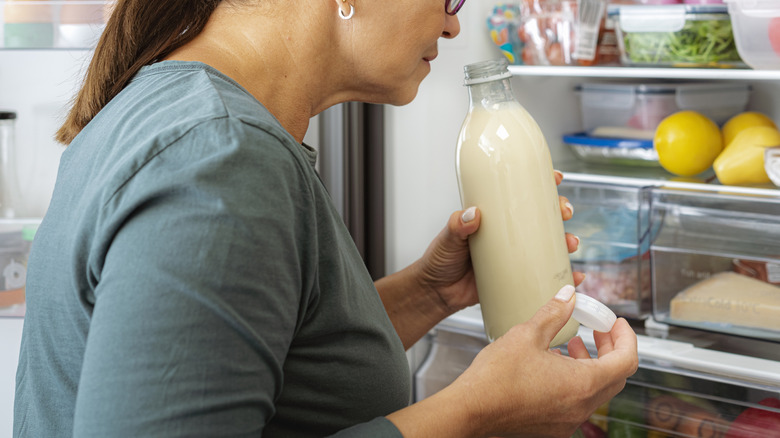
We've all experienced reaching for the milk in the fridge, only to discover the expiration date stamped on the carton has passed. While some of us might toss it right in the trash, others may be more willing to roll the dice on milk that's technically expired. But should you? It turns out the answer isn't so simple, and may depend on several factors about the packaging and the milk itself.
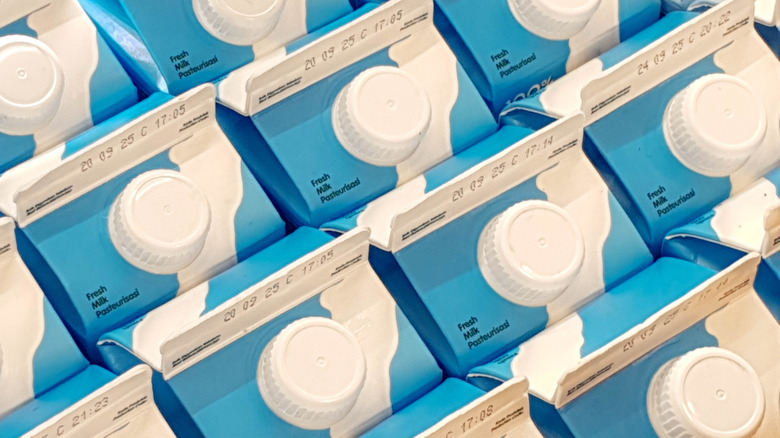
First, it's critical to understand precisely what the date on your milk is trying to communicate. Depending on where you live or buy your milk, you may see a "best if used by", "use by", and "sell by" date, all of which mean different things. "Best if used by" and "use by" are an indication of quality, suggesting when the milk will no longer be at the optimal quality it was when it was packaged. "Sell by" is geared instead toward grocery stores and other markets, aimed at helping them manage their inventory.
The messy truth about food "expiration dates" is that none explicitly label when milk is no longer safe or fit for consumption. That means it's typically safe to drink milk past the "expiration date," at least for a short period. This can be around three days for opened milk or up to a week with unopened cartons or containers. But before you just toss it down the hatch, you need to look for signs for spoilage.
Always check for spoilage
Although the methods for how to tell when milk has gone bad varies by the type of milk, typical dairy varieties develop an unpleasant smell that's quickly apparent, as well as a greenish-yellowish tint or a thicker, lumpier texture. A sour taste is also a sure sign the milk has spoiled and shouldn't be consumed any further.
Like many perishable foods, the lifespan of milk isn't set in stone. Storage conditions can make a big difference in whether it's still safe to drink after the printed "use by" date. If you're among the many people who have been storing milk wrong their entire lives, here's a tip: Storing it in the fridge door is a major problem for keeping it fresh because this part of the refrigerator experiences far more temperature fluctuation than ideal spots like the back of the fridge. Milk should also never be kept at room temperature for extended periods, with the exception of unopened shelf-stable milk that's been ultra-pasteurized and specially packaged.
So, if you've just discovered milk is a day or two past the date printed on the carton, don't send it down the drain quite yet. Consider the short "grace period" milk often enjoys past the use by or sell by date, and carefully assess it for signs of spoilage. In the long run, this can save a significant amount of milk, money, and trips to the grocery store.