

Cowboys Swore By This Old-School Meat Preservation Trick
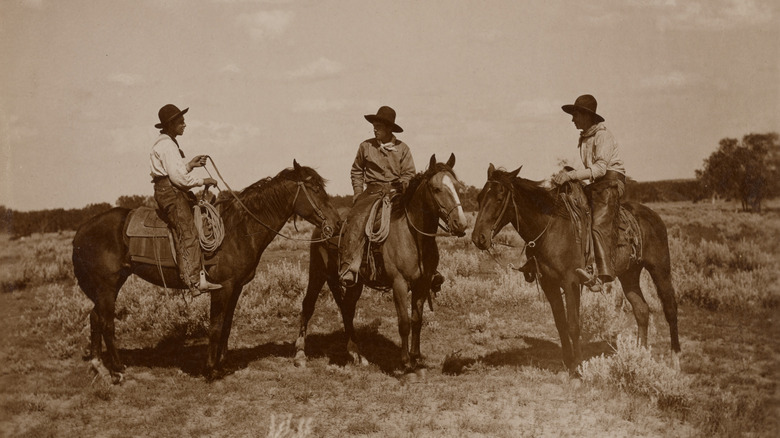
Hollywood has a long history of glamorizing the cowboy lifestyle, but in reality, driving and herding cattle wasn't for the faint of heart. Conditions were harsh and dirty, and sitting down in comfort to a lavish meal was merely a nice thought, not a real possibility. The food cowboys brought on these long journeys was about convenience and sustenance, so if something wasn't shelf-stable, they probably didn't bring it out on the range. While fresh meat was an occasional treat, cowboys preserved most of the meat they ate through salting or curing.
Treating meats with salt made them safe for storing and eating without refrigeration. These processes remove moisture, which is where bacteria thrive, and keep the meat edible for a long period of time. Curing is a broad term that basically describes a range of preservation methods including smoking, corning, and sugaring. Salting is also a type of curing, and it's one cowboys widely used for their meat.
Things like bacon, salt pork, and dried beef appeared in many cowboy meals, along with beans, biscuits, and plenty of strong cowboy coffee. If a steer or cow died during a cattle drive, cowboys might have made rascal stew, a frontier dish that modern diners have since left behind.
How cowboys salt-cured meat on the range
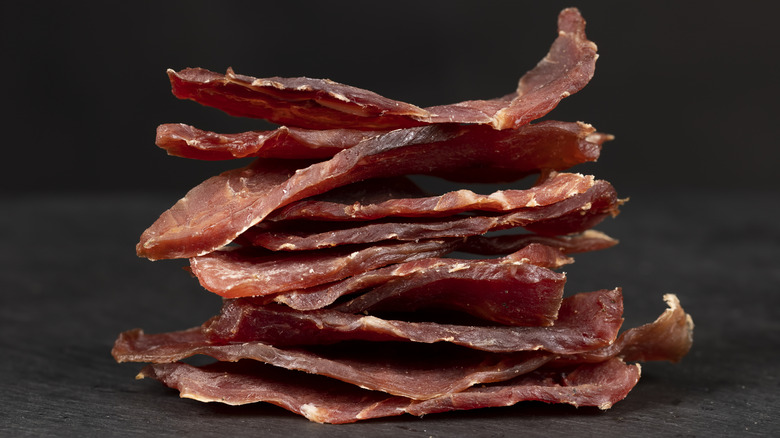
Until a certain point in time, cowboys were responsible for keeping their own food supplies handy, but they also had to be well-versed in preservation methods so they could prepare long-lasting food on the range. Of course, by 1866, cattle drives began traveling with chuckwagons as camp kitchens, as well as a designated camp cook who prepared meals for the crew.
Jaqueline Williams' 1993 book "Wagon Wheel Kitchens: Food on the Oregon Trail" (via FoodTimeline) discusses how pioneers made meat jerky, which is likely similar to how cowboys prepared their own. People would string long strips of meat on top of a wagon cover to dry or slowly smoke them over a fire.
Another cowboy favorite, salt pork, was similar to bacon, but it came from various fatty parts of the pig (instead of the belly, where bacon originates). Also called sowbelly, salt pork could be made on the range by storing pieces of meat in barrels with salt. Beef could be treated and preserved in the same way. Folks on the range ate salted and cured meat by itself, but they also used it to flavor several other dishes cowboys ate in the Old West, like pots of beans.