

This May Be One Of The Unhealthiest Peanut Butter Brands You Can Buy
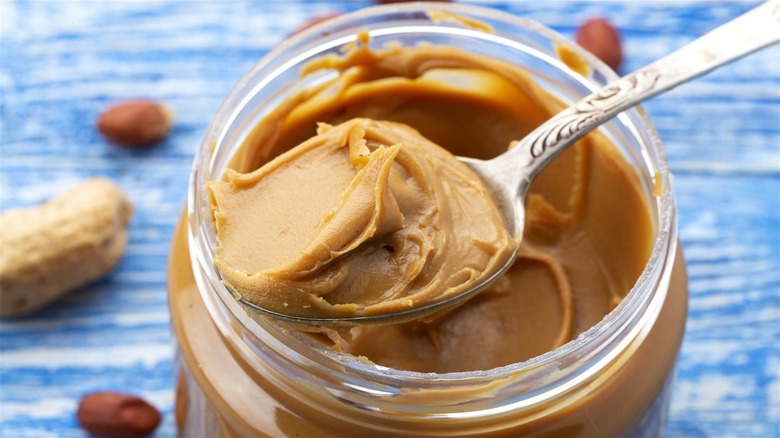
Walmart's Great Value brand has a lot of surprisingly good products, with some copycats that are better than the real thing. There are also, unfortunately, some duds in its lineup, including what might be one of the unhealthiest peanut butter brands on grocery shelves.
According to the label, a two-tablespoon serving of Great Value Creamy Peanut Butter has 15 grams of fat, of which 2.5 grams is saturated fat. It also contains 135 milligrams of sodium, 2 grams of dietary fiber, and 2 grams of added sugar. The fat content is comparable to healthier options, but it's everything else that makes Great Value less healthy. If you're looking to have less of those in the food you eat, add the peanut butter to your list of Great Value products to avoid at Walmart. For comparison, Crazy Richard's 100% Peanuts! Natural Peanut Butter has 0 grams of sodium, 3 grams of dietary fiber, and 0 grams of added sugar.
You could also try going with a healthier nut butter. According to legacy data at the USDA's FoodData Central, almond butter has a lot more to offer on the nutritional end than unsalted peanut butter does, pound-for-pound. Almond butter contains significantly more dietary fiber, calcium, iron, potassium, manganese, and vitamin E, while also having less sodium and saturated fat. Peanut butter does contain more protein, but barely so; 100 grams of peanut butter has 22.2 grams of protein to almond butter's 20.8 grams.
2 questionable ingredients make Great Value peanut butter less than healthy
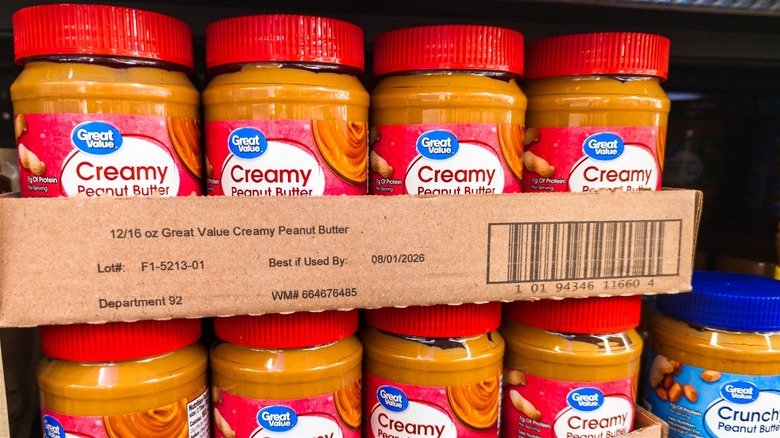
The ingredient list on the label of Great Value Peanut Butter also includes two items that might raise some eyebrows: hydrogenated vegetable oils and monoglycerides. While the FDA recognizes both ingredients as safe for use in food, there are slight health concerns with each one.
The FDA-permitted type of hydrogenated oils can contain very small amounts of trans fat, even if the label says it contains 0 grams. FDA labeling guidelines allow food items with less than 0.5 grams of trans fat to be labeled as having 0 grams, even if it actually contains those trace amounts. Because trans fat has been linked to heart disease, the World Health Organization recommends strictly limiting the amount of trans fat in your daily diet. If you don't want to take any risks with even trace amounts of trans fat, it might be better to avoid hydrogenated oils completely.
In the case of monoglycerides, a French study published in 2024 found that subjects who ate more mono- and diglycerides had a higher incidence of overall cancer, breast cancer, and prostate cancer. Correlation doesn't mean causation, however, and the researchers themselves recommended further studies on the matter. It's one of those cases where the ingredient is safe until proven otherwise. So if you're against taking risks, you might be better off making peanut butter at home using ingredients you recognize and skip Walmart's label altogether.