

The First Thing You Should Do With Strawberries When You Get Home
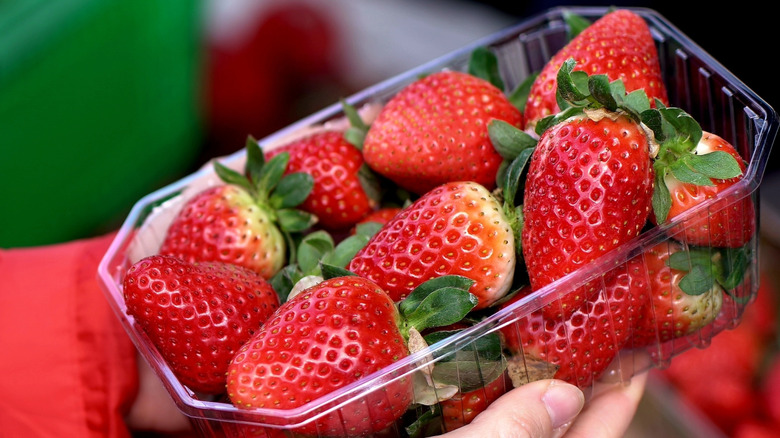
Grocery shopping can be a mental and physical trial. Although it's tempting to toss food in the fridge or pantry and relax after getting home, a few minutes of prep time can go a long way toward having a better experience with certain items. Deliciously juicy, vibrantly red strawberries are among them. Specifically, you need to closely examine the fruit before storing it.
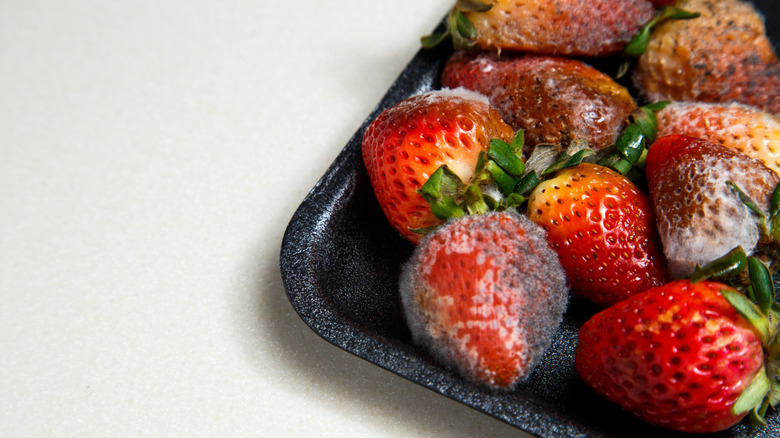
What you're mainly looking for are strawberries that already show signs of decay or high susceptibility to pathogens. Most seriously, immediately discard any that are moldy. An infected berry can quickly spread the fungus to the entire container, ruining the rest of the fruit. You should also toss any significantly bruised strawberries at this point. Even if they're mold-free, the damage makes them vulnerable to quicker degradation and gives any remaining fungal hangers-on another potential foothold. Although it might be painful to toss out freshly bought produce, it's better in the long run.
It's also generally not recommended to wash your strawberries before storing. Moisture is the enemy in this case, as it can speed up the growth of mold and other problematic microbes. Instead, after picking out the bad produce, line your original container with paper towels to absorb excess moisture and store your berries in the fridge.
An ounce of prevention for a better pound of strawberries
Of course, a little bit of extra time at the supermarket can also help reduce the amount of moldy or bruised fruit you find at home. Choosing the best strawberries involves looking for a bright red color with a natural shine, along with fresh, green caps. You can also check how red the fruit is under these caps. The darker berries will be sweeter and juicier.
It's equally important to learn how to tell when strawberries have gone bad. Mold is an obvious sign, as are significant color changes. Soft, mushy, slimy, or wet textures also provide a clear signal to send the berries to the trash or compost. When in doubt, take a sniff; instead of the fresh, fruity aroma you're looking for, bad strawberries will often put off notes of sour, rotten, or alcohol-like odors.
There are so many ways to use fresh strawberries, from traditional strawberry shortcakes to beverages, jams, salads, and more. But you may never get to make these foods if you don't properly check out your fruit after you bring it home.