

What Live Seafood Tanks Could Reveal About A Restaurant
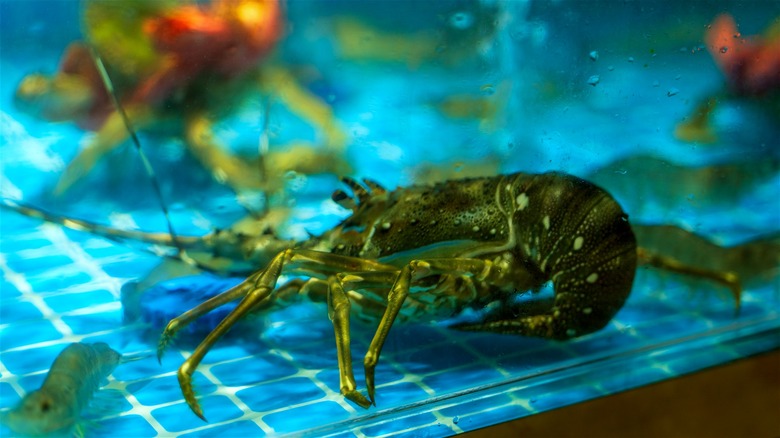
If you've ever been to Red Lobster, you've probably noticed a lot of locations have tanks with live lobsters out front. You can pick one out yourself and have a meal with peak freshness, which is why the chain is recognized for its high-quality seafood. A commitment to freshness isn't the only thing you can expect from restaurants with live seafood tanks, however; in fact, you can tell a lot about an establishment based on its tanks.
In general, a live seafood tank suggests that the restaurant cares about the customer experience — with an emphasis on "experience." It's said that frozen seafood is often better than fresh unless you're buying it from the source, which these restaurants would technically fall under. Sure, you may not have seen the fishermen pull it out of the ocean, but being able to see the fish alive and swimming before they're cooked makes the tank seafood at restaurants seem much fresher. At the same time, customers at these establishments often have the privilege of picking out the exact fish that'll be served to them, so the meal feels more personalized.
There's also an inherent sense of luxury that comes with these tanks. Not only is the maintenance of a live seafood tank a significant expense, but the cost of acquiring the equipment itself and shipping live seafood to the restaurant also adds up. This tells you that the establishment is willing to invest in something that isn't strictly necessary, but helps heighten the dining experience. It might not always feel like fine dining, but it always makes you feel a little more important.
Red flags to look out for when it comes to live seafood tanks
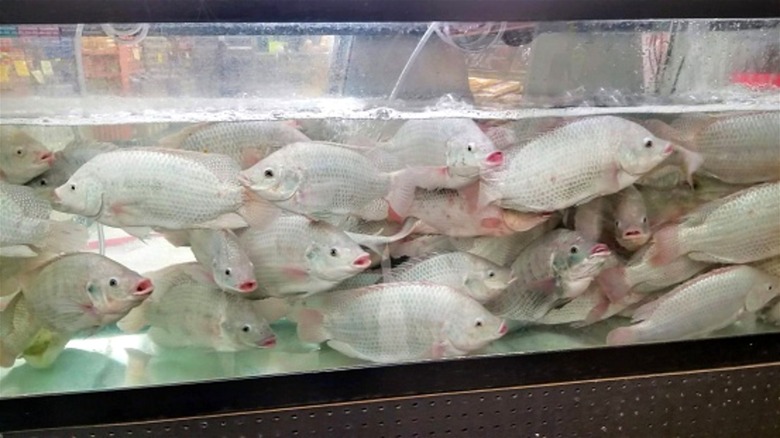
The condition of live seafood tanks, however, can also be an indicator of problems with the restaurant. If the water isn't clear, it's likely that the restaurant doesn't prioritize proper maintenance of its seafood tanks, which in turn may reflect management's attitude towards providing a safe, hygienic space for you to have a good meal.
You also want to make sure the restaurant doesn't overpopulate its tanks. When lobster tanks are overcrowded, for example, the waste they produce could make the water toxic. In some worst-case scenarios, you might even see dead fish in the tank, which is a sign for you to immediately get out of there. Dead fish decay rapidly in tanks, which could then make the rest of the fish sick and unsafe to eat — which also means the restaurant isn't actually putting enough effort into giving you the best-quality seafood.
Lastly, if the live seafood at a restaurant seems a little lethargic — or lacking any other signs that it's fresh, like having shiny skin — it's probably not too great for eating. Fish can stay alive for several days without food, and because waste in the water is a health hazard, it's sometimes advised not to feed them in the tank. This results in much less healthy fish that won't taste as fresh as ones that were caught thriving in their natural habitat.