

The Grilling Mistake That Can Make You Sick
The next time you fire up the grill, make sure you've got two pairs of tongs. One of the most dangerous mistakes you can make while cooking involves cross-contamination, or the transfer of harmful bacteria between food items. If you're using the same pair of tongs for both raw and cooked meat, microbes like salmonella and listeria can essentially hitch a ride and contaminate the food you're about to eat.
High heat typically kills these bacteria, but the frequent back-and-forth movement of your tongs doesn't guarantee that the parts touching the food will stay at the temperatures needed to eliminate the pathogens. There's a good chance that the utensil will hover in the "danger zone": a range of temperatures between 40 and 140 degrees Fahrenheit, where bacteria grow most rapidly. According to the USDA, foodborne pathogens can double in number in just 20 minutes under those conditions. When you take cooked food away from the intense heat of the grill, it becomes a lot less hostile to the bacteria multiplying on your tongs, and the risk of cross contamination increases significantly.
The effects these pathogens can have on your health can range from bouts of diarrhea to life-threatening sicknesses. In the late 1990s, for instance, an outbreak of listeria traced back to Sara Lee forced the company to recall 35 million pounds of meat products. The illnesses it caused resulted in 21 deaths.
Other grilling tips that will help you avoid illnesses
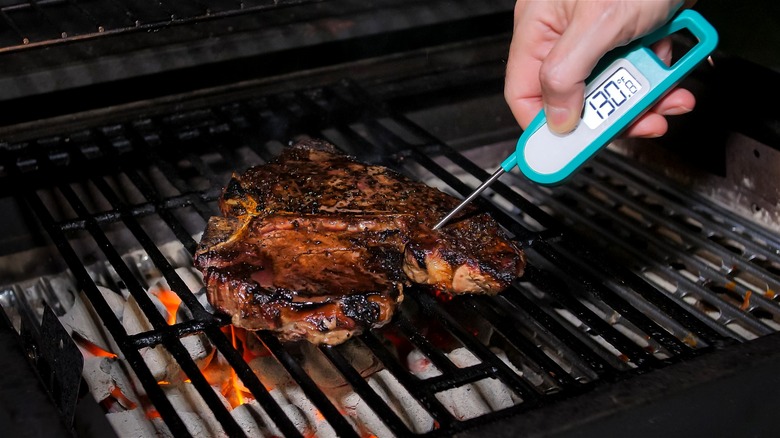
While cross-contamination is a significant concern when grilling, it's also a big mistake to overlook what's happening underneath the surface of your meat. Even though the cooking process purges bacteria from the exterior of your food, you need to make sure the interior gets hot enough as well.
The USDA recommends a range of internal temperatures to target so you can be sure every inch of your food is safe to eat. For most red meats and fish, you'll want to hit a minimum internal temperature of 145 degrees Fahrenheit, while ground meats like burgers need to reach at least 160 degrees. Poultry, leftovers, and casseroles require a higher internal temperature of at least 165 degrees Fahrenheit. Always use a meat thermometer when grilling so that you can leave out the guesswork when it comes to reaching these temperatures.
If you end up with leftovers for both cooked and uncooked food, avoid storing them together. Cross-contamination can still happen inside your fridge. Certain bacteria, such as listeria, are hardy enough to survive refrigeration temperatures. The leftovers should be kept in separate sealed containers, with uncooked meat stored at a level below cooked counterparts so that any leaks in the containers won't lead to raw juices dripping onto your food. Make sure you cook the raw leftovers within five days to prevent harmful bacterial growth and spoilage.