

Is Dried-Out Cheese Safe To Eat?
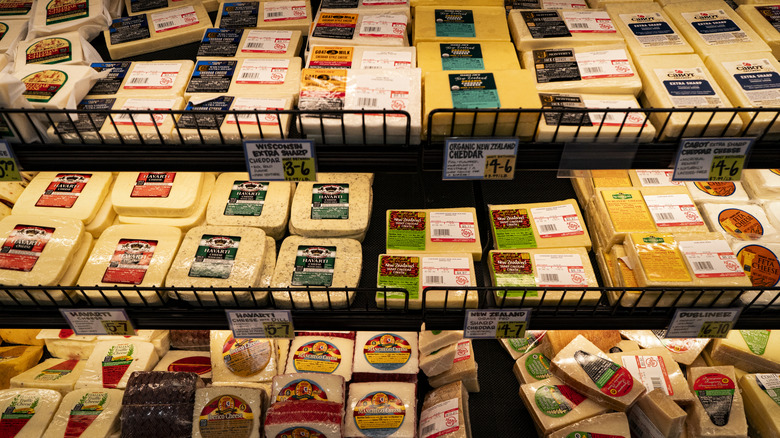
We all have that one partial block of cheese sitting in the back of the drawer. Maybe it'll eventually make it onto a grilled cheese or sandwiched into a quesadilla. But when you actually get around to using it, the cheese might be dried out. If it's just dry, that's simply a sign of moisture loss – moisture that has evaporated from prolonged contact with air. It's not necessarily a sign the cheese has gone bad.
Crusty, dry edges on your block of cheese are a signal it won't be quite as good as when it was fresh, but it doesn't always mean it's unsafe to eat. It won't have the same creamy consistency as it did when you first took it home, so consider using dried-out cheeses for cooked dishes rather than eating it on its own. Think of it like stale bread: It's not going to make you sick, but it may not taste as good.
Cheese is one of the most commonly wasted household food items, so using it before it goes bad can help reduce food waste. Storing your cheese properly is key. Cheese dries out because of the air flow around it, so to store cheese for as long as possible, make sure it's kept airtight (a glass food storage container with a seal will do well here). Cheese paper is also a good option, but something you might not have in your house already.
Telltale signs of spoiled cheese

Using the stale bread analogy: Stale isn't unsafe but visible mold definitely can be, and both old bread and old cheese can grow mold. Warning: Don't eat this kind of moldy cheese. Though some cheeses are actually made with mold, they're produced in a way that makes the mold safe to eat, unlike mold growing accidentally, which can make you sick. Hard and semisoft cheeses like cheddar, Swiss, or Parmesan are still safe to eat even when they're moldy so long as you cut out the mold and at least one inch of the cheese surrounding the mold. However, soft cheeses with mold are never safe to eat.
If your dry cheese looks fine, get a good whiff of it. Does it smell the way that type of cheese usually smells? If so, it's fine. If you get a hint of sourness or ammonia, that's usually a sign the cheese has gone bad. You can do the same test by tasting the cheese but use a small amount just in case it's spoiled. If it tastes metallic, bitter, or strangely fizzy, toss it.
Check out the texture, too. If you bought fresh cheese that's suddenly starting to look crumbly and dry like an aged cheese, that's usually a sign of spoilage. Also take note of a contrasting exterior to interior texture. If the edges are dry but the inside is normal, that's simply how cheese dries out over time. But if the outside is slimy or sticky while the inside is dry, that means overeager bacteria have begun to find your cheese delicious before you can get to it.