

The Airport McDonald's Where Your Fries Are Cooked In Future Jet Fuel
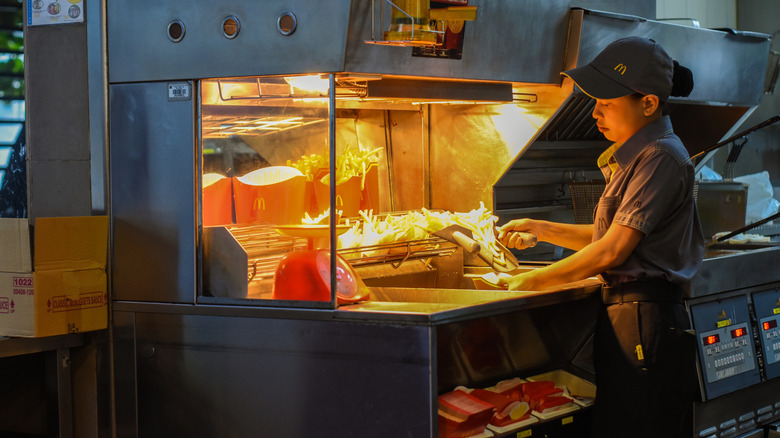
It would be understandable if your thoughts about the McDonald's menu didn't go much further than how to score the freshest fries or applying other ordering hacks at the Golden Arches. What happens to the food waste left behind might not cross your mind. At Dallas Fort Worth International Airport, the oil used to prepare fries has a much greater life beyond the fryer. It doesn't get thrown away once it's no longer fit for the kitchen. Instead, it's transformed into sustainable aviation fuel that might later end up helping a plane lift you off of the runway.
The recycling program began in 2019 when Dallas Fort Worth International Airport partnered with Neste, a sustainable fuel producer, to collect used cooking oil from various airport restaurants. These include five McDonald's locations. Also involved in the undertaking is Mahoney Environmental, which picks up and recycles cooking and fryer oil from over 90,000 restaurants in the United States. According to Neste 32,000 pounds of this food waste are gathered from McDonald's and other restaurants at the Dallas Fort Worth airport each month.
It's unclear how frequently the Golden Arches offloads used cooking fat. However, social media users might provide an idea of what's possible. According to a McDonald's manager on Quora, their location changes the oil every seven to 10 days, although the goal is to make it last 14 days. While stores try to keep it clean by filtering after several batches, at a certain point it will degrade and start to affect the quality of the food being fried.
How french fry oil becomes sustainable fuel
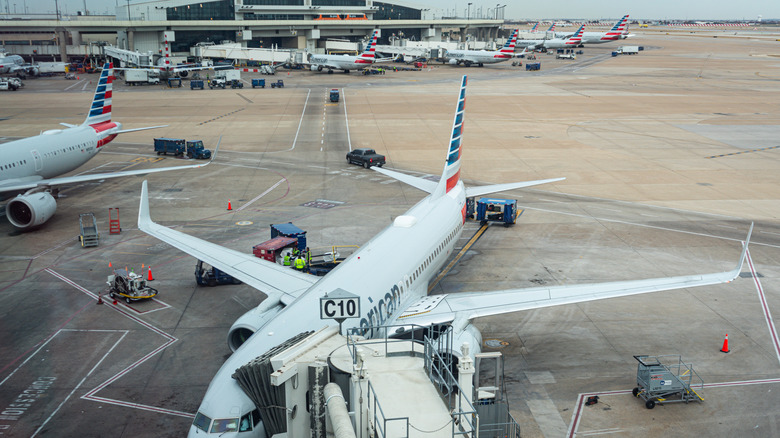
McDonald's French fries are cooked in a vegetable oil blend. This doesn't sound like it could chemically meet the requirements of jet fuel made with a blend of hydrocarbons sourced from petroleum. However, after it leaves the fryers, it is collected and transported for processing.
First, food particles get filtered out of the oil, which is then treated to remove any impurities. It goes through a refining process that breaks the oil down chemically and reformulates it into the kind of hydrocarbon molecules that could power a plane. These in turn get mixed with regular jet fuel and can account for as much as half of the final product. From there, the biofuel blend gets sent to airports.
Just as there are various styles of McDonald's French fries around the world, different countries have their own cooking oil recycling programs. According to the chain's U.K. website, every year 618,000 liters of used cooking oil get taken from 165 London locations and produce about 532,000 liters of biodiesel. When it comes to Indian McDonalds restaurants, about 35,000 liters get converted each month. Meanwhile, over in the Netherlands, 1,000 tons of used cooking oil from Mickey D's got upcycled in a single year (2021).