

3 Of The Best Ways To Safely Get Rid Of Bacon Grease

We may receive a commission on purchases made from links.
You may have heard the phrase "liquid gold" used to describe pasta water, which became trendy because people realized they could utilize it for other purposes after boiling a pot of pasta. However, there is another ingredient that's also known as liquid gold: bacon grease. While you can repurpose it to make various foods, drinks, or even home decor, there is a limit to how many times you can reuse cooking fat before tossing it. Beyond that, there are only so many bacon-scented candles and infused cocktails you can make before your senses are bacon-ed out. How do you get rid of the excess grease?
First of all, you should always think twice before discarding any type of oil or grease down the sink. It could combine with flushable wipes and sanitary products, creating sizable "fatbergs" that clog pipes. But pouring grease into a garbage bag with the rest of the household trash does not seem like the most sound idea either. What if the bag punctures and leaks? That mess will be very difficult to clean. Fortunately, there are convenient options for storing grease in small batches, having the fat recycled, and even cleaning up after spills.
Collect small amounts of grease in a disposable container
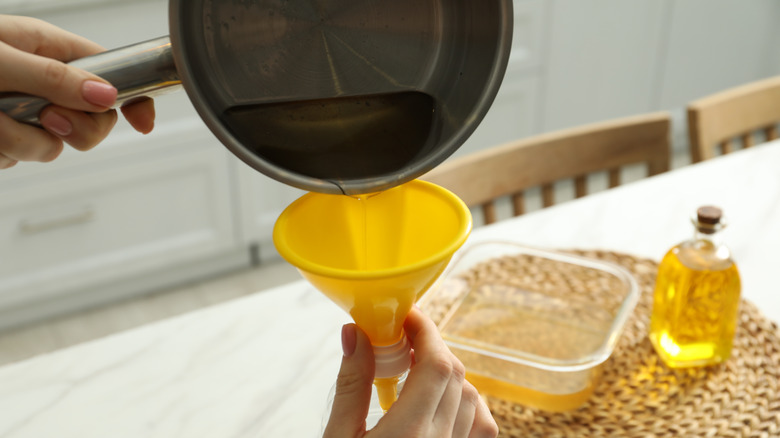
If you only have to deal with a small amount of leftover bacon grease, the easiest solution is to collect it in a sealable container. Consider items like empty yogurt tubs and deli containers. When one gets full, simply place the lid on and secure it with something strong like duct tape. Then chuck the container into the trash bag before tying it up and hauling it to the curb.
If the smell of rancid grease bothers you, or you have a pet that likes to lick cooking fat (we see you, cat owners!), put this container in the fridge or freezer while waiting for it to fill up. This greatly helps to mute the smell while keeping it out of reach from inquisitive animals. Some folks might occasionally perform a big fry-up and have a more significant amount of grease. In that case, powders like FryAway work almost like magic to harden cooking fats for easy disposal. The product is also touted as biodegradable, so you can compost these hardened disks of grease at home or at a dedicated facility.
Look for facilities that recycle cooking oil
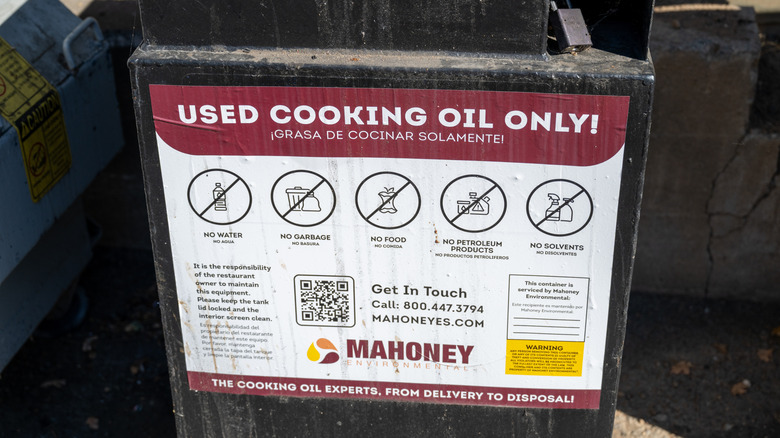
If, for whatever reason, your kitchen regularly generates a large amount of leftover bacon grease (or cooking oil for that matter), it is worth seeking out places that will take it off of your hands and recycle it. The website Earth911 has a directory for purposes like this — just enter your zip code and it will list available collection facilities. These locations will process what would otherwise be waste material into goods like biodiesel or even building blocks for bioplastics.
For folks who want to transport their grease to a recycling place, there are a couple of storage recommendations. First, check if the collection center has its own containers that you can use. If not, a good substitute is to use an empty vessel designed to hold cooking fat. For example, if you buy cooking oil from the store, you can keep the old empty bottles and use them to hold bacon grease.
How to take care of grease and oil spills
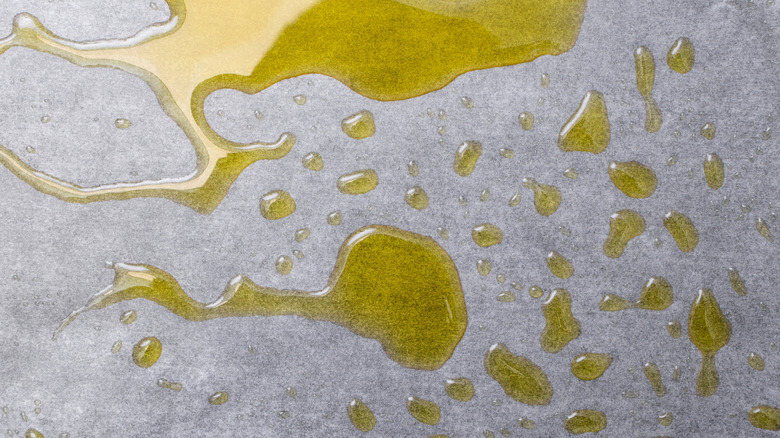
What if you need to deal with bacon grease that ended up on the floor or counter? You might already know that you can clean up spilled oil with a pantry item like flour, cornstarch, salt, or baking soda. The same approach applies here. Use the powdery products will soak up the fat before sweeping it all up into the garbage can.
There needs to be an adequate amount of starch or salt to absorb the amount of grease that spilled, and it has to sit for at least a few minutes to remove as much as possible. (It may take as long as 15 minutes.) You can then grab a brush and dustpan to clear it off of the affected surface. Follow that up by using your preferred cleaning agent (vinegar, soap, etc) and rags to get the greasy spots back to their usual squeaky clean state. Clean the rags by boiling them in hot water and vinegar before running them through a hot water cycle in your washing machine.
You may be wondering: Why not skip using flour or baking soda and just use paper towels or rags? If it is a small spill, then those are fine options. But if it is relatively large, you will need a lot of paper towels to soak up the mess properly. You could grab a rag and squeeze or clean it in between wipes. However, you may end up wasting much more water than you bargained for unless you plan on using a disposable cloth or towel. Starchy powders or salts simply do a much better and more economical job.