

Forget Cleaning Chemicals; These Pantry Staples Make Oven Racks Look Like New
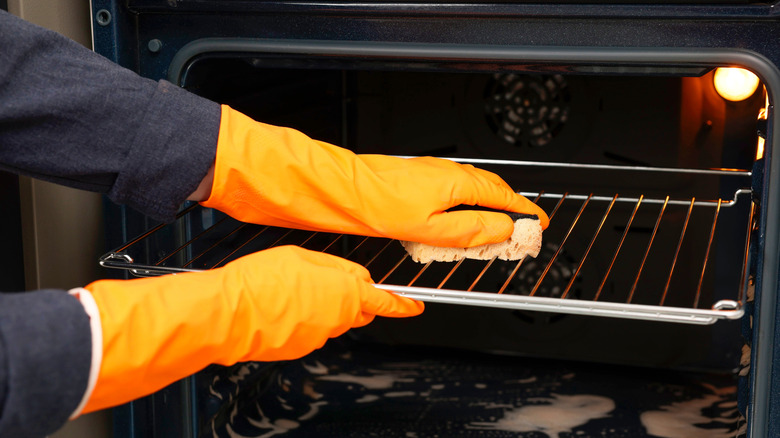
As one of the workhorses of any kitchen, most ovens can get pretty grimy after a while. However, many people may be reluctant to coat their racks with the assortment of chemicals commonly found in commercially sold oven cleaners. Fortunately, the solution is likely already sitting in your pantry. It's two common powders, both of which have a variety of uses, culinary and otherwise: baking soda and cornstarch.
Although baking soda may be somewhat well-known as a home cleaner, fewer tips and tricks focus on cornstarch. For those unfamiliar, it's a flavorless, odorless, finely ground powder made from the dried and ground endosperm (interior) of corn kernels. As a pure starch, the main uses of cornstarch are for textural purposes, helping thicken soups and stews, produce more tender baked goods, and add an ideal, gluten-free crunch to battered and fried items.
However, it's also a dynamo when it comes to cleaning. It readily absorbs grease, making it easy to wipe away, while also functioning as a gentle abrasive to help scour off grime without damaging your oven. Typically, it's combined at a ratio of two tablespoons cornstarch to one tablespoon baking soda, then mixed into a thick paste with water.
Cornstarch and baking soda are by no means the only foods that are actually great to clean with, either. Adding a few drops of white vinegar or lemon juice to the paste before applying boosts the non-toxic cleaning power of your homemade oven cleaner, thanks to the grime-fighting acidity.
Safe and affordable oven cleaning
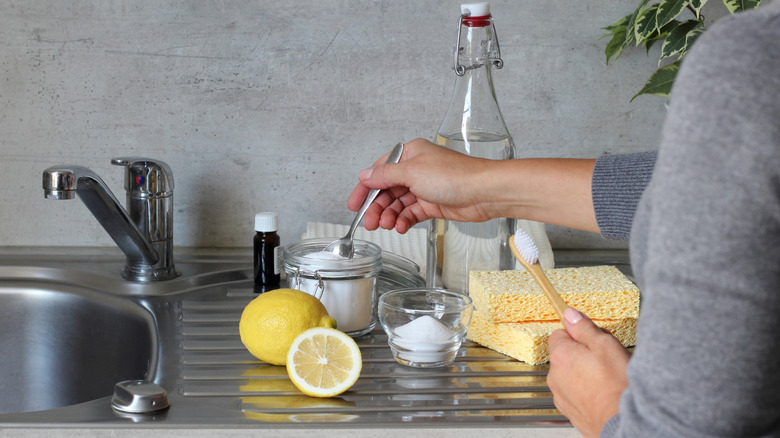
Not scrubbing down often enough is a classic mistake everyone makes when cleaning the oven, with best practices suggesting an immediate post-cooking wipe-down of any notable stains, combined with a more thorough scrubbing every three to six months. Although this cornstarch-baking soda mixture can be effective, it's best used on a regular basis to prevent grime from building, rather than sporadically trying to do a deep-clean, which may be much less effective.
To give it a try, apply the paste to your oven racks, then wait at least 15 minutes (or as long as overnight) to allow the mixture to absorb grease before scrubbing off with a non-abrasive brush, sponge, or cloth. The combination of grease-lifting power and slight abrasion is said to leave your oven racks sparkling after a rinse. But while this method is debatable as far as effectiveness, it's also totally non-toxic. Both baking soda and cornstarch sold at typical supermarkets are safe for human consumption, even though any remnants should be long gone by the time you fire up your oven.
Additionally, this mix can be substantially cheaper, with boxes of baking soda and cornstarch costing only a dollar or two per pound (enough for many oven cleanings and other uses), notably less than specialized chemical oven cleaners, which can reach $5-6 or more per can. Since this trick relies on basic properties of both of these powders, there's no issue opting for cheaper store brands over pricier name brands. So turning dirty, greasy, grimy oven racks into sparkling ones that look like new can be done without the cost or chemicals that come with commercial oven cleaners.