

Why Do Bell Peppers Shrivel Up (And Should You Still Eat Them)?
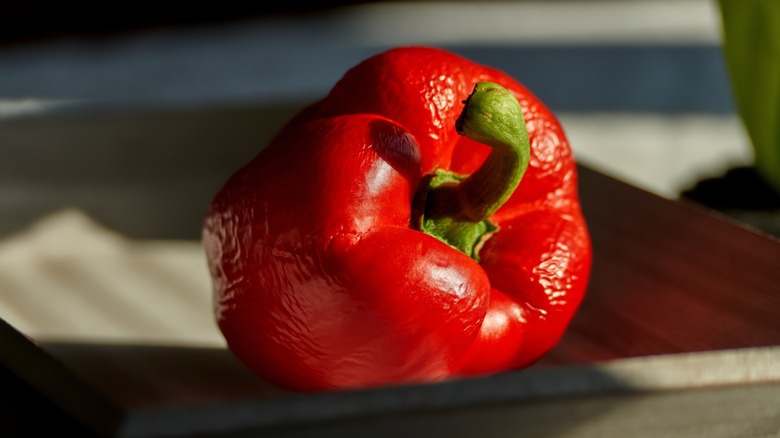
It's a sight that's confronted most veggie-friendly home cooks at one point or another: a shriveled bell pepper. Maybe meal plans changed or it simply got pushed to the back of the produce drawer and forgotten. In any case, home cooks eyeing these less-than-ideal-looking peppers may wonder why it happened and whether they can still eat the vegetable. Fortunately, you can, and the reason why it happens is a reassuring explanation for pepper lovers looking to avoid waste.
First, it's critical to understand peppers are over 90% water. This is among the highest for any fruit or vegetable, beaten only by a handful of ultra-fresh options like cucumbers, radishes, lettuce, cabbage, and celery. However, once a pepper is picked, it loses this moisture through natural processes. This occurs regardless of how the pepper is stored. As the water leaves plant cells, the outer skin sags and creases, creating the wrinkles.
Still, wrinkled peppers are generally fine to eat, with a few caveats. Most importantly, it's likely they'll have lost some of the characteristic crispness and freshness that bell peppers are known for. On the other hand, they may also take on a slightly more intense taste, as the flavor compounds remain constant in the pepper flesh even as the water content decreases.
The right uses for slightly shriveled peppers

Although there are plenty of ways to save produce that's gone bad, the best strategy for using shriveled peppers might simply be rethinking how you prepare them. Instead of texture-forward fresh uses like salads or crudités, integrate them into cooked dishes where flavor is paramount. Those intent on trying to revive their wrinkled peppers can attempt to restore some crispness by slicing them and placing in an ice bath for a few minutes before using. However, this will likely do more for the pepper's texture than its appearance.
It's also vital to recognize when a pepper has progressed beyond harmless wrinkles to a state that requires you to get rid of it. Peppers share similar signs your food has gone bad with other types of vegetables and produce, including obvious changes in color, an overall mushy or slimy texture, offensive smells, and of course, any visible mold.
So, don't let a few wrinkles on your bell pepper derail your meal, especially if they'll be cooked, like in our delicious roasted red pepper pasta sauce recipe. A little shriveling isn't the end of the world and is likely safe to eat if other aspects of the vegetable check out.