

The Gross Thing You Should Know About Your Spices
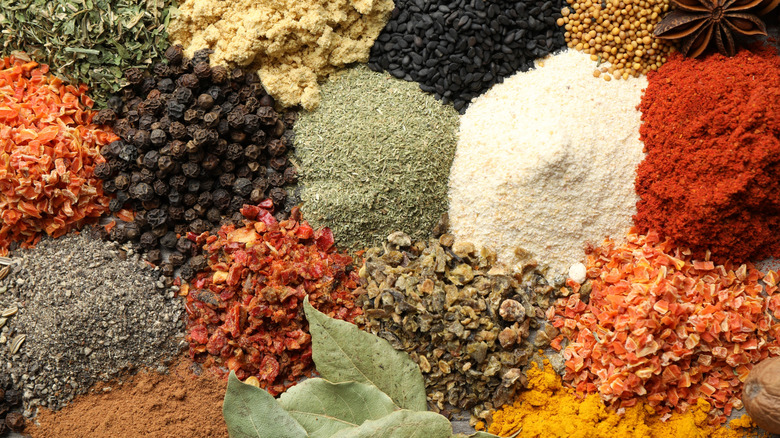
Ah, spice! It seasons your food and drinks, comes with health benefits (did you know spices can help with allergies?), and let's be honest, they look pretty good just sitting on your countertops. But if you look closer, perhaps under a magnifying glass or microscope, you may find your spices do not just contain spice. There are many non-food items the Food and Drug Administration (FDA) actually allows in our food, and it may turn your stomach. For spices specifically, the top categories of non-food items you will find are insect fragments, rodent hair or droppings, and mold.
While this may make you queasy, according to the FDA's Food Defect Levels Handbook, "Federal regulations ... [allow the FDA] to establish maximum levels of natural or unavoidable defects in foods for human use that present no health hazard." This is because it's nearly impossible to produce some products that are completely free from non-hazardous defects that occur naturally, like bugs. What this means is that while there is a certain number of gross things that happen to food every day, it's just that — gross. But not harmful to your health.
How bugs get in your spices and what to do about it
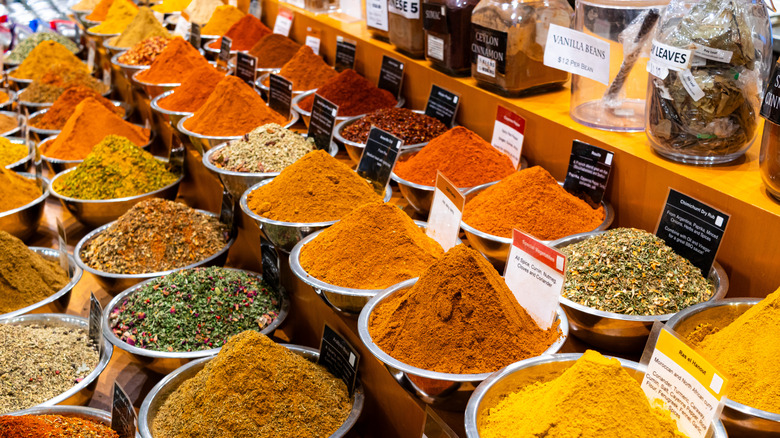
The majority of raw ingredients for spices grow outdoors. Then they're sorted to remove subpar pieces and debris and cleaned with food-safe alkalis before drying them. During processing and transportation, large sacks of spices are moved across long distances, sometimes even oceans, and stored in warehouses before being packed into smaller packages to distribute to retail stores. Insects, rodents, and mold can easily reach the spices at every stage of this process, and while every step is taken to ensure cleanliness, it is impossible to hermetically seal this system from end to end.
So what can you do to minimize risk when your jar or packet of spices reaches your home? Always inspect the packaging the spices came in: Check whether the seal is still intact or if there are holes in the bags. When you get home, immediately store the spices in the freezer for about four days to kill any bugs that may be present. After that, your spices are ready to be sifted and decanted into smaller, airtight containers. Or you can reach for conscious brands like Burlap & Barrel and Diaspora Spice Co., which have smaller teams dedicated to high quality spices while maintaining a relationship with partner farms built on trust. And as a bonus, you will be supporting small, regenerative farms around the world. Just remember if you do accidentally eat a bug or a piece of hair, chances are extremely good that you will be fine!