

This Morning Pick-Me-Up Was Essential To Life On The Oregon Trail
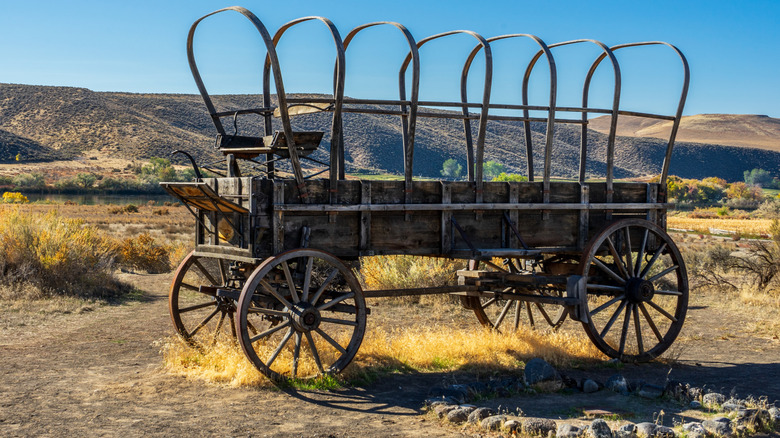
How might you fuel up to travel along a 2,000-mile trail by foot and wagon? Yes, food is essential, but coffee is also called for. Even before the days of Starbucks drive-thrus and fancy at-home espresso machines, this brew served as the morning pick-me-up for thousands of pioneers traveling on the Oregon Trail.
When you buy coffee from the store, you might only grab a bag that weighs 1 pound or less. Before early settlers took off on the Oregon Trail, they were typically bringing along 100 pounds of coffee beans for a group of three on the four to six month journey, according to National Park Service. Alongside their morning brew, the pioneers would eat foods like bacon, biscuits, cornmeal mush, or bread. When food was in short supply, or not even available, many would depend on coffee to keep them going.
When you run out of coffee at home, you might opt for stopping at a cafe to get your morning brew. With generally no access to stores or supplies along the trail, pioneers would have to drink an alternative made of ground peas or corn boiled in water. They might also consume a beverage made with dried horsemint.
How coffee was prepared on the Oregon Trail
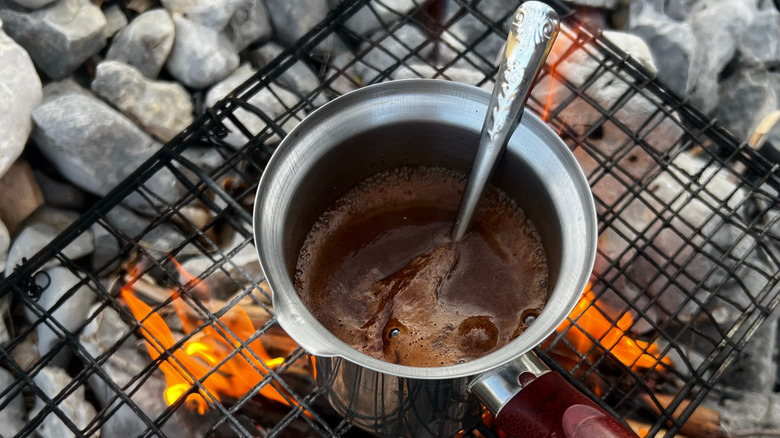
Most mornings began before daylight, and the first order of business was restarting the previous night's fire to start breakfast. Women were typically charged with this important task. While we always buy roasted coffee from the grocery store, pioneers traveled with green coffee beans that were roasted in a pan over open flame.
Although space on wagons was limited, settlers still made room for coffee grinders. (Even today, a coffee grinder is considered an important tool for making a good cup of joe at home.) Travelers on the tail brewed their crushed beans in a pot of water over the fire. This method is best known as the way to make "cowboy coffee," and it produces a potent drink. For pioneers and cowboys spending physically and mentally exhausting days outside, the stronger the coffee, the better. It also had the benefit of sterilizing the water and potentially sparing people from illnesses like cholera.
Folks on the Oregon Trail would typically take their coffee black, or sometimes with sugar. If they brought cows on the arduous journey with the wagons, the pioneers also would have had access to fresh milk at times.