

You Should Never Store Potatoes In The Fridge. Here's Why
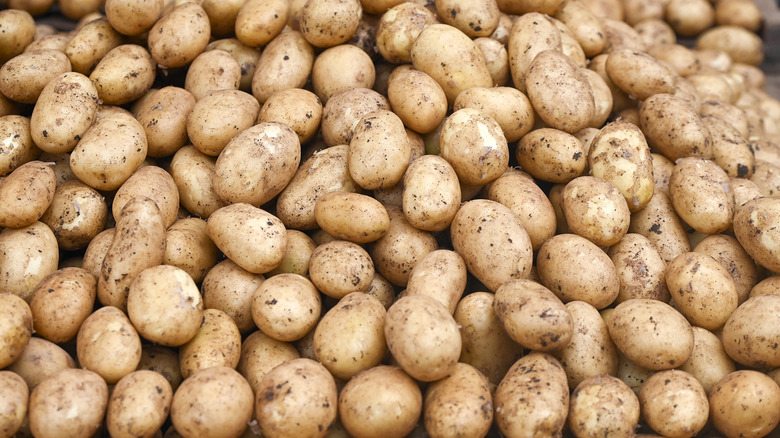
Potatoes are among the starchiest vegetables. That starch can be put to good use throughout the kitchen, but when you're thinking about where to store your potatoes, it's also the key to keeping them fresh for longer. Starches are complex carbohydrates, which means they can be broken down into sugar under the right conditions. For potatoes, that's a bad thing — but it's exactly what will happen if you store your raw spuds in the fridge.
Potatoes don't need to be stored in the refrigerator because the cold hastens the breakdown of those complex carbohydrates into sugar. This causes the potatoes' taste to change, making them unpleasantly sweet with a sandy texture. Those aren't exactly the descriptions you expect from a delicious plate of french fries or mashed potatoes.
That chemical change also alters the way the potatoes behave during cooking. The sugars brown (and burn) more quickly than the natural starches when frying, and that means the outside will be dark before the potato is cooked all the way through. Sugars created when starches break down (along with the amino acid asparagine) can also convert into acrylamide when cooked at high temperatures. Acrylamide is a naturally occurring chemical substance, and at high levels, it has been shown to cause cancer in animals. The FDA is still researching whether it poses similar risks to humans.
Keep spuds in a cool, dark place with good ventilation
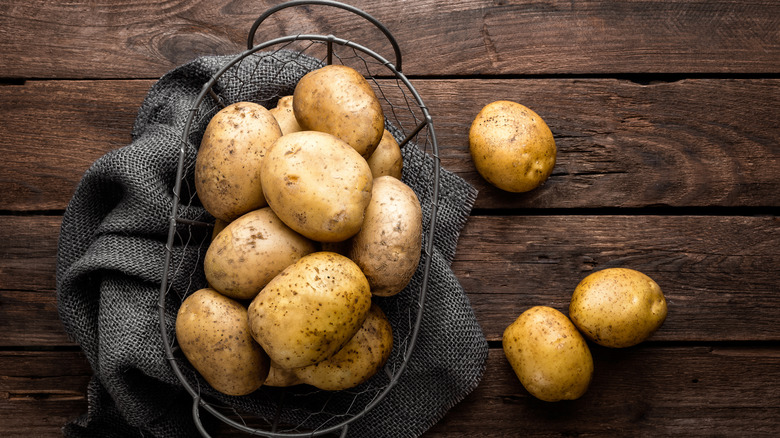
Skip the fridge when storing your potatoes and look for a cool, dark place instead, like a pantry. The ideal temperature range for potato storage is between 45 and 55 degrees Fahrenheit, which is higher than the inside of a refrigerator but lower than the average room temperature. If you're storing them in a container, make it a breathable one, such as a basket, perforated bag, or cardboard box. Avoid plastic bags, since they can trap moisture and spoil the potatoes faster.
Put these tips into practice, and you can expect your potatoes to last for months, though the exact duration varies by potato type. Most varieties last up to two months, although some types will stay fresh for even longer under the right circumstances. Yukon golds can stick around for three months and russets up to five, though that's a high-end estimate. These time frames will also vary based on how fresh the potatoes were when you bought them.
In addition to sparing fresh potatoes from the fridge, it's worth noting that onions and potatoes shouldn't be stored next to each other. This tidbit of advice is grounded in scientific fact. Onions emit ethylene gas, a natural substance released during ripening that can over-ripen the many fruits and vegetables that are sensitive to it (like potatoes). Keep sufficient airflow between them, and try to avoid putting them in the same bag or on the same shelf.