

Should You Season Your Cast Iron With Flaxseed Oil?
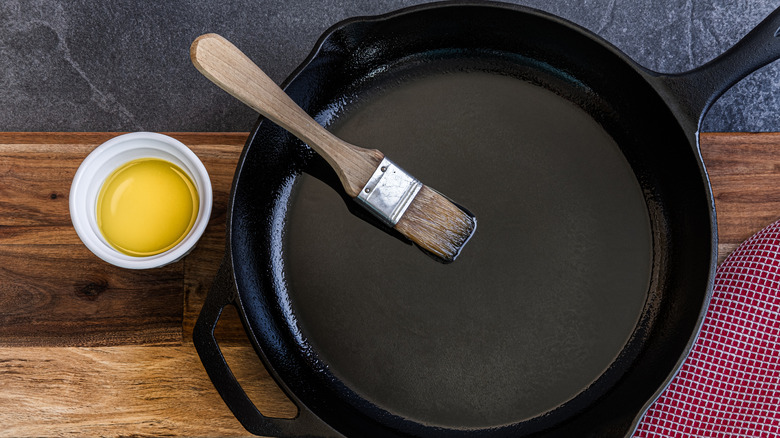
Seasoning your cast-iron cookware is one of the most important things you can do to keep your gear in top condition. When cared for appropriately, these kitchen workhorses can last generations, but when mishandled, they can begin to rust and degrade before you know it. Although most cooks who use cast iron are familiar with the concept of seasoning, they may not be getting the finer points right. One of the most critical is the oil used in the process. The choices range from vegetable oil to a host of exotic oils, including flaxseed oil. But is this latter option a good choice for your cast iron? Overall, the answer leans strongly toward no.
Generally speaking, the main principle in cast-iron seasoning is to use an oil with a high smoke point. Seasoning requires heating the pan up to 450 degrees Fahrenheit, a temperature that can cause some oil to start sending unpleasant acrid smoke into your kitchen. However, the amount of smoke (and how soon it begins) is strongly affected by an oil's smoke point, the temperature at which visible smoking begins.
Options like butter or extra virgin olive oil are considered low-smoke-point cooking fats, starting to smoke in the low- to mid-300-degree Fahrenheit range. In contrast, refined avocado oil can reach over 500 degrees Fahrenheit before it begins to smoke, while canola and safflower oils don't hit their smoke point until the high 400s. However, flaxseed oil sits at an astoundingly low smoke point of around 225 degrees Fahrenheit, meaning it'll be belching out smoke long before your pan reaches appropriate seasoning temperature.
Flaxseed oil makes for a poor seasoning choice
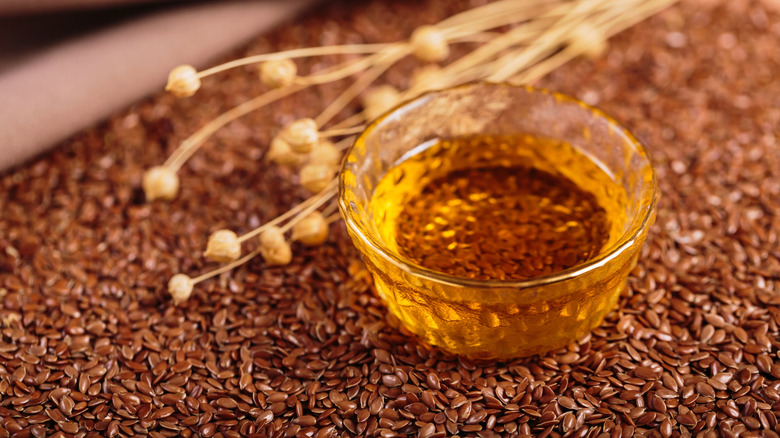
Another key element for seasoning your cast iron is an oil with a neutral or non-existent flavor. You don't want your seasoning to influence the flavor of food cooked in your cast iron. Flaxseed oil is generally referred to as having a mild, nutty flavor when fresh, but it can sometimes take on an unpleasant fishy odor, too. This is due to the high amount of fatty acids present in the oil, which can quickly oxidize and taste rancid, something all home cooks want to avoid in their prized cast iron.
Despite these fundamental issues, foodies may still encounter guidance suggesting seasoning their cast-iron cookware with flaxseed oil. Many are seeking the sleek looking, ultrasmooth appearance that flaxseed treatment can provide. However, according to Serious Eats, while attractive, this coating is far more fragile than typical seasoning layers and can easily flake off. Instead, cast-iron maker Lodge suggests regular vegetable or canola oil for seasoning, which are also substantially more affordable than flaxseed oil.
So, if you've invested in one of these cast-iron skillets for your kitchen, don't make the common mistake of improperly seasoning it. Although there may be some trendy advice to swap out traditional high-smoke-point seasoning oils for flaxseed, it's worth ignoring. Because of its ultra-low smoke point, sometimes unpleasant flavor and aroma, and generally brittle seasoning layer, it's not a great idea to season your cast iron with flaxseed oil.