

Why Are Bananas Considered Bad Luck At Sea?
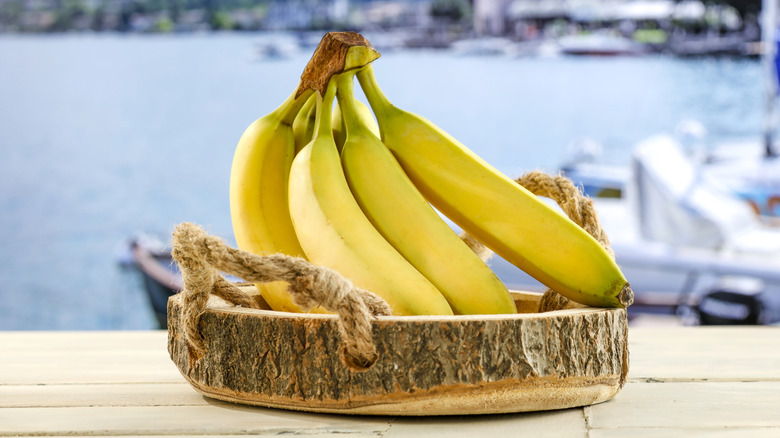
Plenty of unusual rules, traditions, and superstitions come with a life on the water. One of those is the informal prohibition of bananas on boats because wary fishermen and sailors view the fruit as bad luck. It turns out there are many possible explanations for this feeling, some with roots in actual, real-world problems.
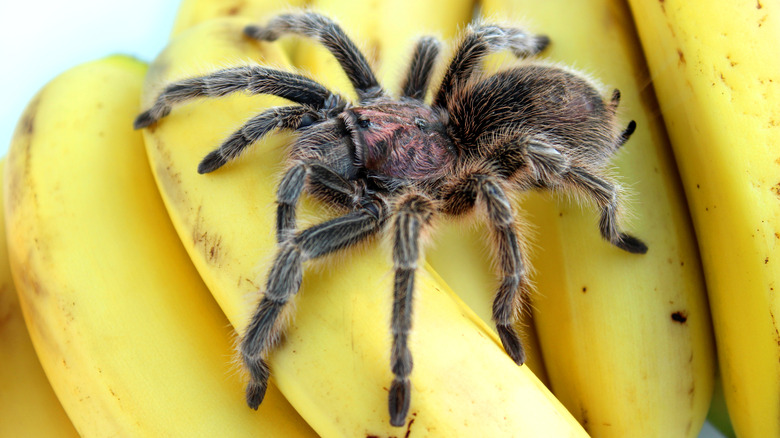
The idea that bananas are a major no-no among anglers and boaters may date as far back as the 1700s. In those days, the issue was likely practical. Boats transporting large numbers of bananas have historically had to deal with venomous spiders, snakes, and other unpleasant creatures tagging along. A 1938 New York Times article noted that the cargo could harbor large Central American boas, scorpions, and tree frogs that have been described as "grotesque and bizarre." While not all the bugs and reptiles known to infest the fruit pose a serious danger to humans, crews may still have seen them as perilous or not wanted to spend much time working and sleeping nearby.
Another hazard that might have led to this bad reputation involves an observable scientific phenomenon. The unlucky yellow fruit releases extensive amounts of ethylene gas as it matures. This substance acts as a genetic trigger that causes bananas to brown quickly and speeds up the ripening process of other produce (including apples, stone fruit, tomatoes, and avocados). Sailors may have discovered bananas causing other provisions to ripen (and rot) faster than expected, leaving them without crucial food for long trips on the high seas.
Many reasons to leave the bananas on land
While factors like spiders and spoilage might provide real-world grounding for the superstition, other possible explanations abound. For example, one theory argues that ships transporting bananas had to move more quickly than usual to ensure the cargo reached its destination before going bad. Supposedly, this extra speed made it difficult for crew members to fish off the ship, leaving them even hungrier. Another account alleges that bananas naturally fermented and produced alcohol that could spark large and deadly fires on board.
Others even speculate the classic slapstick hazard of slipping on a banana peel could have played a role. Most grimly, one explanation holds that after a shipwreck, the fruits would float together on the surface of the water while the vessel (and its unlucky crew) sank to the bottom.
Naturally, most — if not all — of these potential sources for the anti-banana superstition don't apply to modern boaters, particularly those heading out on the water for short pleasure or fishing trips. However, social media posts about the superstition (and accidentally running afoul of it) suggest it's still taken seriously by a small number of sailors, boaters, and guides, even if a larger number scoff at the idea. So, whether or not you see this bad-luck label as a false belief about bananas, it may be worth waiting to snack on one until you're back on dry land — just to be safe.