

What Happens To Leftover Airline Food?
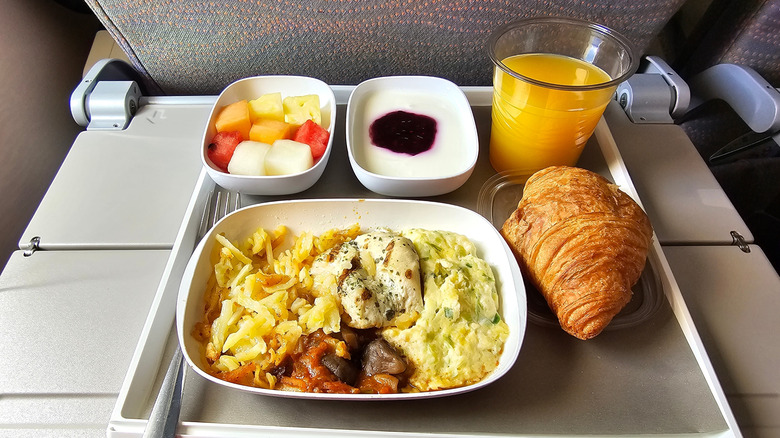
Something people often get wrong about airplane food is assuming it was made long before it's served on board. The truth is, an airline's food is prepared specifically for the flight it's about to go on, which is better for diners at 30,000 feet, but also means there's a ticking clock that starts when it's cooked. The truth about your airplane meal is that it's not good for much time beyond the flight itself. There aren't a lot of ways to reuse or repurpose leftover meals post-flight, which results in a surprising amount of airplane meals being sent directly to the garbage upon landing.
This practice is yet another contributing factor to the growing food waste problem worldwide. On an airplane, food that has been opened must be discarded, and a significant number of unopened items are thrown out, too. In 2024, the International Air Transport Association (IATA) published data from a series of audits analyzing waste produced on airplanes, and food garbage dominated. The IATA's findings showed that 65% of the waste produced on airplanes was from food and beverages, and unopened meals made up 18% of all waste. The vast majority of that trash goes to a landfill or incinerator, often due to regulations that prohibit airline meals from being reused for food safety reasons. New procedures are helping to cut down on this major food waste problem.
Airlines have tested and implemented new strategies to reduce food waste
As more attention is paid to the massive amounts of uneaten food discarded from airplanes and food waste in general, some airlines have adopted new approaches. In 2025, Airbus and Virgin Atlantic partnered to reduce waste through a prevention method known as "Smart Catering." AI forecasting models were used to track how many units of each meal were served, while monitoring the remaining inventory. Over time, this system is intended to help catering teams prepare the right number of meals, so unneeded food never even enters the airplane.
Other airlines separate unopened food packages (like sugar packets or bagged snacks) from the rest of the uneaten food at the end of the flight. Since they're factory sealed, these items can be reused on other flights. Air New Zealand reported in 2020 that within three years of launching its sustainability initiative, Project Green, it had repurposed 890 tonnes of food. Certain items can also be donated, but the practice hasn't become widespread because of strict international food safety regulations.
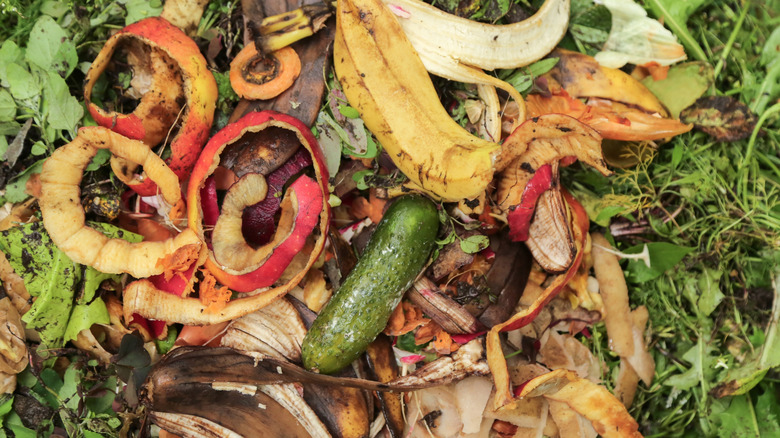
Some caterers have begun composting programs for leftover food. LSG SkyChefs, a company that provides food for American Airlines and others, composts scraps from preparation and uneaten food from airplanes. After a meticulous process to convert the waste into compost, the nutrient-rich soil is sent to agricultural businesses to grow new crops. Approaches like this show promise, but they remain largely experimental rather than mainstream.