

Do Aldi Products Contain MSG?
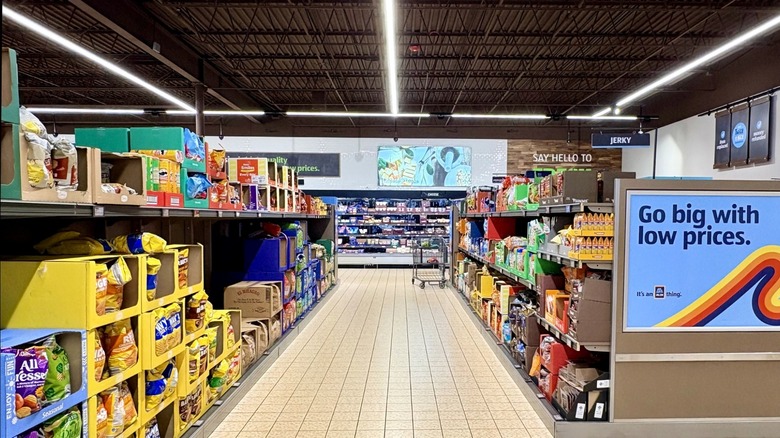
Back in 2015, Aldi established ingredient standards, a set of guidelines governing its brand-exclusive food products. The standards originally involved the removal of 13 synthetic colors, partially hydrogenated oils, and added MSG from its offerings, all in the name of meeting the demand for simpler food formulations. The standards continue to evolve, with as many as 44 additional ingredients lined up for removal by 2027 on top of a few other major changes with its private label products.
Does this mean Aldi's products have been completely MSG-free for over 10 years? Yes and no; there's a little bit of nuance to the matter. It's important to note Aldi specified it only removed added MSG from its products, and that's some fairly significant wording.
MSG is a naturally occurring compound in many foods, so any Aldi product that contains those foods as ingredients may still have some MSG in them. This includes ingredients like yeast extract, tomatoes, cheese, and mushrooms. The compound is so prevalent in what we eat that FDA guidelines state any products made with ingredients that naturally contain MSG can't be labeled as being MSG-free. If you want to avoid MSG altogether, you'll have to skip out on many common foods — including a bunch of Aldi products. But do you really want to stop munching on Aldi's cheap private-label cheeses?
What exactly is added MSG and is it actually bad?
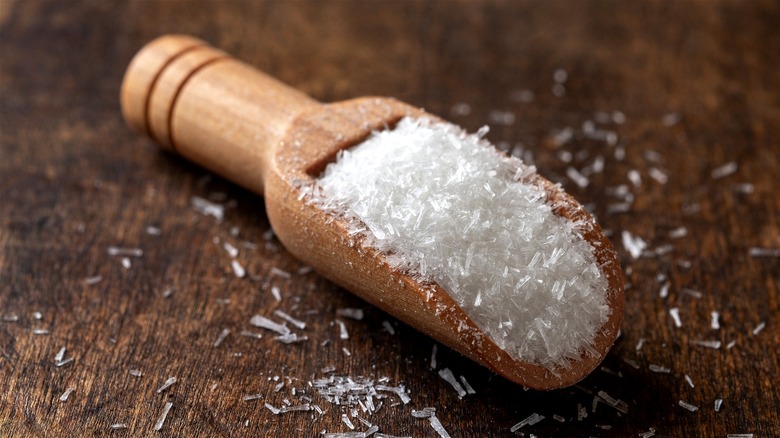
With a name like monosodium glutamate, it's easy to imagine MSG as some sort of artificial flavor enhancer instead of what it really is: a purified form of natural flavors. When a food label says it contains added MSG, there's a high likelihood it's just salt made from organic ingredients.
Ajinomoto Group, the world's largest producer of MSG seasoning, invented the stuff more than a hundred years ago using seaweed broth. Over the years, the company refined its process until it came up with the current recipe, which involves fermenting corn starch, cassava starch, and sugarcane, and then crystallizing the resulting amino acids into a salt. And yes, this means MSG is vegan, making it a great bridge for people who want to transition to the lifestyle without missing out on meaty, umami flavors.
As for why it gets a bad rap, a major myth about MSG was likely born from racial bias and mass hysteria. In the late 1960s, a doctor felt unwell after eating at a Chinese restaurant and published an article speculating a handful of ingredients, including MSG, may have triggered it. The public latched on to the idea, and suddenly "Chinese restaurant syndrome" became a thing. FDA-commissioned laboratory tests in the 1990s found milder symptoms associated with the hoax could only be replicated if people with certain sensitivities ate more than 3 grams on an empty stomach, which isn't something anyone should be doing, anyway. When consumed normally, MSG is generally recognized as safe.