

Why Coffee In Italy Often Comes With A Shot Of Seltzer Water On The Side
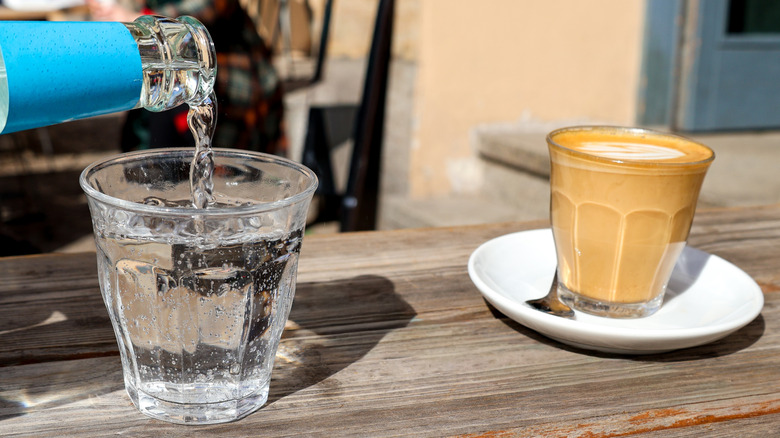
It's no secret to most coffee fans that Italians take the drink quite seriously. Since it was first introduced in the 16th century, coffee, cafes, and traditions have played an important role in Italian culinary culture. Some of these longstanding traditions might be a bit inscrutable to modern drinkers, particularly those from outside the country. This includes one refreshing, but sometimes unexpected, accompaniment to coffee in Italy: sparkling seltzer water. The reason is linked to both a desire to improve the drinking experience and the pride many coffee shops take in its brew.
The small glass of fizzy water presented alongside the coffee (sometimes known as a sidecar) acts as a palate cleanser when drunk first, removing the aftertaste of anything the drinker imbibed or ingested beforehand. Carbonated water is particularly effective at this for a few reasons, starting with the bubbles themselves, which gently remove lingering flavors with its fizzing. Meanwhile, slight acidity helps cut through oily or strong leftover residue, while the absence of any flavor leaves the drinker's mouth primed to fully experience the coffee they're about to drink.
There's also an element of pride in ensuring the drinker's palate has been fully cleansed. The tradition dates back to long before standardized, mass-produced coffee was common, when many coffee shops served unique blends and roasts of its own. By properly eliminating previous aftertastes and flavors, shops could be sure the customer would experience the flavor and aroma profile of the brew in its entirety.
Sidecar of water and coffee culture in Italy

While sparkling or seltzer water may be typical, it's worth noting it's not the universal choice. Some point to how the effervescence can slightly numb or dull taste buds, while others argue it can disrupt how you perceive the aroma of the coffee. Therefore, there's nothing wrong with swapping in a glass of still water if necessity or preference dictates. Both can be enjoyed either chilled or at room temperature.
The varying ways people around the world drink coffee can be a fascinating picture of local cultures and culinary innovations. For example, Cuban coffee is also often similarly enjoyed with a glass of water beforehand, while Greeks sometimes whip theirs into frosty, sweet frappés. The use of water as a palate cleanser helps ensure you can fully perceive the subtleties of each cup. It's a small but noteworthy addition that allows a nation of coffee lovers to better savor the flavor of their brew.
This sidecar of water is just one way coffee bar rules are different in Italy. For one, don't try to order milk-based drinks, like lattes and cappuccinos, any time other than the morning — this is linked to both tradition and lactose-related digestive concerns. Also, prices can be substantially higher if you want to linger at a table and drink your coffee (known as al tavolo), rather than sip it quickly standing at the bar (al banco).