

Why Do Rings Appear Inside Slow Cookers?
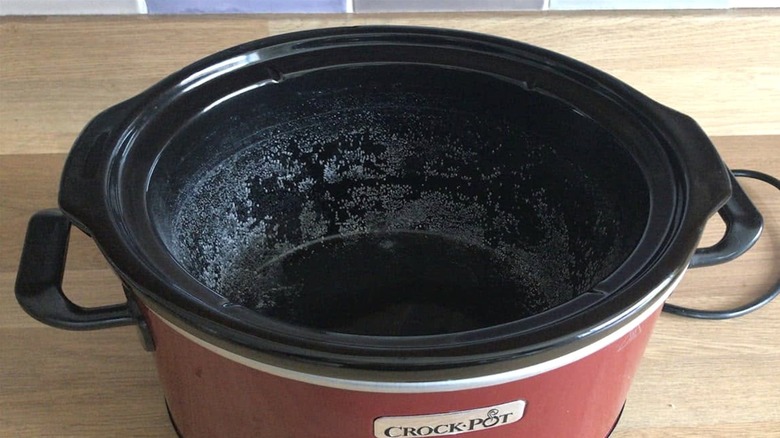
Slow cooker recipes make life easier on busy weeknights when you don't feel like babysitting the stove. They also help when you're feeding a crowd or hosting a get-together. After using the appliance for a while, you may notice a stubborn white ring appear on the inside of the slow cooker. Before you relentlessly start scrubbing (or worse, throw it away), hear us out: The rings are natural, harmless, and easy to clean.
For the record, we don't mean the ring of food residue left by your famous slow cooker mashed potatoes. We're talking about a white, chalky ring that remains on the inside of the appliance, even after a thorough wash. The stain is the result of mineral deposits, called limescale, which are caused by the evaporation of hard water (or tap water containing minerals, like calcium and magnesium). The solid ring of minerals stay behind once the water is gone, so what you're seeing is essentially a buildup of calcium carbonate.
While limescale won't be as detrimental to your slow cooker as it is for pipes and home fixtures that come into contact with hard water, it can still do damage. Besides looking unappetizing, the ring will also become thicker and harder to clean, trapping odors, compromising the slow cooker's nonstick capabilities (if it's indeed nonstick), and eventually causing uneven or slowed heating. Luckily, removing it is simple.
Slow cooker rings are safe, easy to clean, and somewhat preventable
Your slow cooker's white rings may be unsightly, but they're not dangerous. In small quantities, limescale can't harm you; in fact, calcium and magnesium are good for your body. If you drink the tap water you used in the slow cooker, you've already consumed those minerals. They just look more obvious (and alarming) when they aren't dissolved.
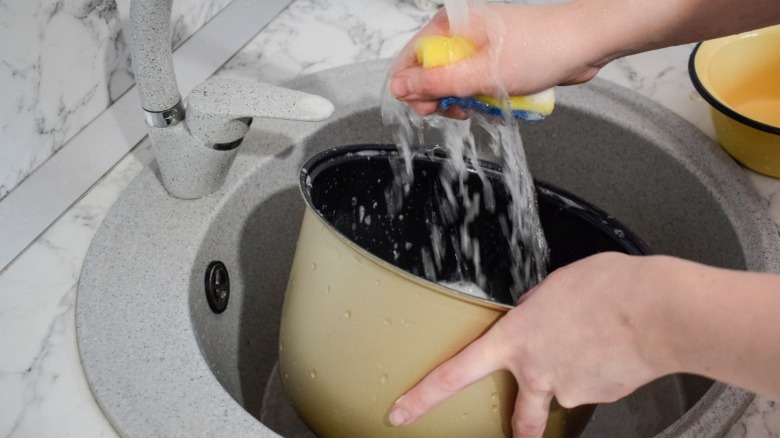
Limescale often occurs in appliances that use hot tap water, like coffee makers and tea kettles. To get rid of the white ring, add a one-to-one ratio of vinegar and water to the slow cooker. Use the solution to scrub the ring off with a sponge. The acid in the vinegar will break down the ring into an easily dissolvable salt. You can add baking soda or lemon to neutralize any odors; lemon's acidity will also help break down the ring, while abrasive baking soda will double as a scouring agent that won't scratch the pot. Finally, rinse and dry the pot — it should look good as new.
It's easy to make your Crock-Pot sparkle again, but you'll have less to clean if it doesn't stain in the first place. To prevent mineral deposits from leaving a ring, line the slow cooker or make packets for the food inside to contain the mess. Options include slow cooker liners, aluminum foil, and parchment paper. You can also use distilled water instead of tap to minimize the pot's contact with minerals.