

The Prime Rib Mistake An Expert Wishes Home Cooks Would Stop Making
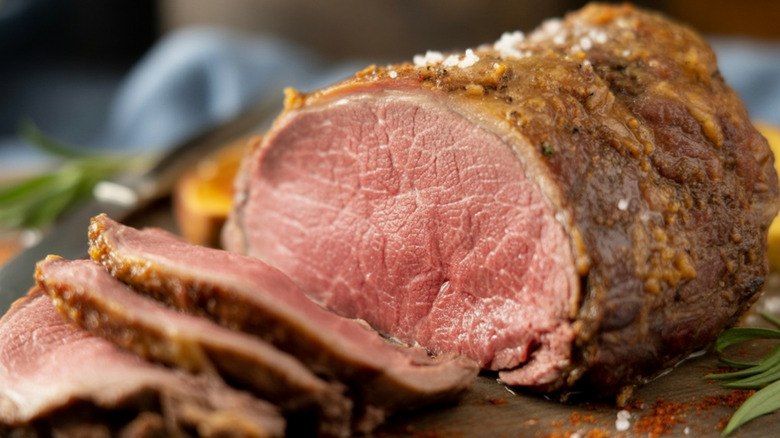
The moment has arrived. The prime rib roast you have been tending to so carefully is rested and ready. You bring it to the table and slice it. With a sinking heart, you realize it is unevenly cooked, with various states of rare to medium doneness in the middle, and well-done ends. Could you have avoided this? Sam Hazen of Palladino's Steak & Seafood says yes. In an exclusive interview with Mashed, he notes, "The biggest mistake home cooks make is cooking the prime rib too quickly or at too high of a temperature." He goes on to say, "It is important to avoid this pitfall so everyone can get juicy, delicious pieces of prime rib cooked to the same warm pink center."
You may think the solution is to then lean heavily in the other direction and cook low and slow to ensure even juiciness. But when you do that, you lose the textural contrast of a crispy crust, which is integral to the enjoyment of prime rib. To get the best of both worlds, employ both low heat and high heat — low to cook the roast evenly and high to sear the outside to achieve that perfect crust.
How to cook the ideal prime rib
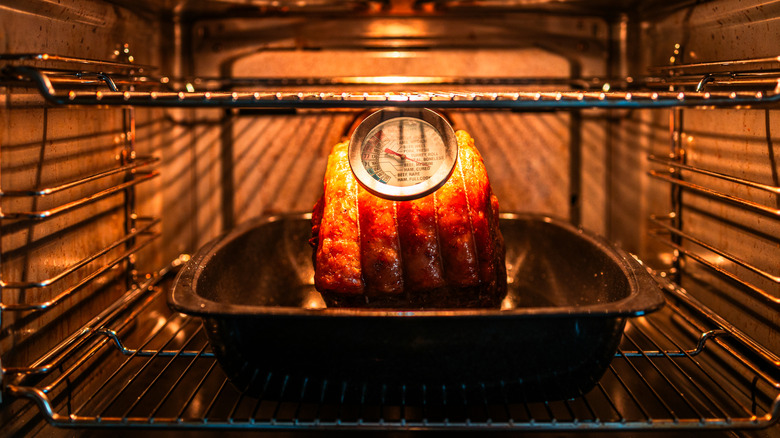
Our homemade prime rib recipe is so good, you will never go to a steak house again, at least not for prime rib! It uses both low and high temperature to cook it to perfect doneness and textural contrast. Set the oven to 250 degrees Fahrenheit, then let the prime rib cook slowly until its internal temperature reaches about 125 degrees Fahrenheit. Remove the meat from the oven and let it rest to help dry out the surface. Then, you can either turn your oven up to 550 degrees Fahrenheit to brown the surface or use a large skillet to sear the prime rib on all sides. Then slice and serve.
Prime rib is a relatively pricey cut of meat, so you may want to avoid the biggest mistakes people make while cooking it, like choosing a roast that's too lean, not seasoning the meat, or covering your prime rib while cooking it. Ensure you season your rib roast well and pay attention to the internal temperature of the meat as it's cooking. Temperature indicators are much more reliable than time measurements when cooking any large piece of meat. Then, if for some reason you find yourself with leftover prime rib, avoid using a microwave, as that is the wrong way to reheat prime rib. Instead, wrap it in foil and reheat the meat in the oven, as it is your best option to retain the texture of the meat.