

You Might Want To Skip The Buffet Pizza On Cruise Ships
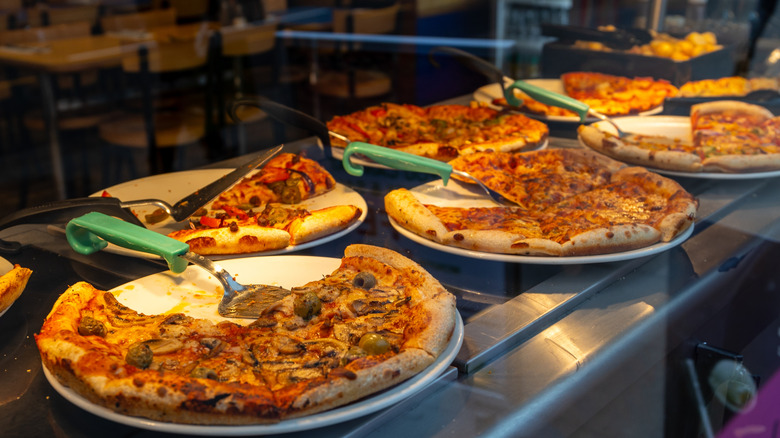
For foodies, cruise ships can be an almost overwhelming experience. From multi-course dining room meals to specialty restaurants to the famous buffets, there's no shortage of opportunities for indulging. However, among the many choices, you may be surprised to learn a familiar standby may be worth skipping. The unfortunate truth about cruise ship buffets is that the pizza on offer can face a variety of challenges linked to freshness and food safety.
As with many buffet settings, you might find that the pizza on the ship is kept warm under heat lamps. Because they steadily radiate thermal energy, over time the lamps will naturally dry out the pie, zapping any remaining moisture from the crust, cheese, and sauce. This can significantly degrade the eating experience, compared to a fresh, steaming slice straight out of the oven.
Even if there's a brisk demand for pizza, this highlights a potentially gross aspect of eating at a buffet. Some passengers might reach for the food with their bare hands. As people grab slices, there's no telling what kind of incidental contact might occur with the rest of the pie or the serving dish. Even if everyone uses tongs, there isn't any way to know what's on your fellow cruisers' hands. Periodic outbreaks of diseases like norovirus and others suggest the worst-case scenario is possible. Moreover, bacteria can multiply freely if rigorous food safety rules aren't followed, such as keeping hot food above 140 degrees Fahrenheit. That would prevent pizza from entering the FDA's temperature danger zone, but it can be a challenge when using the bulb-warmer-style heating found at many buffets.
You don't need to skip all pizza on the high seas
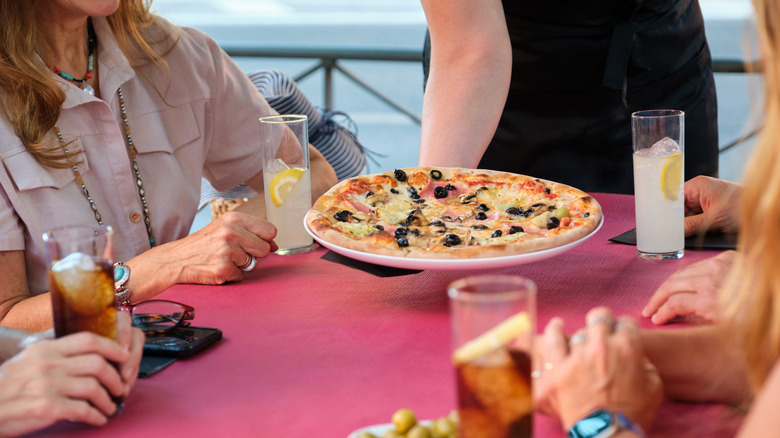
A better alternative for those craving pizza can often be found elsewhere on the ship. Some vessels have dedicated pizza counters, specialty restaurants, and even room-service pizza. In each of these cases, you might have a better chance of encountering fresher pies. These eateries likely have a higher food turnover rate and less customer handling of food.
Of course, pizza isn't the only cruise ship food you shouldn't eat. For example, scrambled eggs can present similar issues with drying out under heat lamps, while undercooked eggs can become a dangerous reservoir of bacteria. Even in the best cases, they're often reconstituted powdered eggs, rather than fresh. Condiments are another potential no-no if you find them sitting out on the table. Many common ones (including ketchup and mustard) should be refrigerated, and it's impossible to know how long a bottle may have been sitting out at room temperature.