

How Bourbon Helped Improve Straws
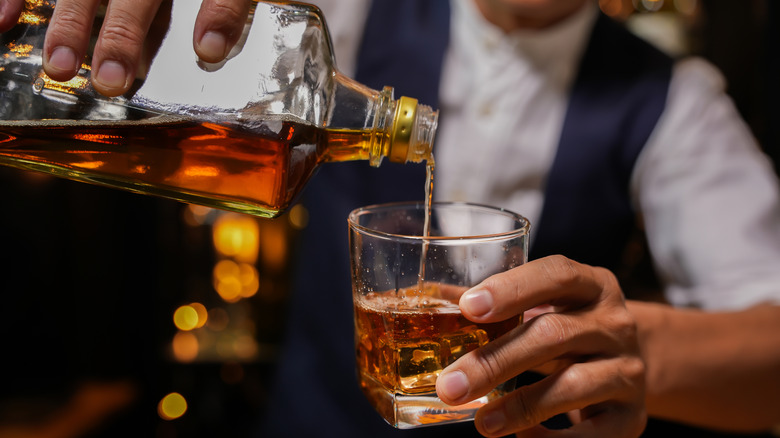
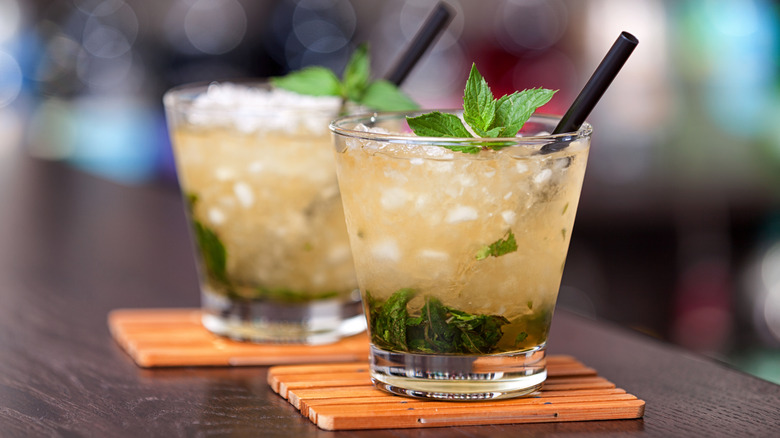
Picture a straw in a glass of bourbon. Is it one of those little black plastic straws for stirring (and/or sipping)? These are common drink utensils in modern bars, but that wasn't always the case. Back in the 19th century, drinkers typically sipped hard booze through something more natural: rye grass straws. And that's exactly what American inventor Marvin Stone found in his bourbon-based mint julep one summer day.
While not every drink back then called for a straw, the crushed ice and leaves in mint juleps got messy without a julep strainer or sipping aid. Unfortunately, rye grass straws were known to dissolve in drinks and sometimes added an unwanted grassy flavor. To bypass this unpleasantness, Stone, who manufactured paper cigarette holders, used this know-how to invent Stone's Patent Paper Julep Straws.
Although he came up with the idea by wrapping strips of paper around a pencil, his straws were eventually made with Manila paper and coated in paraffin wax for durability. After successful tests at a local bar, he patented his design, eventually converting his paper cigarette company into the Stone Straw Corporation. The rest, as they say, is history. Bourbon cocktail drinkers everywhere can thank Stone for keeping rye grass out of their mint juleps.
Does straw material really matter?
Up until Marvin Stone's patented creation, straws were typically makeshift and crafted from whatever natural materials were available. According to Time, in addition to rye grass, people have been using "dried reeds or, unsurprisingly, just straw" as drinking straws since ancient times. In the U.S., rye grass was grown as early as 1782 as pasture grass for animals. As an agricultural byproduct, rye grass straws were cheap to make and readily available.
While natural materials are easy to source, however, they're not well-suited for prolonged liquid exposure. A 2019 study published in Bioresource Technology suggests that alcohol, in particular, can penetrate porous plant grasses and alter their structure, gradually weakening the material over time. Since bourbon is mostly alcohol and water, it could soften rye grass straws and allow plant material and unwanted flavor to leach into drinks.
Even Stone's invention was eventually phased out in favor of more durable plastic straws. Today, the straw debate rages on, as some U.S. states face plastic straw bans while the current White House administration is anti-paper straws. As for bourbon, straw use all depends on the drink. Drinking bourbon straight from a glass allows you to experience its full aroma and flavor. On the other hand, cocktails may still benefit from straw use because of ice, garnishes, and alcohol's impact on your teeth. However you drink it, the search for the ideal straw is still ongoing, even 140-plus years after Stone's invention.