

Why Your Gas Stove Is Turning Pots And Pans Black
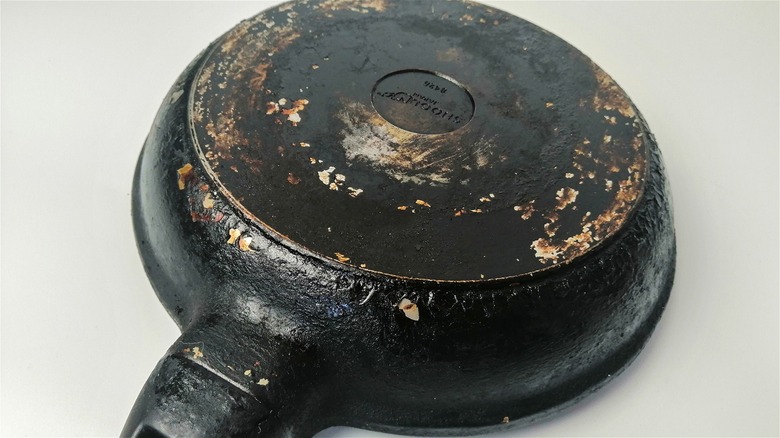
The bottom sides of your pots and pans turning black is a common sight when cooking over a campfire, but it's not something you should expect when you're cooking at home. This is a problem that's more or less exclusive to gas stoves. And the main reason why has to do with the gas itself.
The soot that turns the bottom of your pots and pans black is most likely the result of incomplete combustion. Incomplete combustion occurs when there's an issue with the gas supply, an imbalance in the mix of air and gas from your stove, or dirt and debris blocking the flow of either. When this happens, hydrocarbon molecules from the burning gas solidify into soot particles, which then rise up the flame and stick to the surface of your pan. As the soot builds up, it creates a black, often hard-to-remove coating. This makes a pretty good case for switching from gas to electric stoves, among other reasons.
Black spots can also form if there's any dirt or food stuck to your pots and pans. These could have been left behind if the cookware wasn't washed thoroughly enough, or if any debris on your stove sticks to the bottom surface. The fire from the stove will burn these particles, leaving their charred remains stuck to your pan. Make sure to include cleaning your stove burners as part of regular maintenance to avoid this issue.
How to prevent your gas stove from blackening your cookware
The easiest step is to rule out the possibility that the black areas on your pots and pans aren't the result of any debris burning as you cook. Thoroughly clean your stovetop and try cooking with a fresh pan. If there isn't any smoke or soot forming anywhere, then it's likely that there was just some leftover gunk causing the issue.
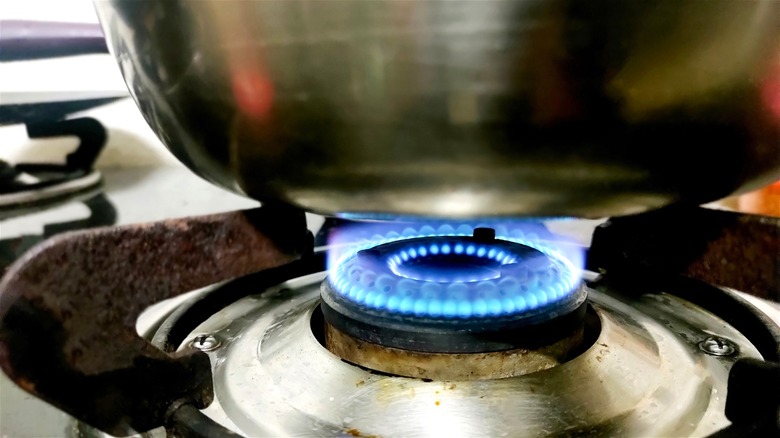
If you have reason to believe that the black soot on your pots and pans is the result of incomplete combustion, you need to act quickly. Aside from soot, this process can also produce carbon monoxide, a poisonous gas with no detectable smells or colors to humans. One way you can tell that your gas stove isn't burning the gas efficiently enough is if it produces yellow flames instead of the ideal blue. This indicates that the fire isn't getting enough oxygen, which is often a sign of incomplete combustion.
Should you suspect this to be the case, it's best to cut off the gas supply to your stove and leave the rest of the work to trained professionals. Common fixes include adjusting the air supply and gas nozzles, checking your gas supply for possible contamination, and replacing gas lines and other parts as necessary, especially if it turns out your stove is leaking methane. Since all of this involves working around combustible substances, the safest thing to do is have the experts take over from here.
How to remove black stains from pots and pans
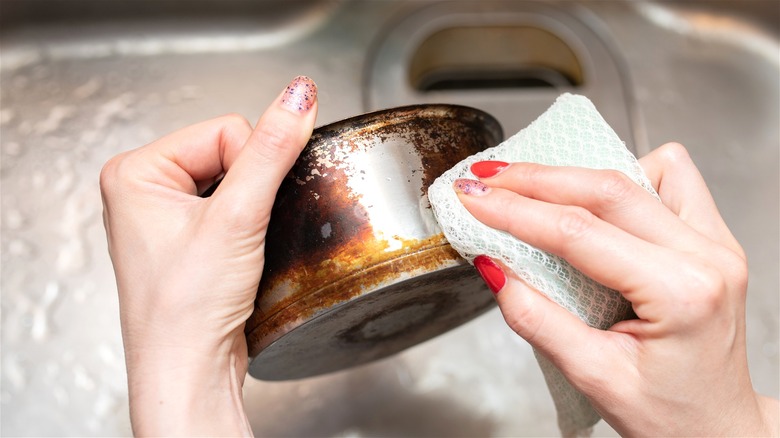
After fixing the root of the problem with your gas stove, it's a good idea to follow it up by cleaning out the black deposits on your cookware. This isn't just for aesthetic purposes, either — layers of soot can affect your pan's ability to distribute heat, leading to uneven cooking zones. Soot is also a known carcinogen, so limiting your exposure to it is in yours and your family's best interests.
If you're trying to clean aluminum pans, you can make a mildly abrasive paste out of baking soda to scrub the soot off after soaking it in a warm solution of dishwashing liquid and water. If the soot is thin enough, it should come off fairly easily. Otherwise, you'll have to rinse and repeat the procedure, stripping the soot away layer by layer. Resist the temptation to boil water in the pan to loosen things up and then immediately scrub it under cold running water; this can cause thermal shock, which is a surefire way to ruin your frying pans.
You'll need to stick with gentle approaches since aluminum isn't as durable as other materials like stainless steel, which can handle a bit more elbow grease. You can also try other popular methods for saving burnt pots and pans, such as dissolving soot with mild acids like lemon juice, or scrubbing it off with a ball of aluminum foil. If you're working with cast iron, these techniques may strip its seasoning, so find some time to re-season the cookware once it's clean.