

What Happens To The Leftover Food At Buc-Ees?
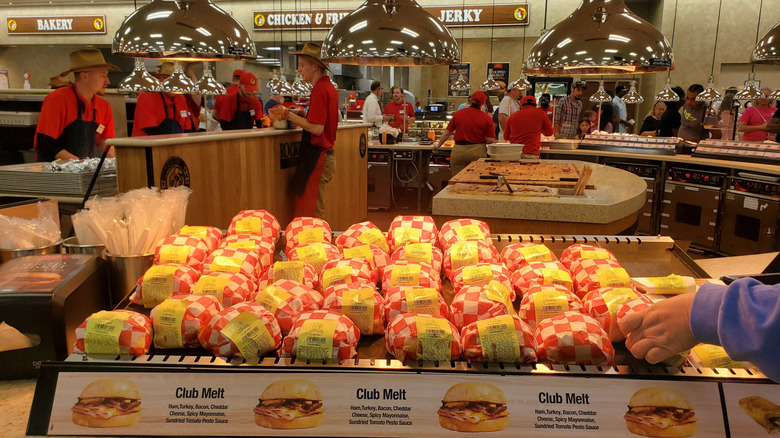
While many may view Buc-ees as a glorified roadside attraction, this popular chain of oversized travel centers has spent more than 40 years expanding both its reach and convenience offerings. In fact, in spring of 2026, trade publisher Progressive Grocer named Buc-ees one of the top 100 food retailers in North America, joining better known supermarkets like Kroger and Costco. Suffice to say, Buc-ees sells a lot of food. Which leaves one wondering, what happens to all of that must-try Buc-ees food that goes unsold? According to many, it gets tossed in the dumpster.
"Worst part of working third shift at Bucees is throwing away all the food that you work so hard to make," said one Redditor. Another former employee added, "When I worked there they also threw away sandwiches if the new trainees missed a tomato or didn't face the piece of cheese in the right direction. So its not just old expired food." Another person claimed on Reddit their father, a Buc-ees employee, said that if a sandwich is wrapped up incorrectly, "it's tossed. Even if the sandwich is perfectly fine." A customer shared that their girlfriend's iced coffee was thrown away by an employee who refused to ring it up because it had been put into the wrong style of cup.
Why isn't all unsold food donated?
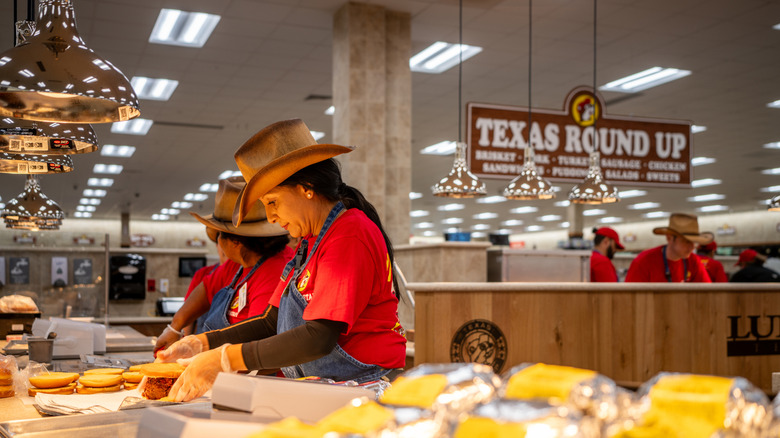
While it might be easy for a grocery store like Costco to donate its unsold fruits and vegetables, there are many reasons a business does not give its leftover food to local charities or farms. For instance, although much of McDonald's leftover food is composted or sent for anaerobic digestion, which turns food waste into fertilizer, it is not donated to food banks because donating cooked food violates the company's food safety policies. According to the FDA, hot foods, like Buc-ees' famous brisket, should be kept at or above 135 degrees Fahrenheit. Below that threshold, rapid bacteria growth may render the food unsafe to eat. Improper packaging may also contaminate a wrapped food item.
Many people believe that food venders choose not to donate leftovers because they don't want to be held liable in case someone gets sick from eating spoiled food. Although that might be a real fear businesses have, legally speaking, unless guilty of the high bar of gross negligence, they will not be held responsible for donated food thanks to the Bill Emerson Good Samaritan Food Donation Act (Cornell Law School).