

Cowboys Relied On This Survival Food In The Old West
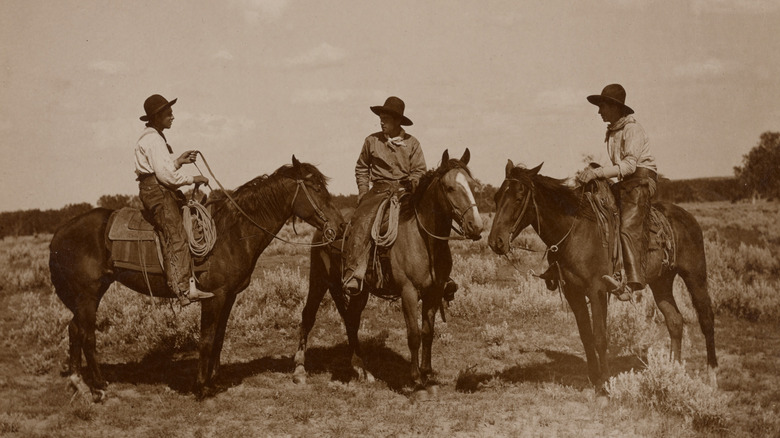
In the Old West, cowboys ate a surprising variety of foods. But the one thing they could rely on above all others was pemmican. While this may or may not be a food from the Old West that needs to make a comeback, its importance in history cannot be understated. Pemmican, from the Cree word pimîhkân with "pimî" meaning "grease" or "fat," has been called both a superfood and the ultimate survival food due to its high nutrition density and resistance to spoilage. The three key ingredients are dried meat, rendered fat or suet, and dried berries. Sometimes people added other on-hand ingredients, like spices and nuts. The food resembles a modern-day energy bar and boasts a dense texture. It has a predominantly meaty flavor, though the berries do come through as well.
Settlers learned to make pemmican from the Indigenous peoples of North America. It commonly contained bison due to the animal's wide range across the Great Plains. The meat in pemmican is dried so thoroughly, it can last for years. This is why it was so essential for cowboys to have in the chuck wagon, as they didn't do much hunting or fishing on the job. Pemmican could be eaten raw, but people also used broken-up pieces in stews or fried them in a pan with onions and potatoes.
How is pemmican made?
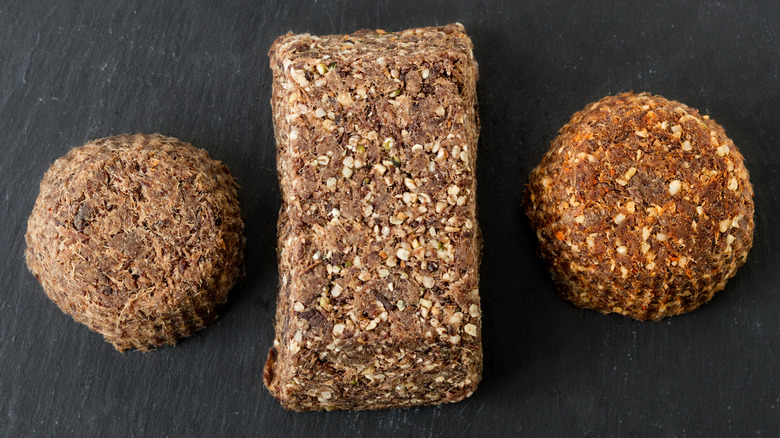
Humans have been making pemmican for at least 5,000 years. Because pemmican was made with what people had on hand, there is no one single recipe. Sean Sherman (a Minneapolis chef revitalizing Native American cuisine) told History, "It's really important to understand that there's so much immense diversity amongst indigenous peoples across North America." So while the preparation styles are similar, variety exists in the "animals utilized, of different kinds of berries or fruits or other ingredients that might have been mixed into these kinds of recipes."
The process of making pemmican often involved pounding dried meat between two rocks in order to create a coarse powder. The pulverized protein may have been mixed with a roughly equal amount of rendered fat as well as fruits like chokecherries and blueberries. Once everything was thoroughly blended, it was pressed into pans or shaped into bars which solidified as they dried.