

Coffee Drinkers Rarely Use This Old-School Brewing Method Now
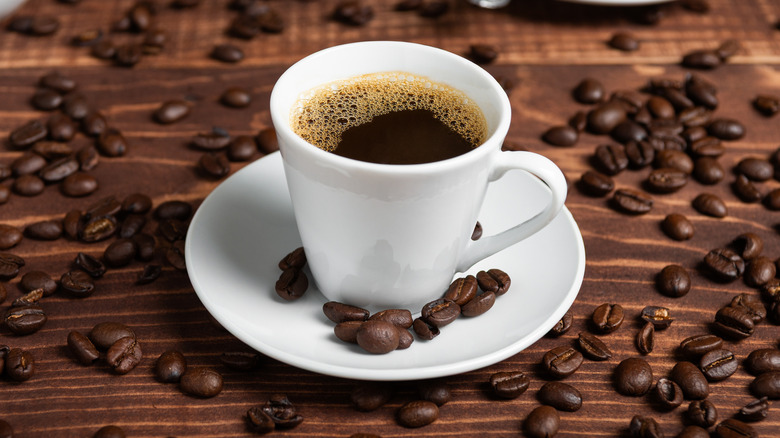
From single-serve coffee makers (like those made by Keurig) to French presses and everything in between, today's coffee-making scene isn't lacking in options. One that has fallen out of fashion allows you to see your coffee as it brews and stop the process at exactly your preferred color, allowing you to enjoy it more. That's the percolator, which for a long time was a common coffee-making method but is rarely used today.
Percolators work by warming water over a heat source (some have a built-in heater, while others go on a stovetop). As the water gets hot — as all water for brewing coffee should be — it's forced up a tube in the middle of the pot, splashing up into a little glass dome at the top and sprinkling down over coffee grounds, then draining back down to the bottom. The process repeats over and over again, and you can judge how intense the brew is by how deep the water's color is when it shows up in the spout.
Illinois farmer Hanson Goodrich invented the percolator in 1889 in order to keep the grounds out of the liquid itself. Previously, people made coffee by simply boiling water with coffee grounds in it. Still, percolators tended to produce bitter brew, so they declined in popularity as drip machines become commonplace. Vincent Marotta, the inventor of the Mr. Coffee automatic drip machine, put it this way to Forbes in 1979: "212 degrees [from a percolator] gives you overextraction, so the coffee becomes bitter and astringent."
Drip machines and other alternatives now allow more control than the percolator
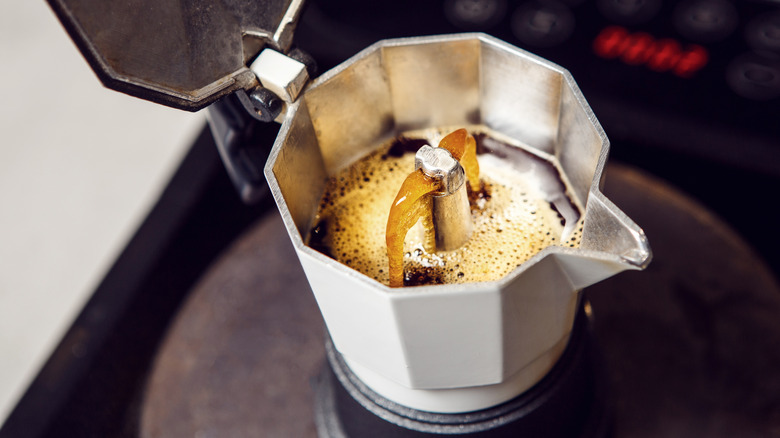
Here's the issue with percolation: The repeated flow of water over the coffee grounds can over-extract the coffee's acidic, metallic flavors, which give the drink some body when included in moderation but can overwhelm it when too prominent. The high, direct heat also can bring out strong, bitter flavors as the water essentially becomes oversaturated with coffee when it passes through the grounds again and again.
Drip coffee (and other similar styles, like pour-over) are fundamentally different, which is why drip coffee became the standard. Not only can you more carefully control the water's temperature and keep it away from an open flame, but the water only passes through the grounds once. All of those opportunities for enhanced control mean that the resulting coffee will have the pleasant-tasting acids and sugars along with some balanced bitterness, but the brewing process ends before breaking into some of the more intense, unpleasant flavors. All of that was rolled into the design of automatic drip coffee pots, popularized in the U.S. by the Mr. Coffee machine introduced in 1972 (and rendering the percolator obsolete).
Still, the percolator might deserve a spot on your kitchen counter. For one, simpler models without a built-in heat source can run without electricity as long as you have a stove burner or other open fire (think camping or during a power outage). And to some coffee drinkers who prefer the acidic, bolder flavor, percolators produce exactly what they like.