

Don't Judge A Mango By Its Color; Try This Instead
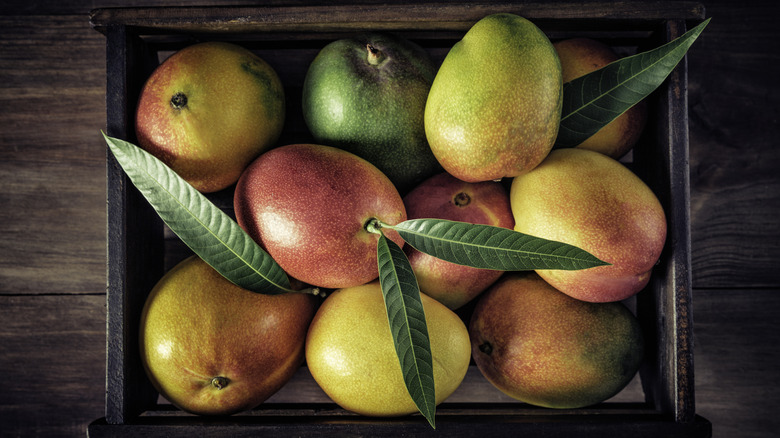
While the ripeness of many fruits becomes evident by their color, mangoes require something a little more hands-on. Next time you go shopping for fresh mangoes, give them a little squeeze — just not too hard. This touch test can determine how far along a mango is in its ripening stages. According to the National Mango Board, hard mangoes are unripe; almost ripe mangos are somewhat firm, and ripe mangoes give a little, much like an avocado.
Very soft or mushy mangoes, on the other hand, are likely overripe. To identify spoiled mangoes, sniff the fruit for any rancid, weird smells. Mangoes should smell sweet and fragrant, not sour. Sniff near the stem for the best indicator of ripeness. Obviously, if there are any large bruises or moldy spots, throw the fruit in your green bin or compost it yourself.
Even if a mango doesn't feel quite ripe yet, that doesn't mean you can't use it. There's a recipe or usage for mangoes at every stage of ripeness. The National Mango Board even created a cheat sheet for the six stages of mango ripeness along with ideal applications that correspond to the mango's taste and texture at that stage. You can make a crisp, sour mango verde with unripe green mangoes or a zesty, sweet mango chutney with ripe ones.
Getting ripe and fresh mangoes
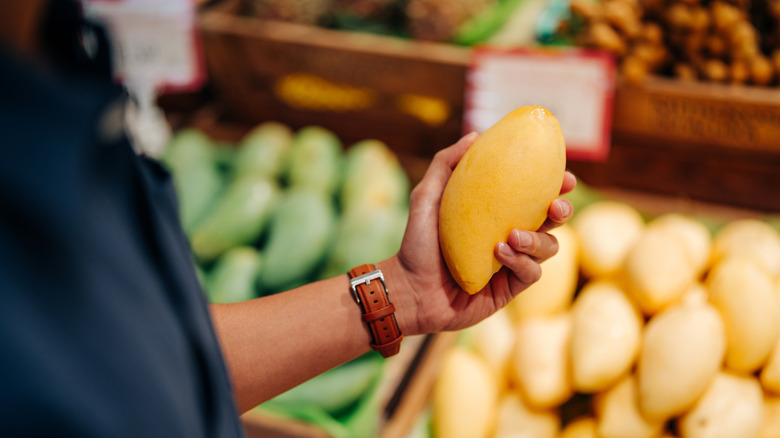
The reason color is not a reliable ripeness indicator is that mangoes come in different colors depending on the variety. From an infographic on the Culinary Institute of America's website, in partnership with the National Mango Board, you can see which colors are common for popular mango varieties. Mangos range in color from yellow, like the Honey/Ataulfo variety; mostly green with some reddish areas, like the Kent variety; and mostly red, like the Tommy Atkins variety. So unless you know the variety, it's better to perform the squeeze test.
Mangoes are climacteric fruits, meaning they continue to ripen after they're picked. Therefore, it's best to choose one closest to the ripeness you need and eat it right away to avoid food waste. However, you can choose firm, unripe mangoes and ripen them on a counter. For faster ripening, place them in a paper bag for a couple of days. Climacteric fruits like mangoes emit ethylene gas as part of their ripening cycle (via Michigan State University), and the closed bag speeds up the process since the gas can't escape as easily.
If you want to slow down a mango's ripening once it's ripe, store it in the refrigerator for up to five days. While the best temperature for mangoes is slightly warmer than the recommended refrigerator setting of 37 degrees Fahrenheit, chilling them will preserve their flavor and nutrition longer, according to a 2026 paper published in Tropical Plants. Ultimately, once you've picked the perfect mango, proper storage will help you enjoy it at its best.